AyurvedaAugust 16, 2026
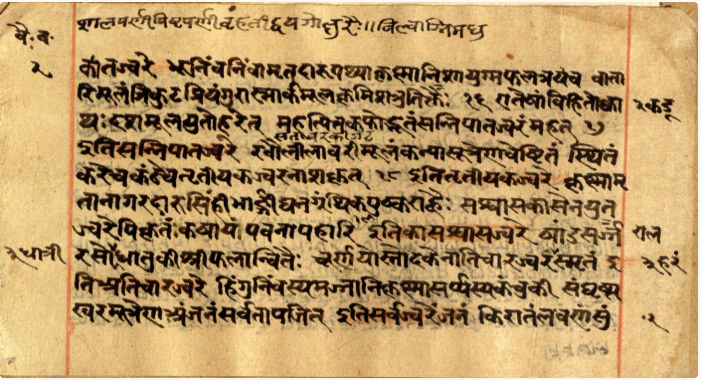
Vaidyavallabha: A Fever Formulary by a Poet-Physician
Vaidyavallabha: fever formulas, universal remedies, and a physician-poet's lineage preserved in 1850.

40 articles filed under Ayurveda.
Vaidyavallabha: fever formulas, universal remedies, and a physician-poet's lineage preserved in 1850.
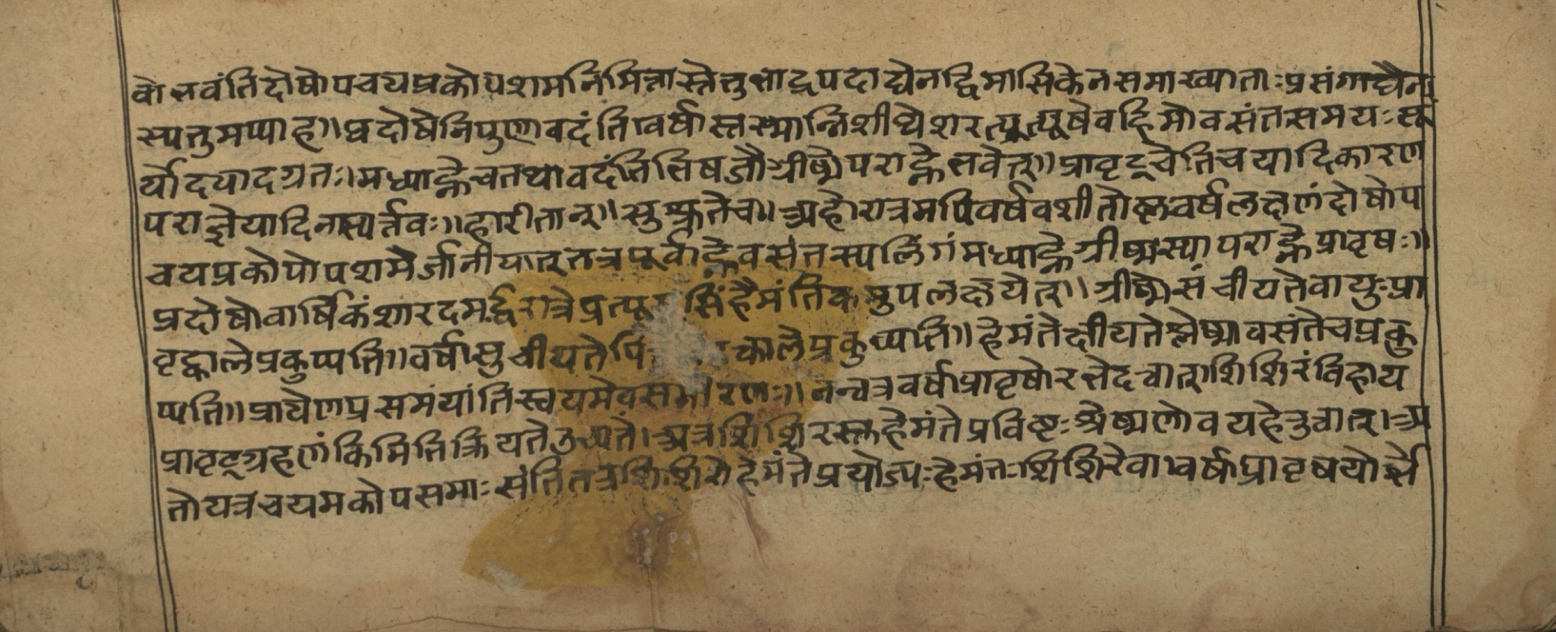
Kāśīrāma's Vaidyasarvasva maps every season to a doṣa — vāta in the rains, pitta in autumn, kapha in spring — with food, drink, and water rules for each.
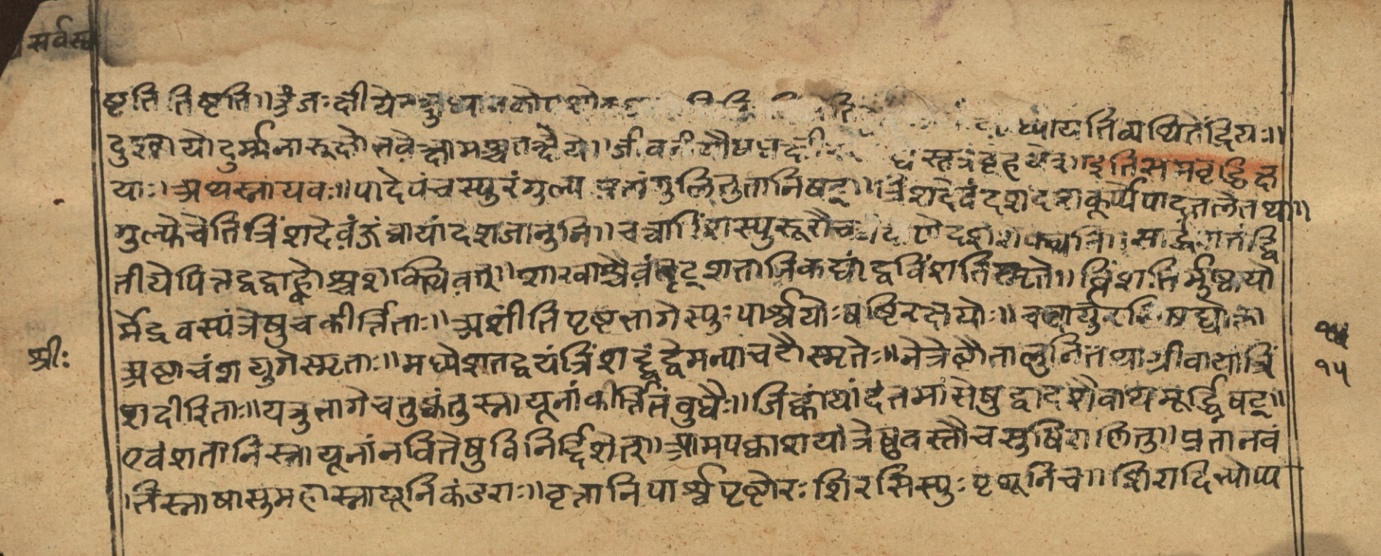
Kāśīrāma's Vaidyasarvasva numbers the body — 900 snāyu, 210 sandhi, 700 srotas — and catalogs honey's four varieties and twenty drug qualities.
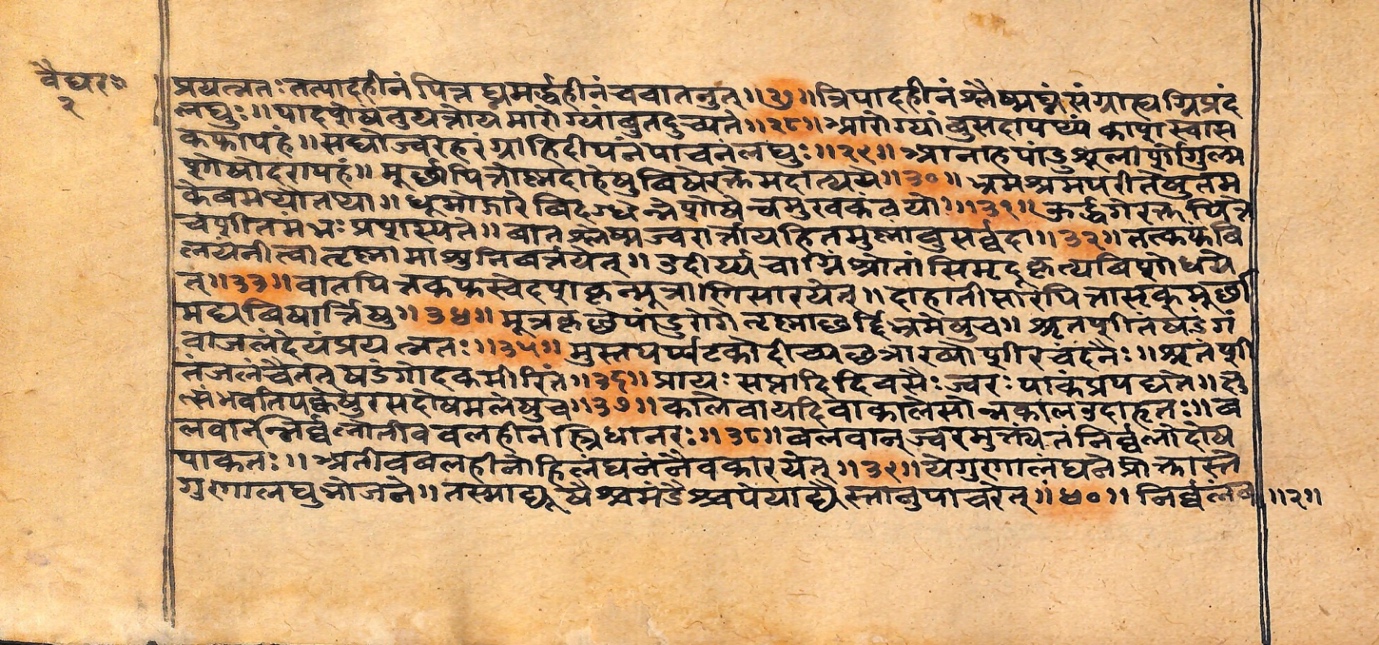
Vaidyarahasya: water therapy, fever fasting, and a 17th-century compendium that absorbed syphilis into Ayurvedic medicine.
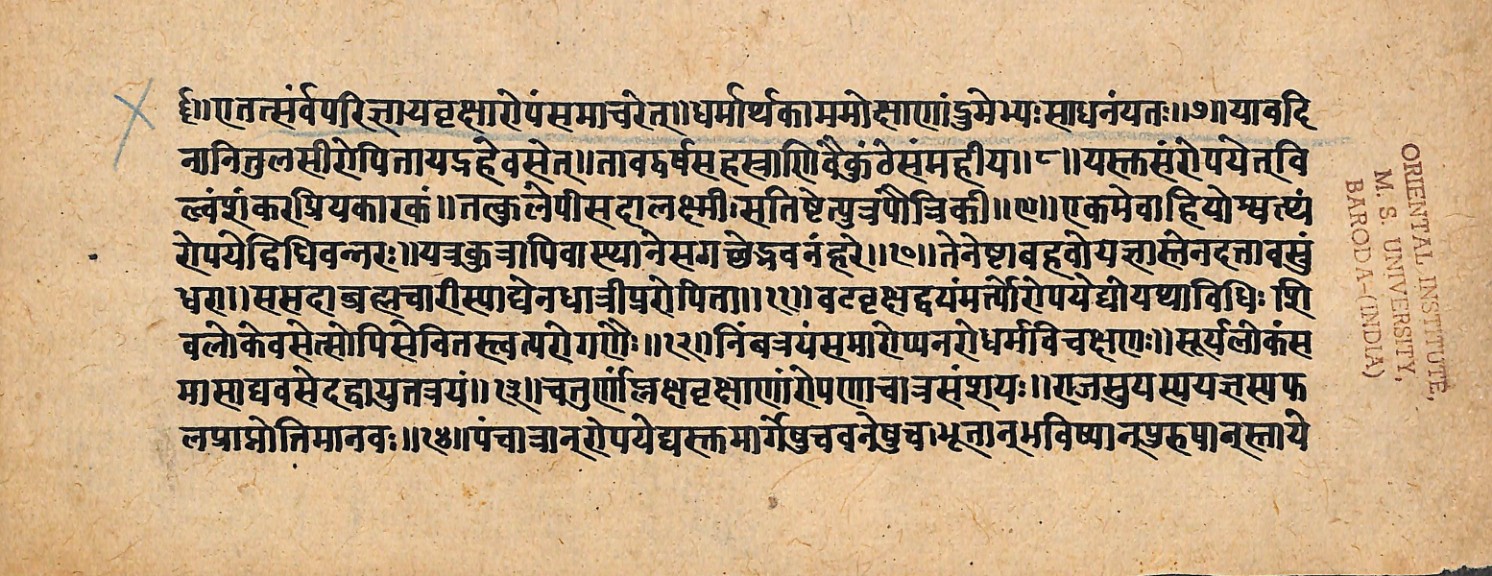
Planting for merit and prosperity: trees as dharma, site selection, water-finding, and applying Ayurvedic healing to gardens from a medieval Sanskrit treatise.
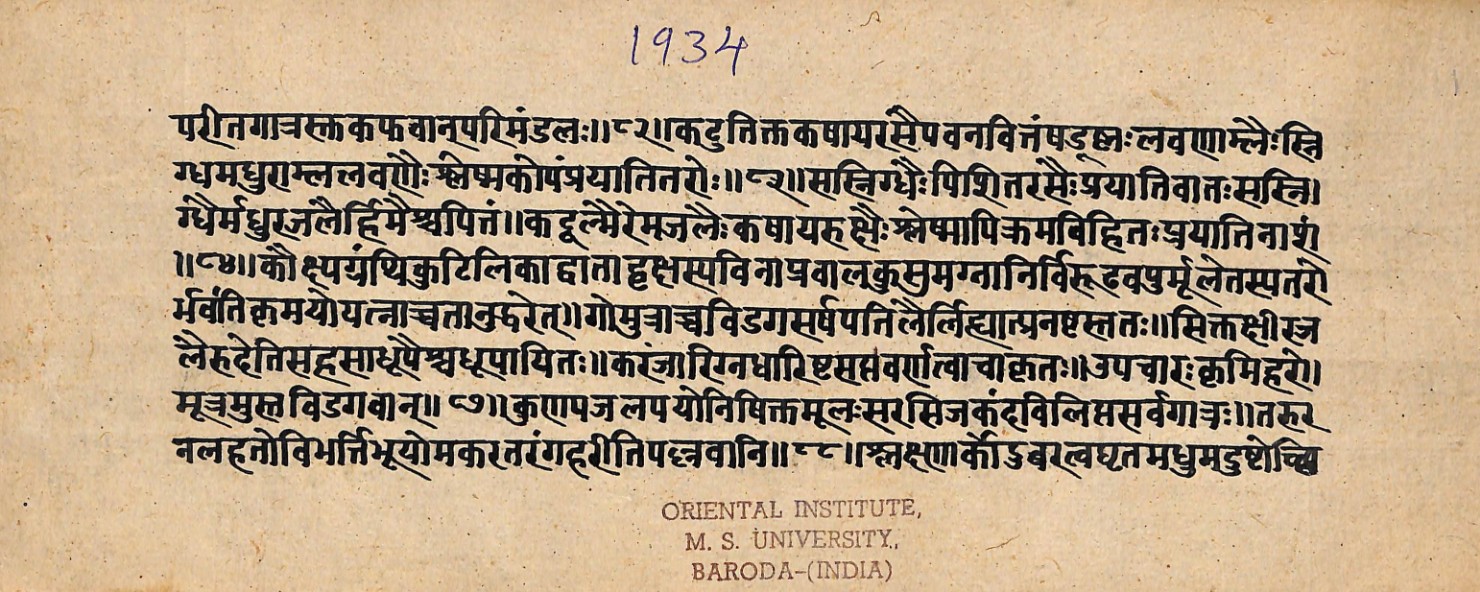
Upavanavinoda treats trees like patients — vāta, pitta, and kapha afflict them too — with cow's-urine pastes, frog-water for barren trees, and ghee for wounds.
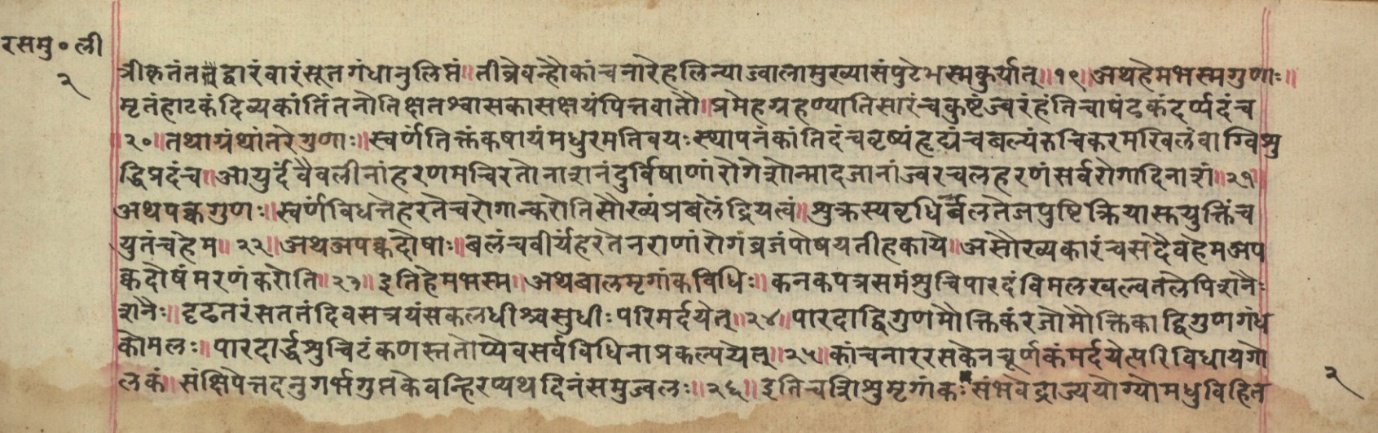
A 12th-century alchemical manual for turning gold and other metals into medicine, with precise procedures for testing, purification, and incineration, followed by a comprehensive therapeutic account of each metal's action on disease.
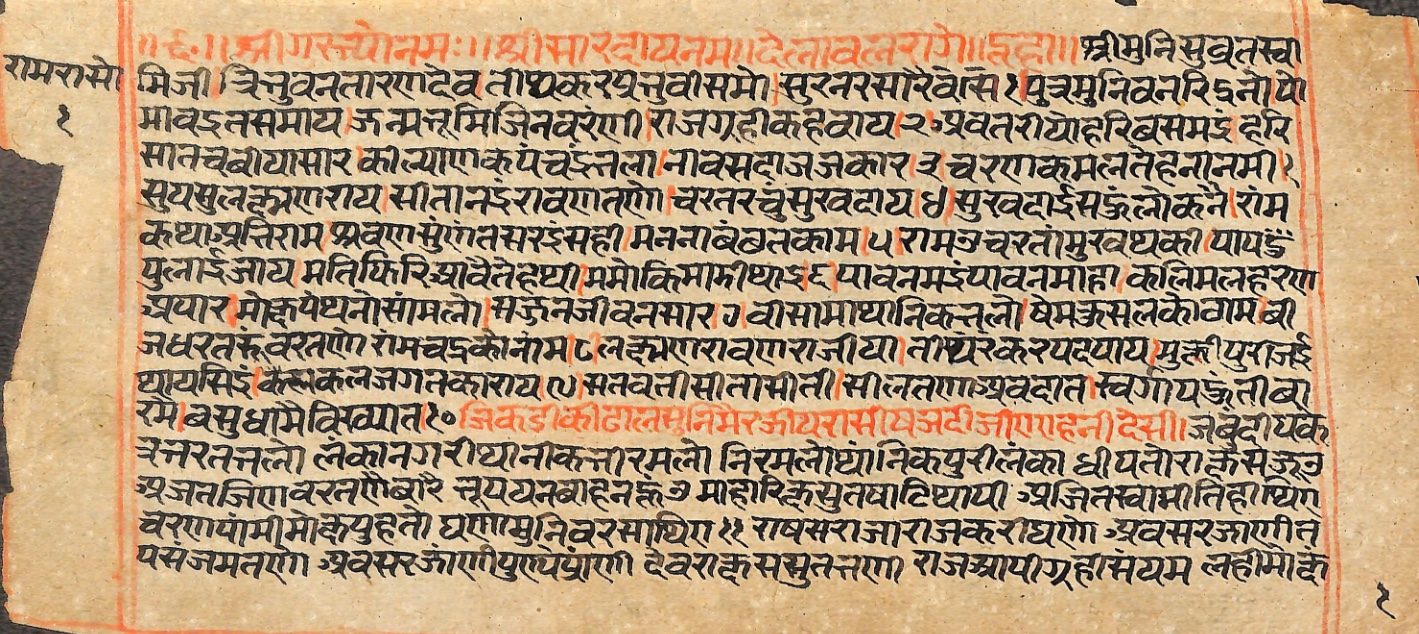
Rāmayaśorasāyana is a 243-page vernacular poem — a Jain telling of Rāma and Rāvaṇa, with tīrthaṅkara invocations and a moral punchline.
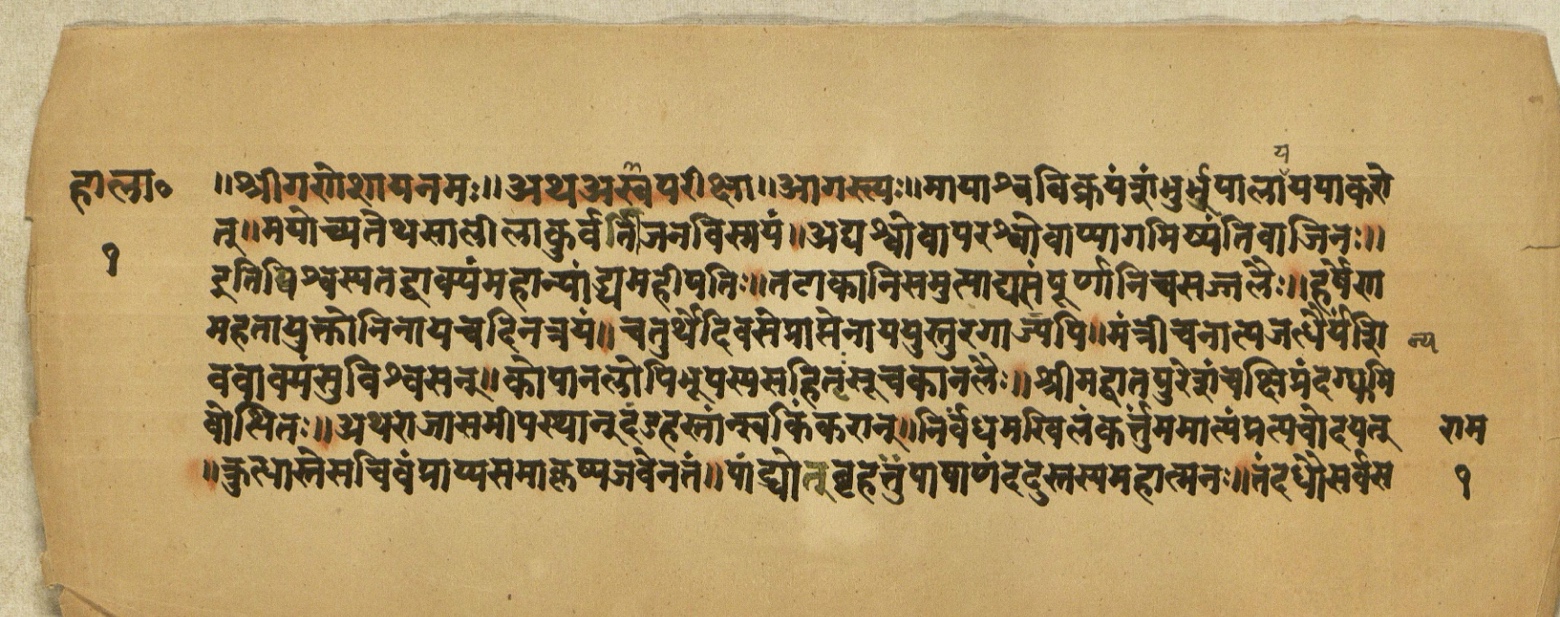
The Aśvaratnaparīkṣā — the examination of the jewel among horses — starts as a story, not a manuall. It opens inside the Hālāsya Māhātmya, with Śiva himself "en
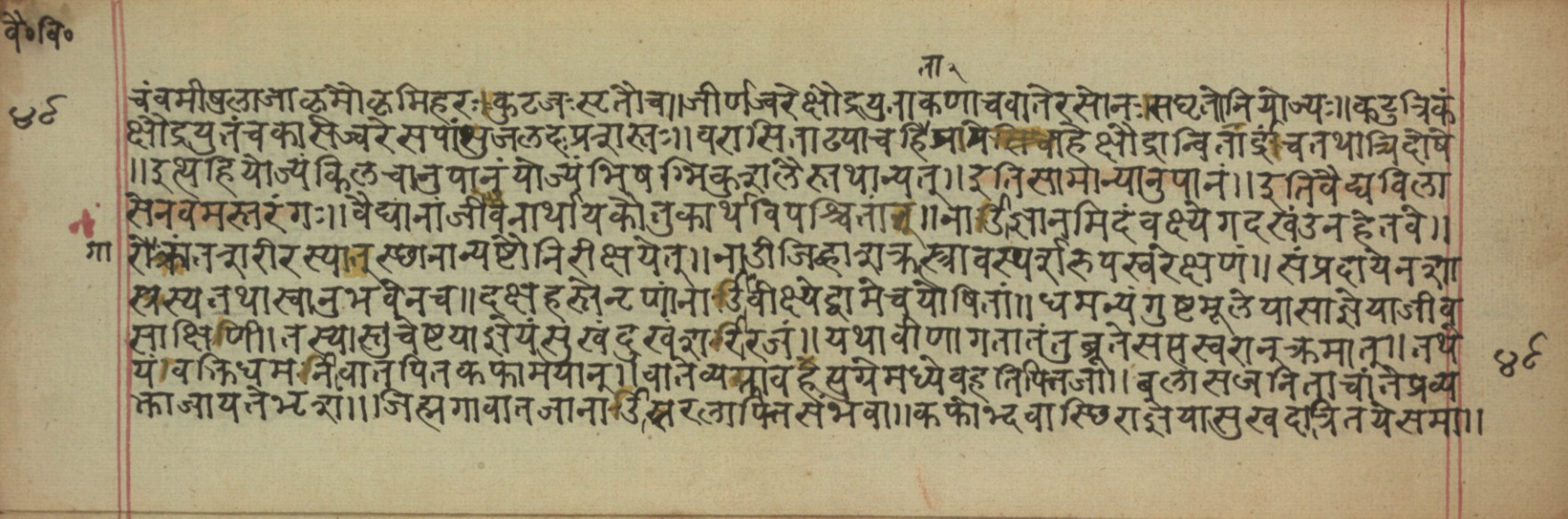
The Vaidyavilāsa — 'The Physician's Delight' — is a 50-folio fever manual by Raghunāthakavīśvara, preserved in the Poona University Collection.
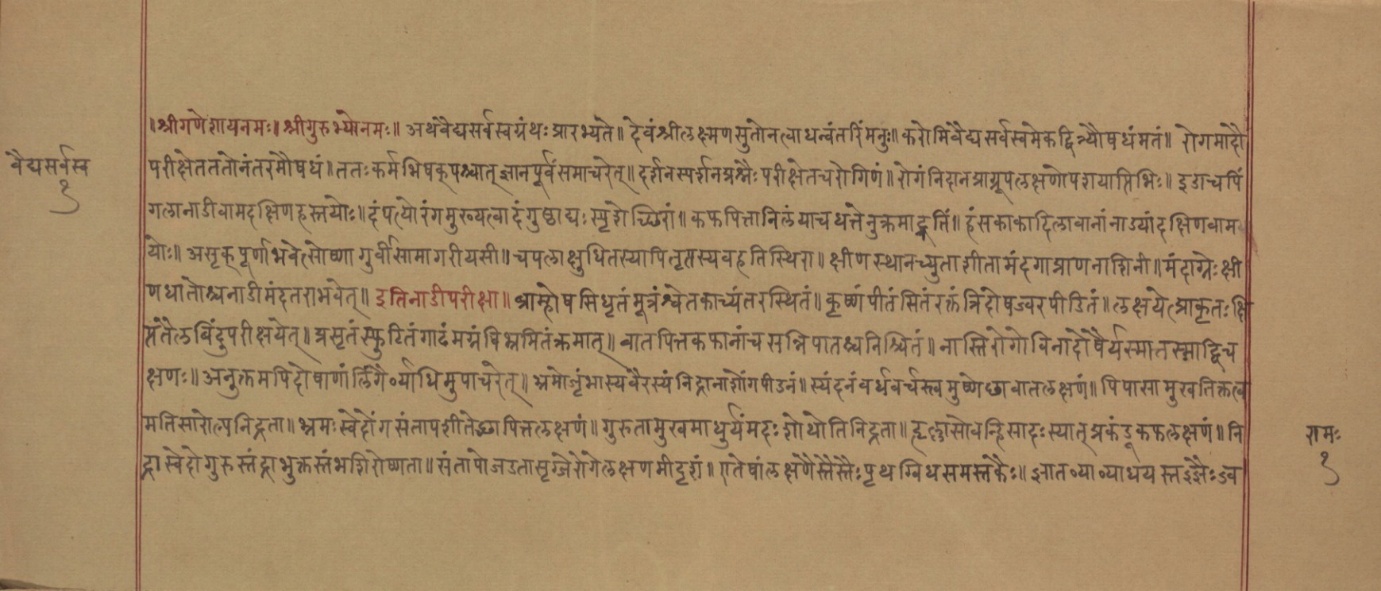
A five-folio Ayurvedic pocket manual by Manu of Chakrapani's lineage: diagnosis through pulse and urine, three-stage fever treatment, and the signs of death every physician must recognize.
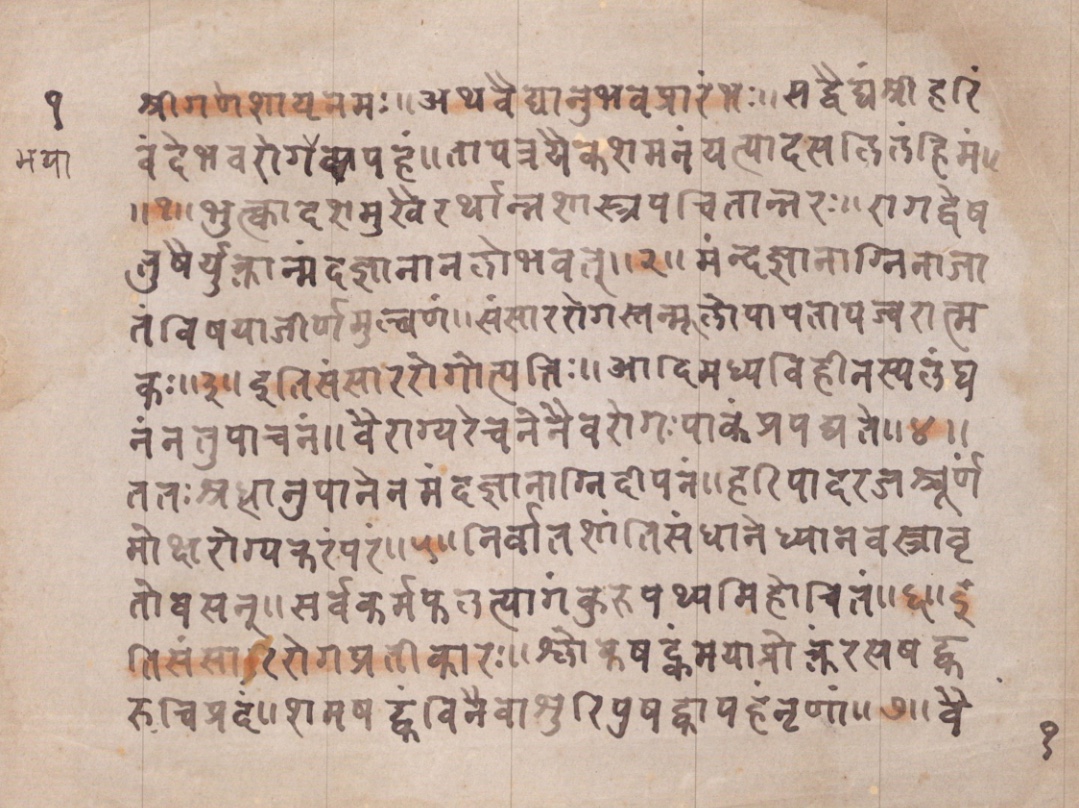
An Ayurvedic physician's personal record of 30+ diseases and their treatments, framed in Vedantic philosophy: samsara as disease, experience as authority, geography as diagnosis.
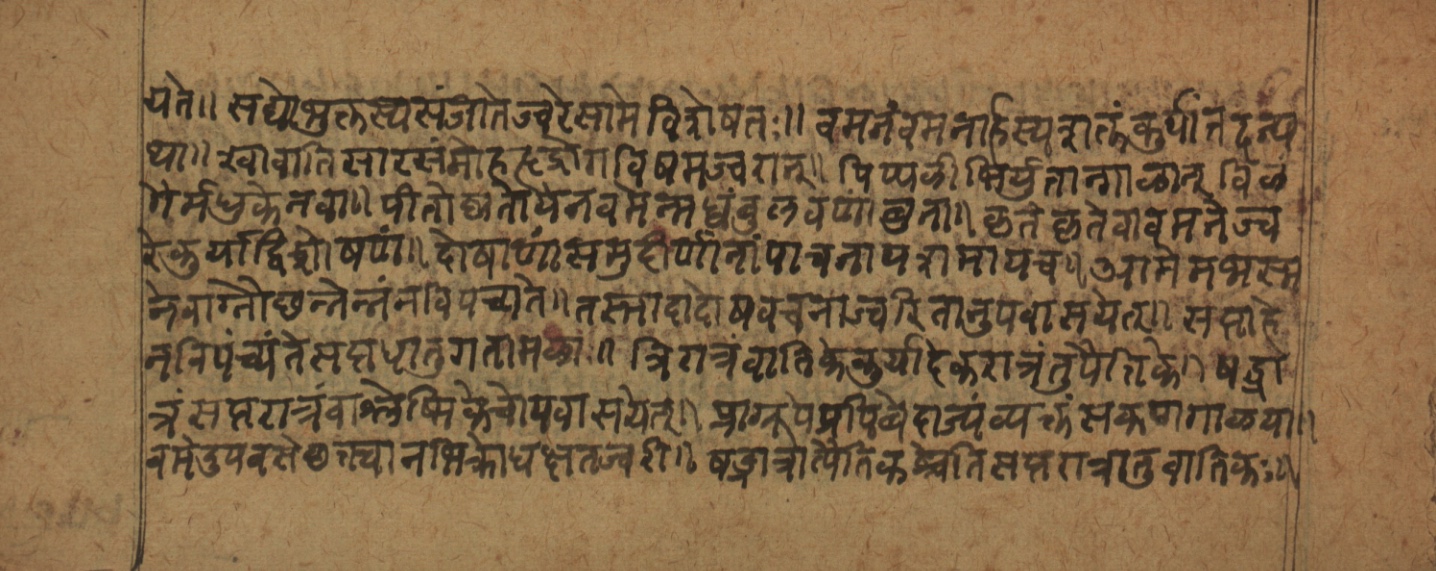
Vāgbhaṭa's Cikitsāsthāna on fever: fasting before medicine, gruels by doṣa type, and the principle that timing makes poison into cure.
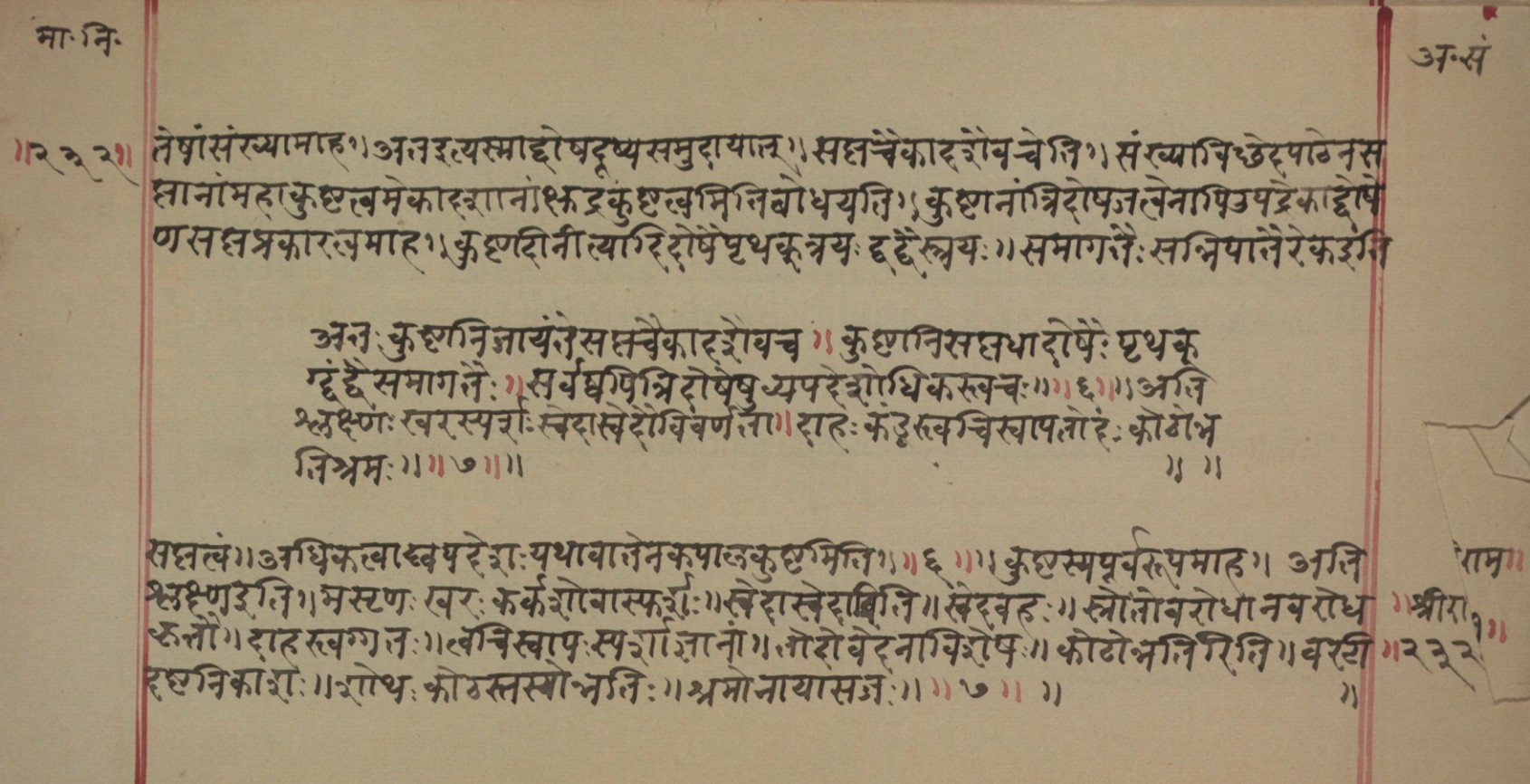
The same Mādhavanidāna manuscript that dissects grahaṇī also carries one of the boldest chapters in classical Indian medicine: the nidāna of kuṣṭha, the grea...
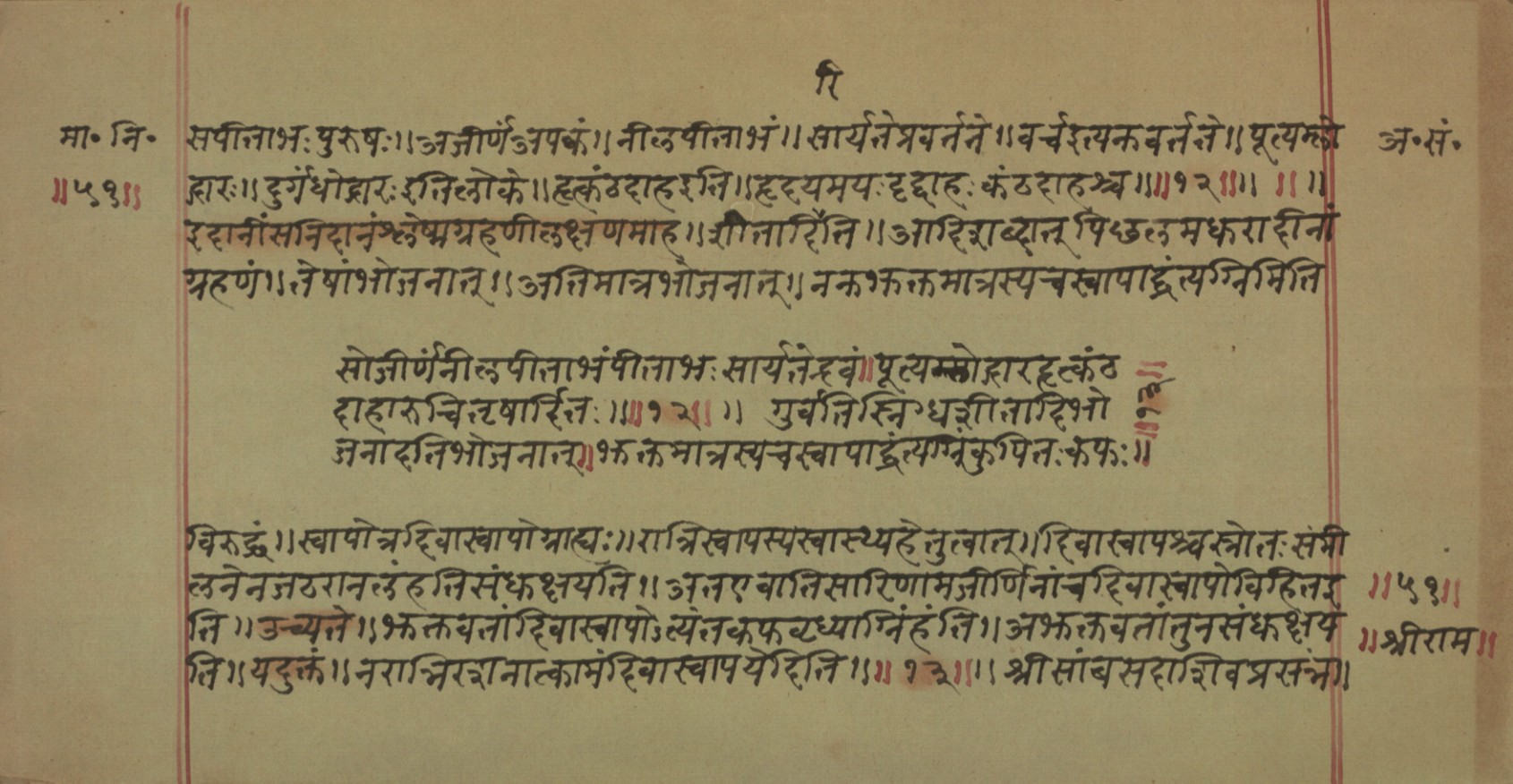
This incomplete Mādhavanidāna — 63 folios from the Poona University Collection at the Bhandarkar Oriental Research Institute — preserves the chapter on graha...
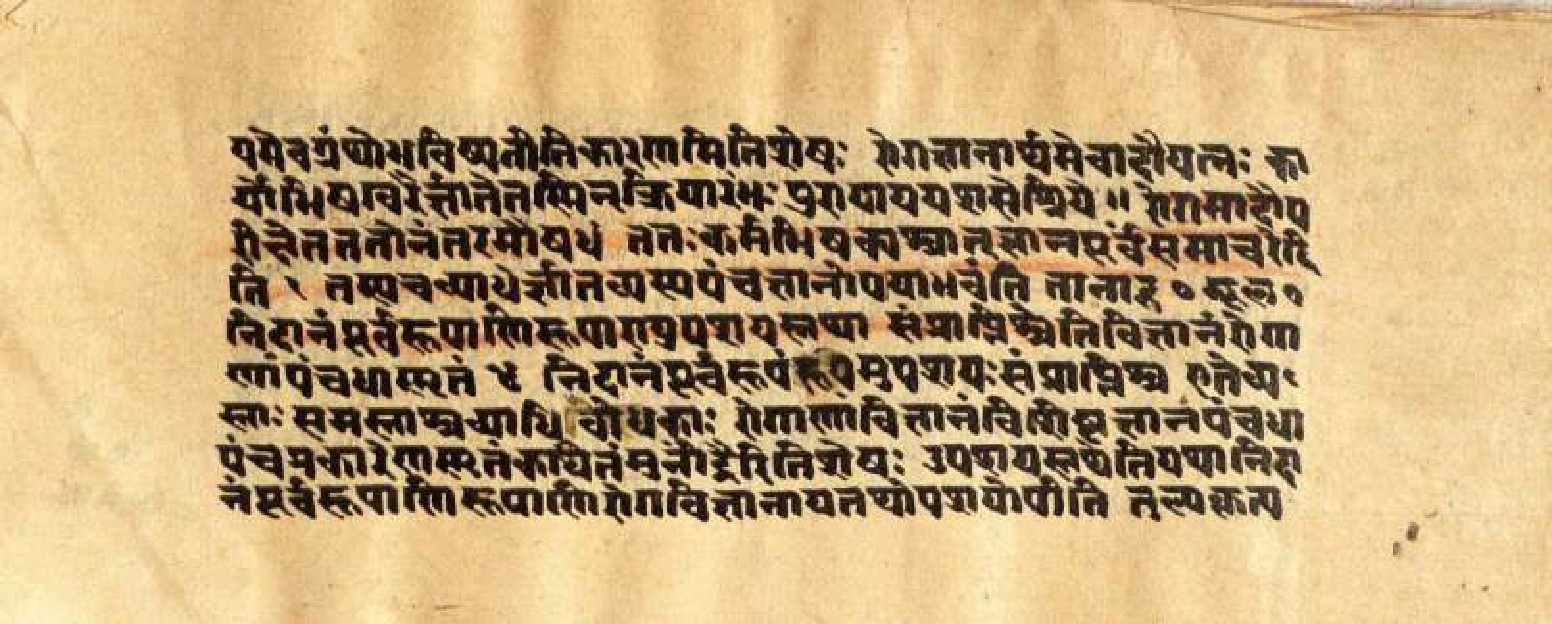
The Mādhavanidāna opens with the five diagnostic factors for understanding fever: cause, premonitory signs, symptoms, alleviation, and pathogenesis. Explore fever classified and timed.
The Laghuyogataraṅgiṇī by Trimallabhaṭṭa presents medicine as a three-party enterprise of physician, patient, and attendant. Discover diagnostic precision and the honest limits of healing.
Kūṭamudgara, a compact Ayurvedic treatise, maps the six tastes across the body's three regions, the day, and a lifetime — each stage ruled by a different dosha.
Rudra's fever manual blends pharmacy and poetry, treating acute, chronic, and irregular fevers with decoctions drawn from roots, herbs, and generations of practice.
Classical Indian metrology: the weight systems, preparation ratios, and four pillars of Ayurvedic medicine from a 17th-century pharmaceutical manual.
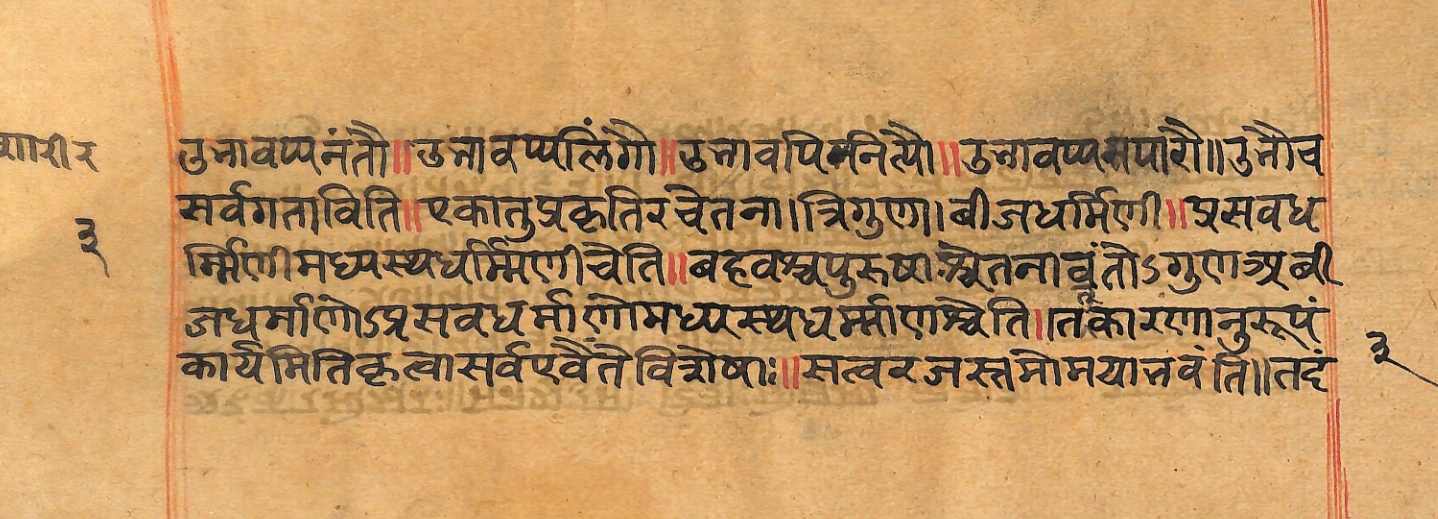
Suśruta's foundational medical text grounds anatomy in Sāṃkhya philosophy, mapping organs to cosmic principles and divine powers before descending into clinical diagnosis and treatment of reproductive disorders.
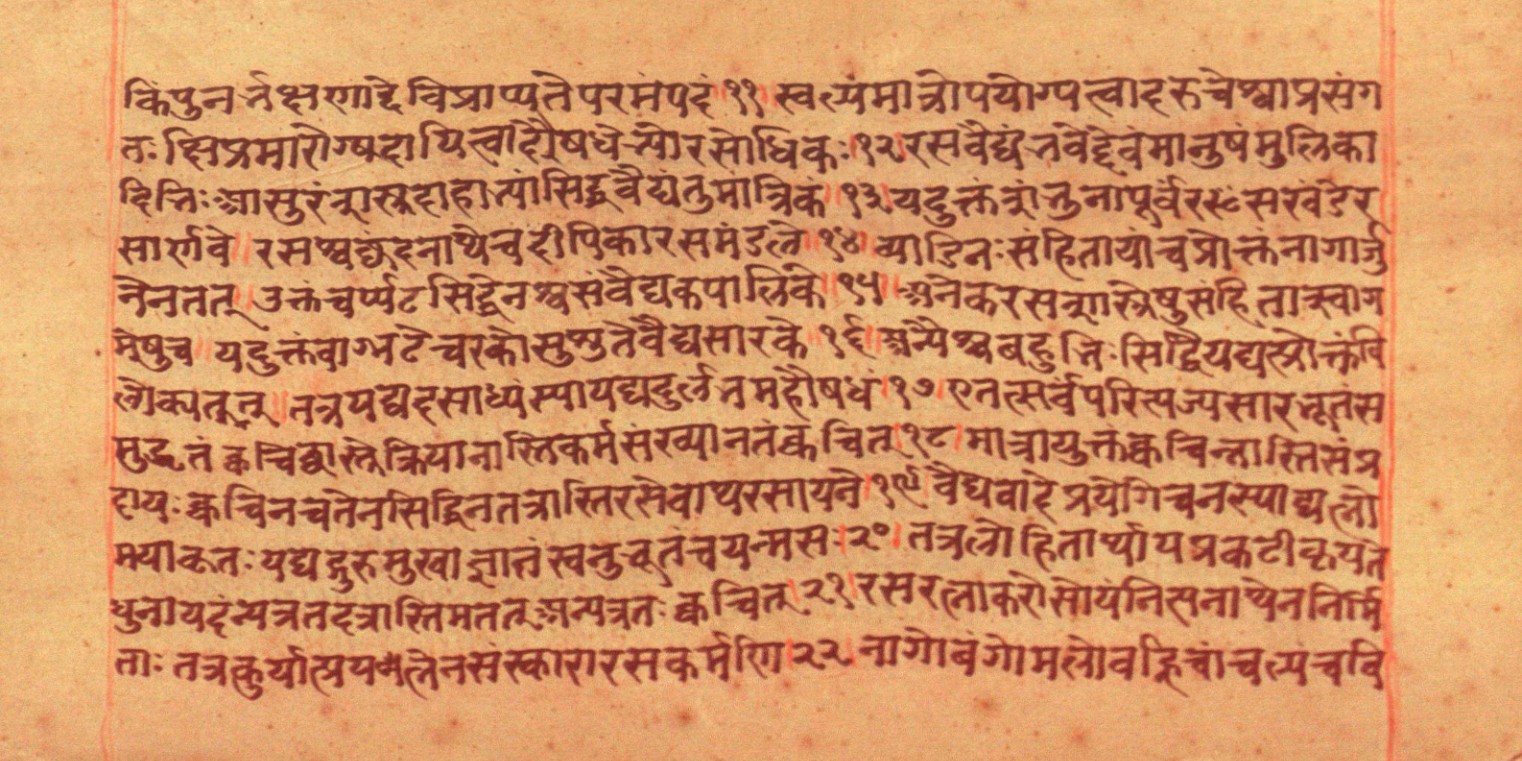
A 22-folio alchemical manual on mercury processing—defect removal, the three states of mercury (killed, swooned, bound), and the purification of mineral companions like sulfur, diamond, and mica.
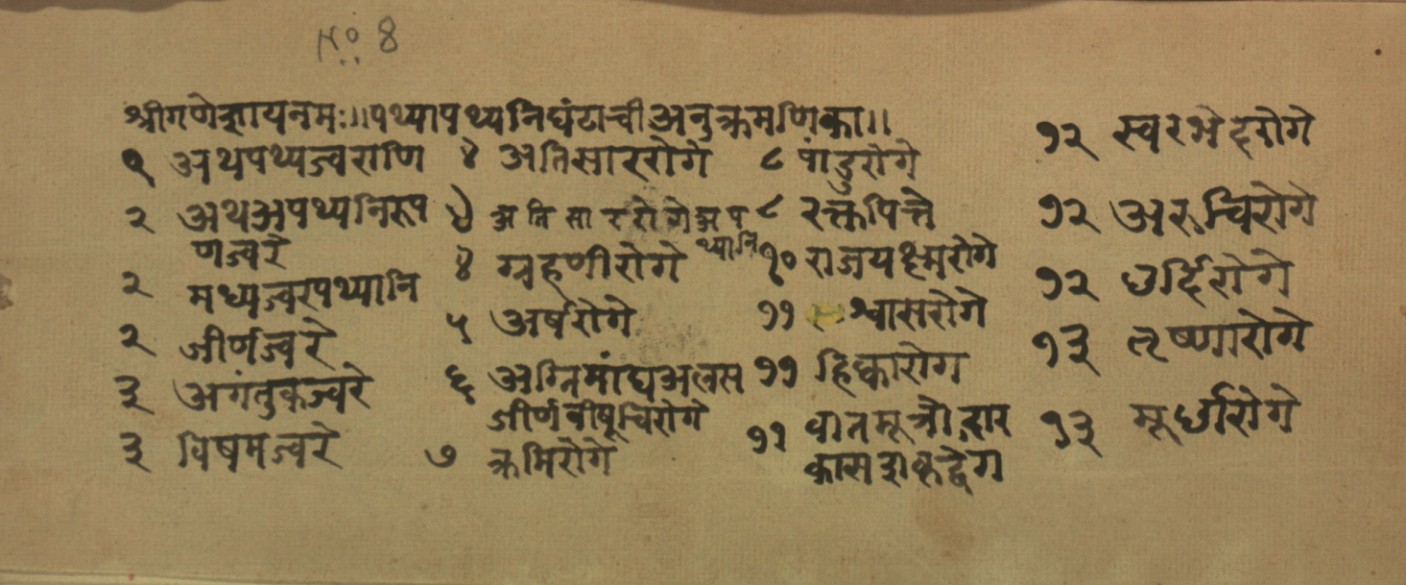
A 34-folio Ayurvedic manual organizing food and regimen by disease, from fever to gout. Its principle: remove the cause first, then diet supports the medicine.
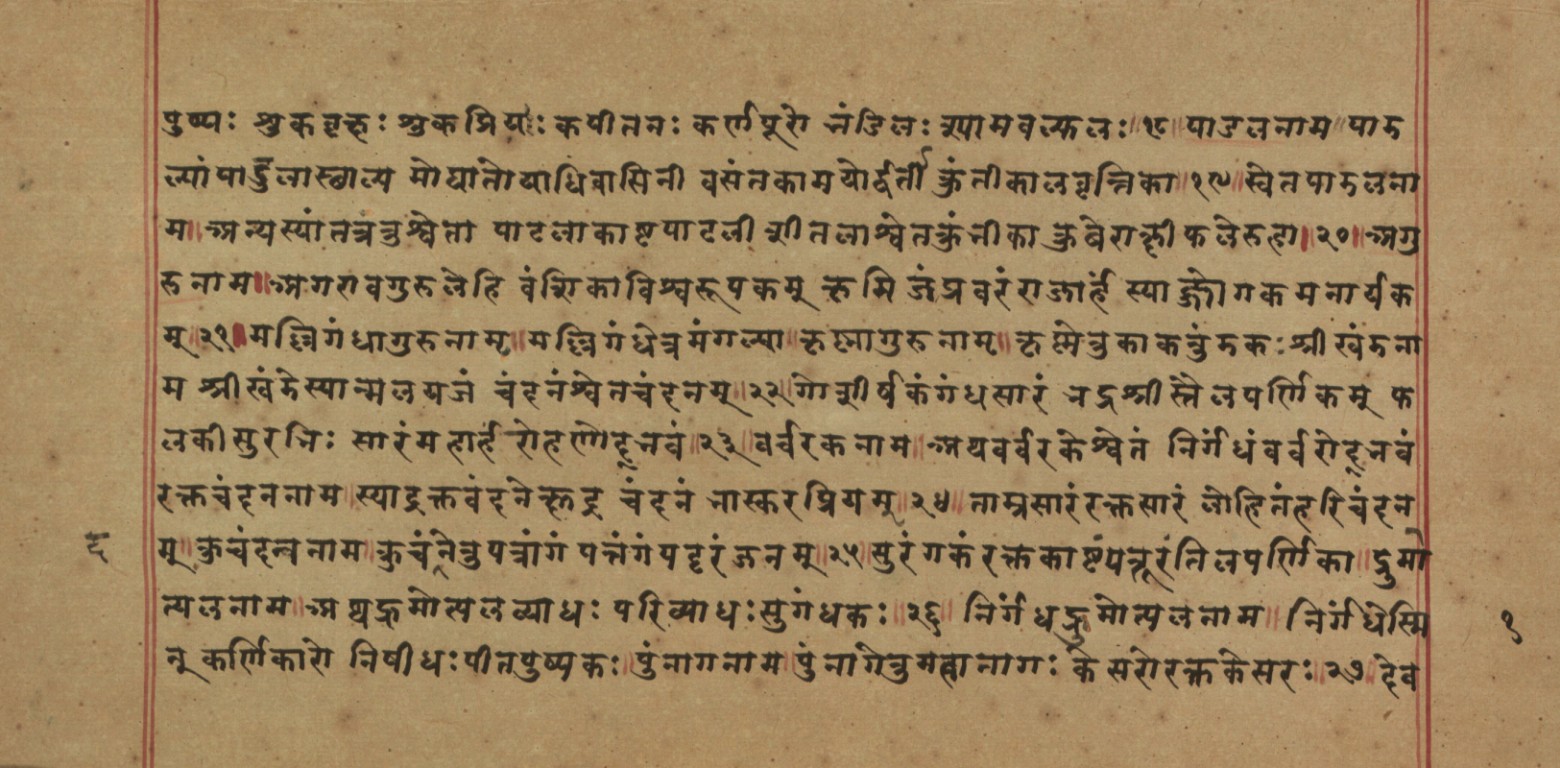
Nighaṇṭuśeṣa, Hemacandra's glossary of medicinal plants, lists the synonyms of sandalwood, myrobalans, and mango — so no herb is lost behind an unfamiliar name.
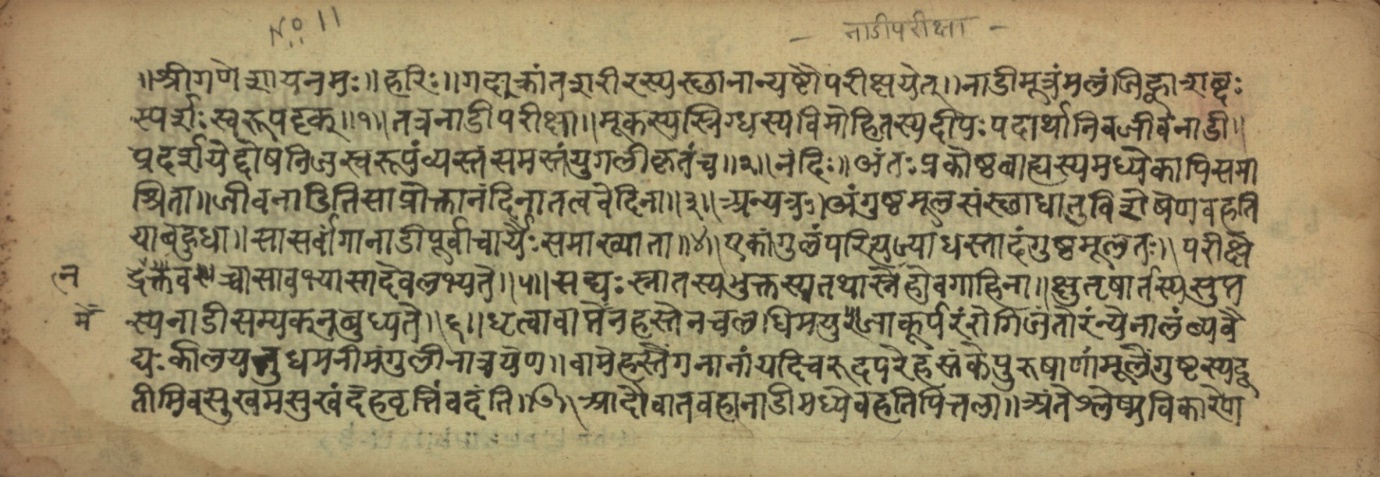
A seventh-century Ayurvedic manual on pulse diagnosis reveals how classical Indian physicians read the three humors with three fingers, and predicted death by the hour.
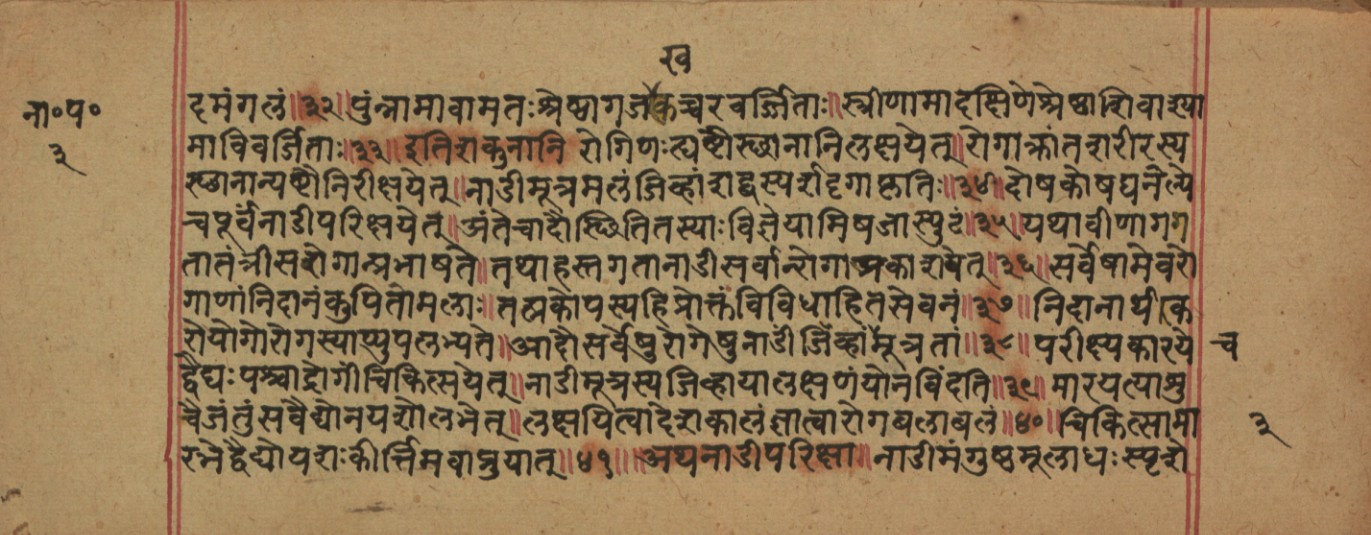
An Ayurvedic manual of the eightfold examination — pulse read like lute-strings, urine tested by dropping oil, prognostic signs of approaching death, and the physician's own code of conduct.
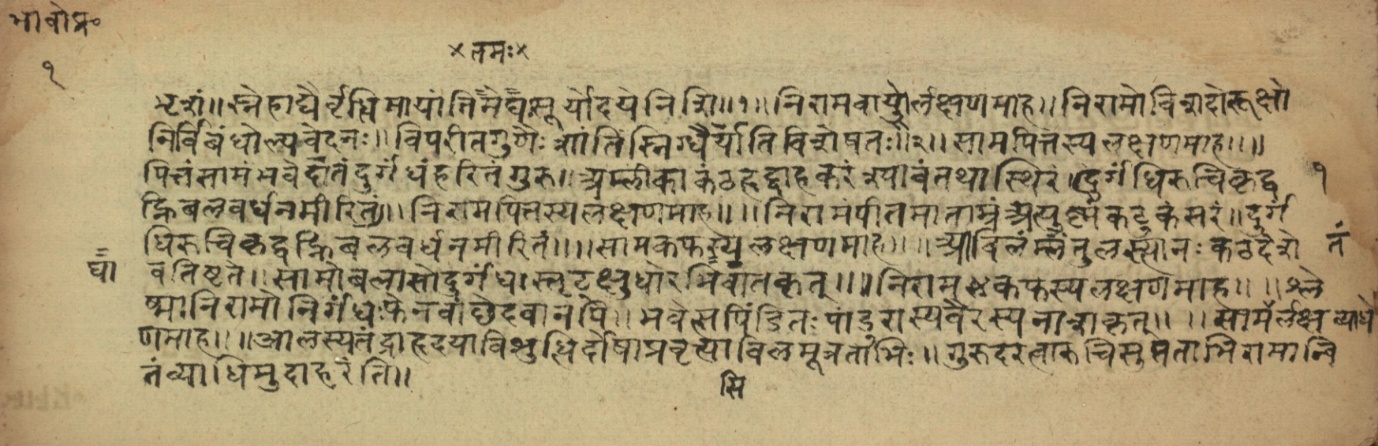
The Bhāvaprakāśa's diagnostic wisdom separates āma, the undigested and toxic, from nirāma, the properly processed and nourishing — a distinction that shapes every treatment decision.
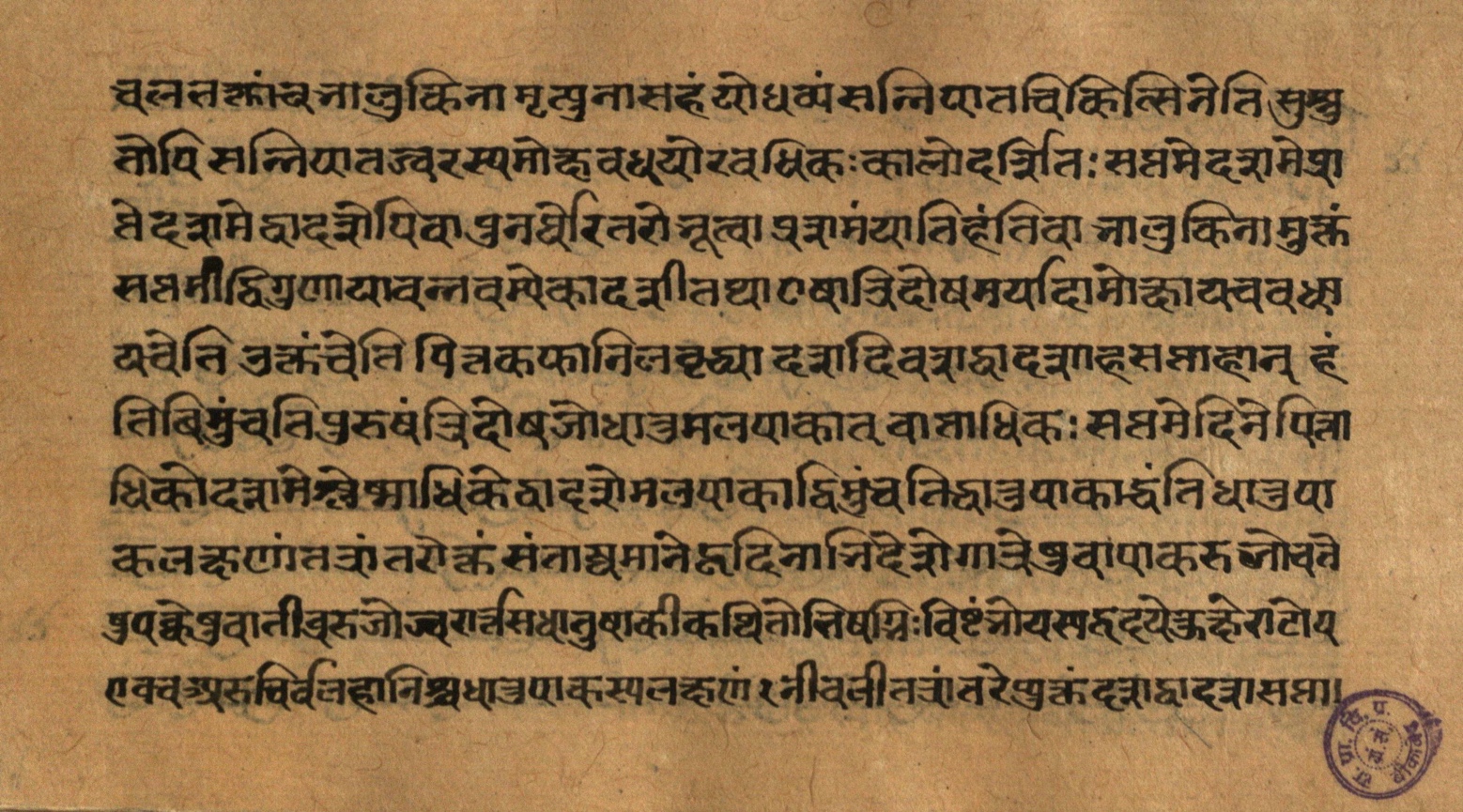
Some fevers are a diagnosis; sannipāta is a crisiss. This nineteenth-century manuscript from Bikaner — the Ātaṅkadarpaṇanidāna, a commentary on the Mādhavanidān
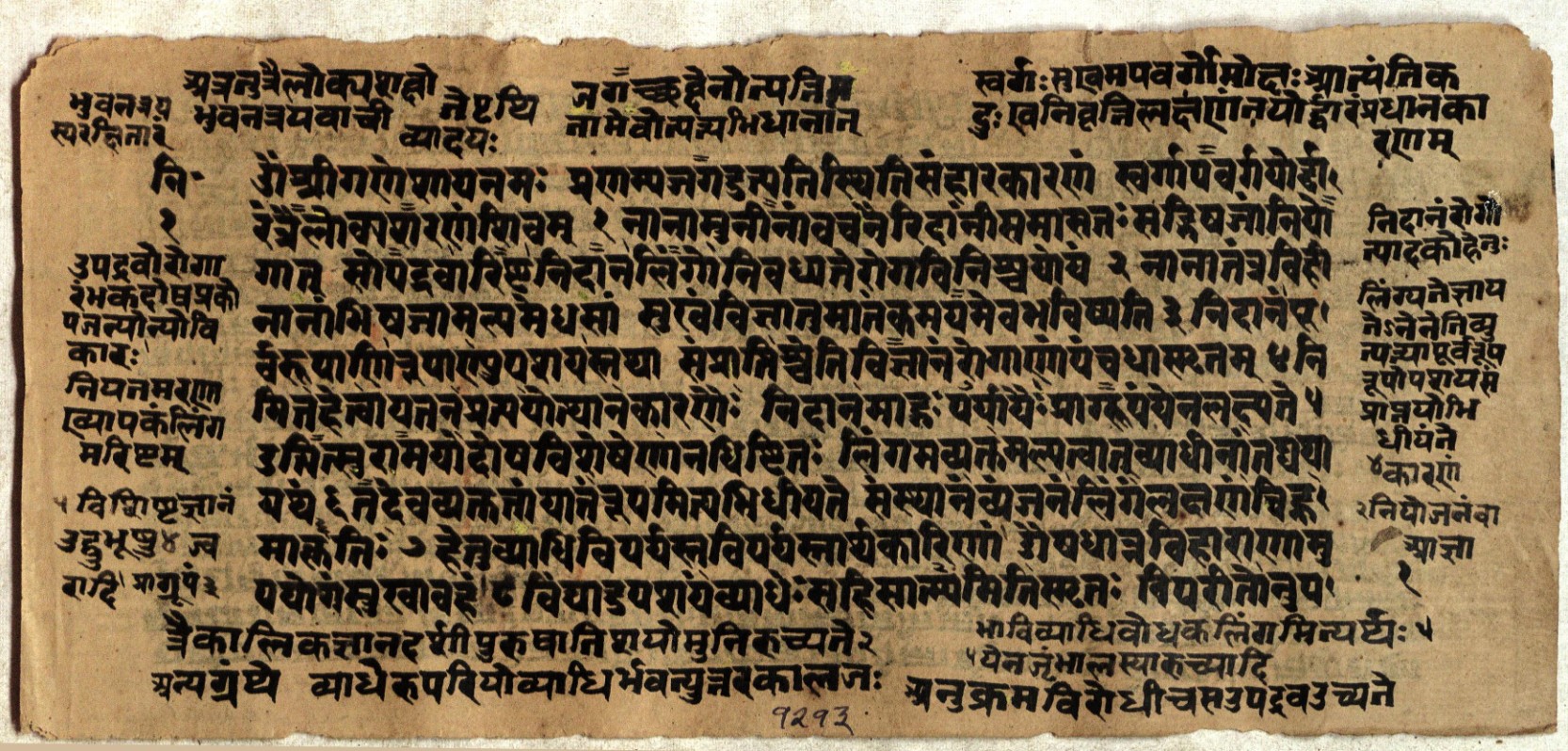
The Mādhavanidānaṃ systematized disease diagnosis into five steps: cause, premonitory signs, manifest symptoms, therapeutic test, and pathogenesis—making diagnosis teachable.
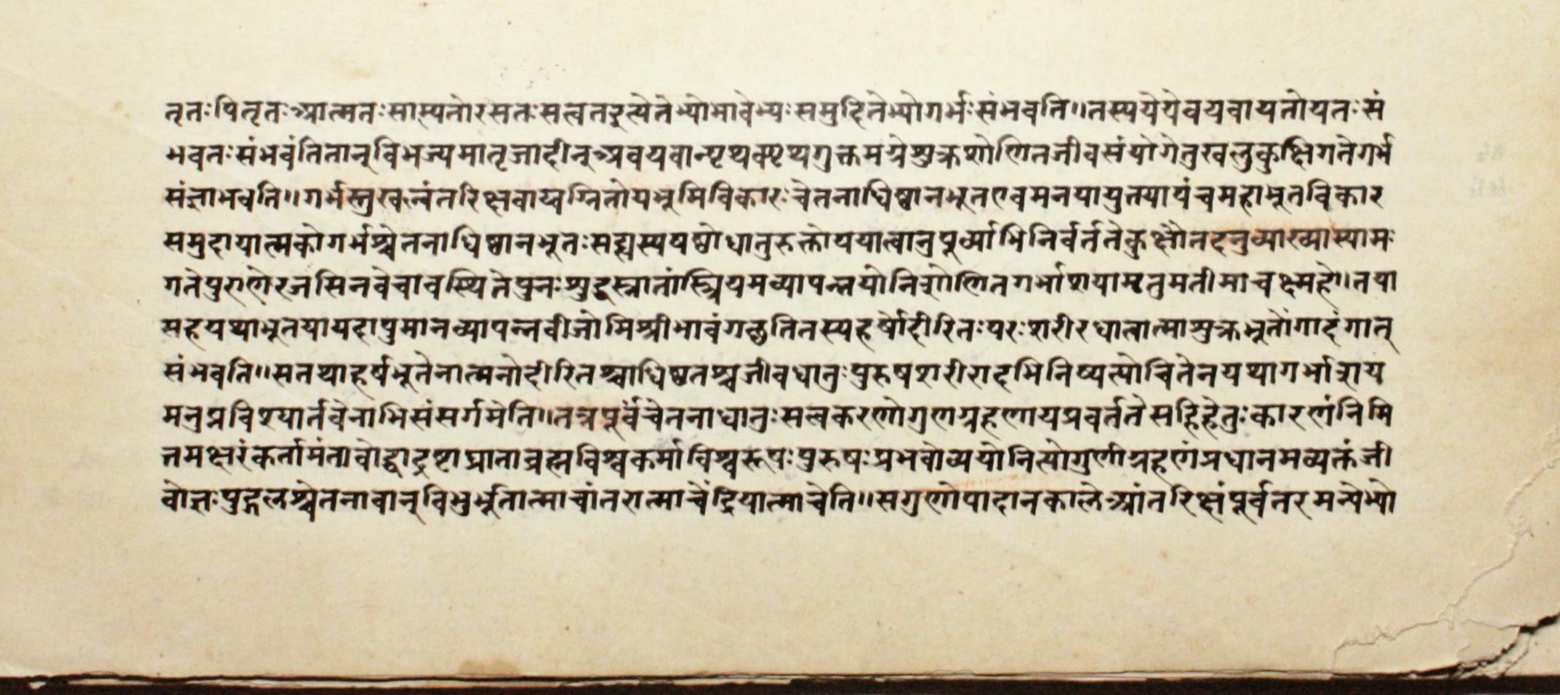
The Carakasaṃhitā describes how embryos form from five factors—father, self, adaptability, essence, and inherent nature—and develop through cosmic elements, with the fetus mirroring the universe.
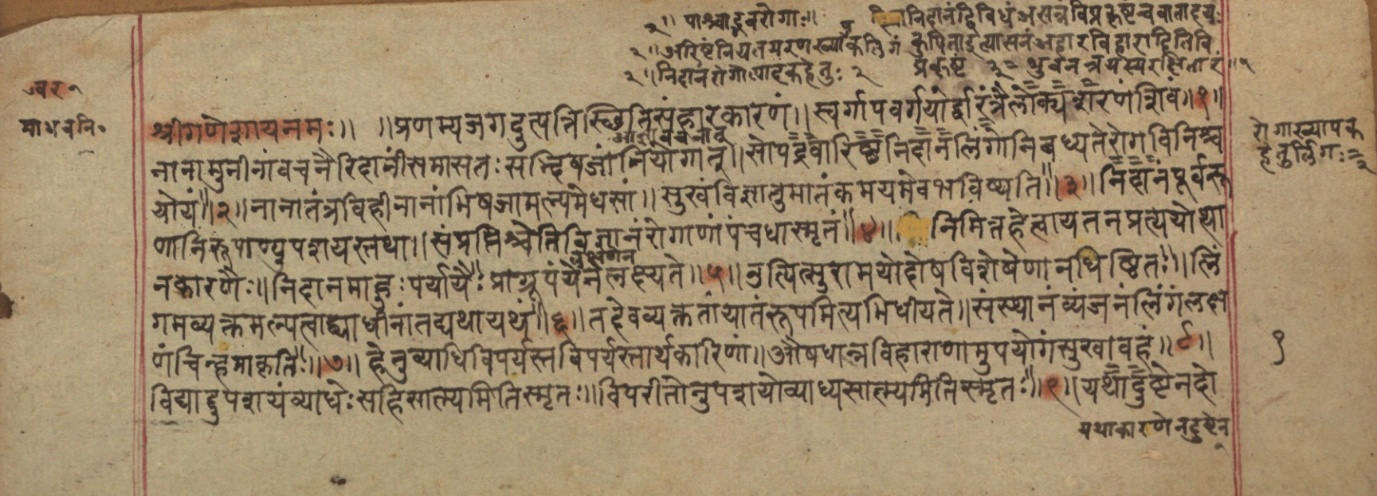
Mādhava's Mādhavanidāna organizes diagnosis into five categories — etiology, prodrome, symptom, therapeutic test, and pathogenesis — a teachable system.
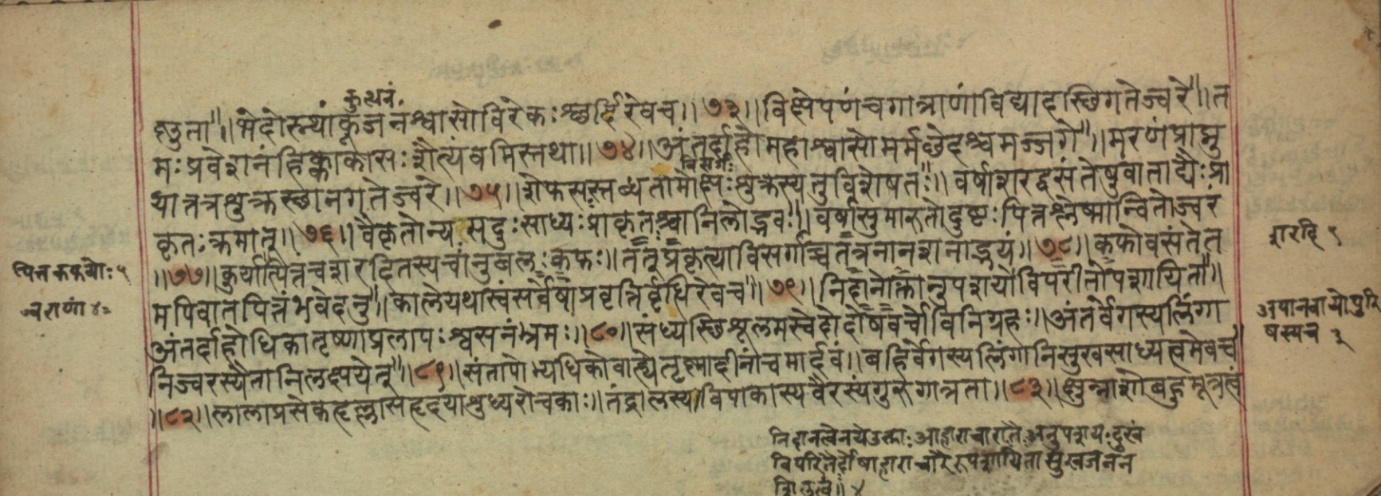
From wind-born to tridoṣic, the Mādhavanidāna classifies fever by doṣa, periodicity, tissue, and season — each sign read toward a prognosis.
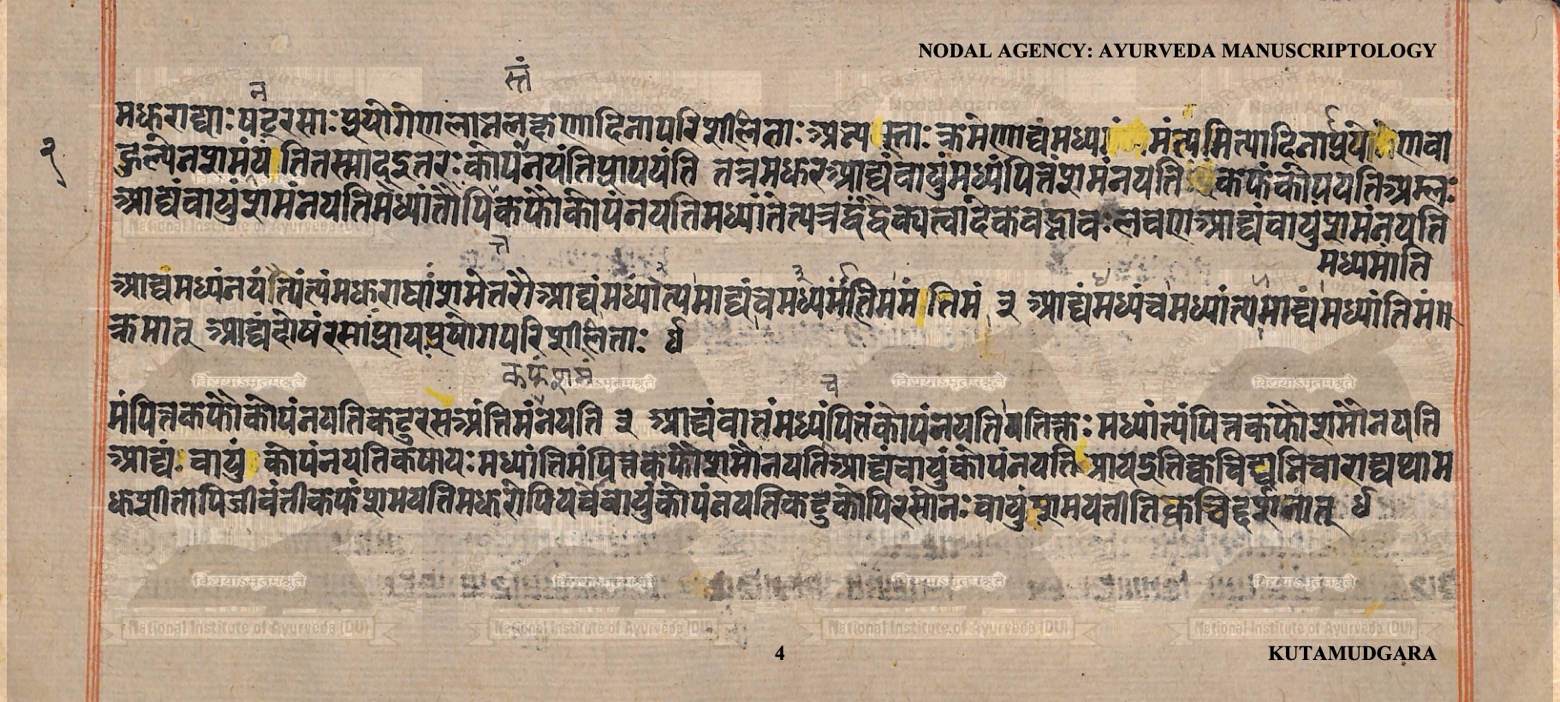
The Kūṭamudgara, a verse treatise on the six tastes and their effects on the three doṣas. Learn how sweet, sour, salty, pungent, bitter, and astringent transform the body.
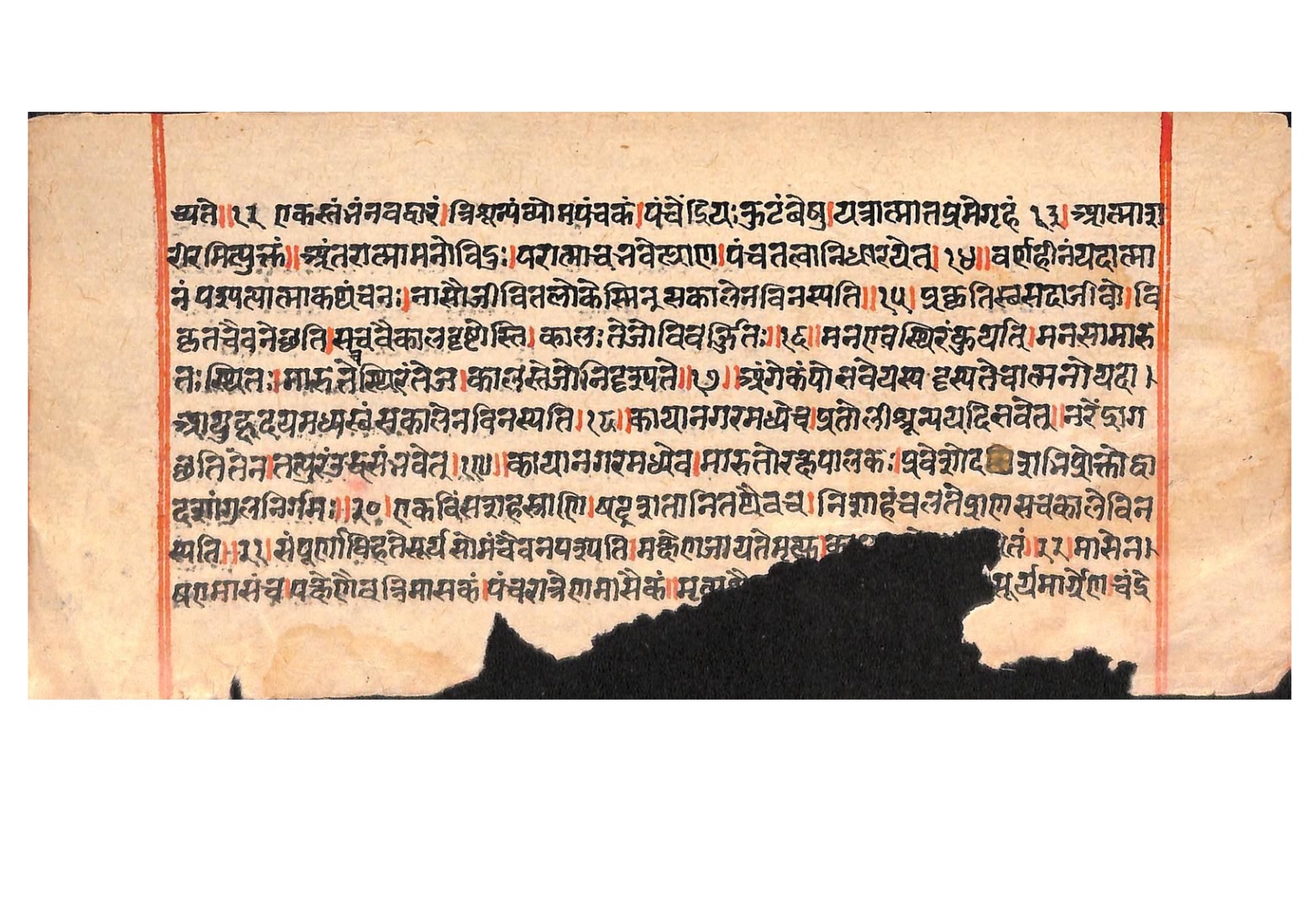
The Kālajñāna, attributed to Śambhunātha, teaches that kāla (time) is the physician's true subject. Explore prognostication, pulse diagnosis, and the temporal rhythms of disease.
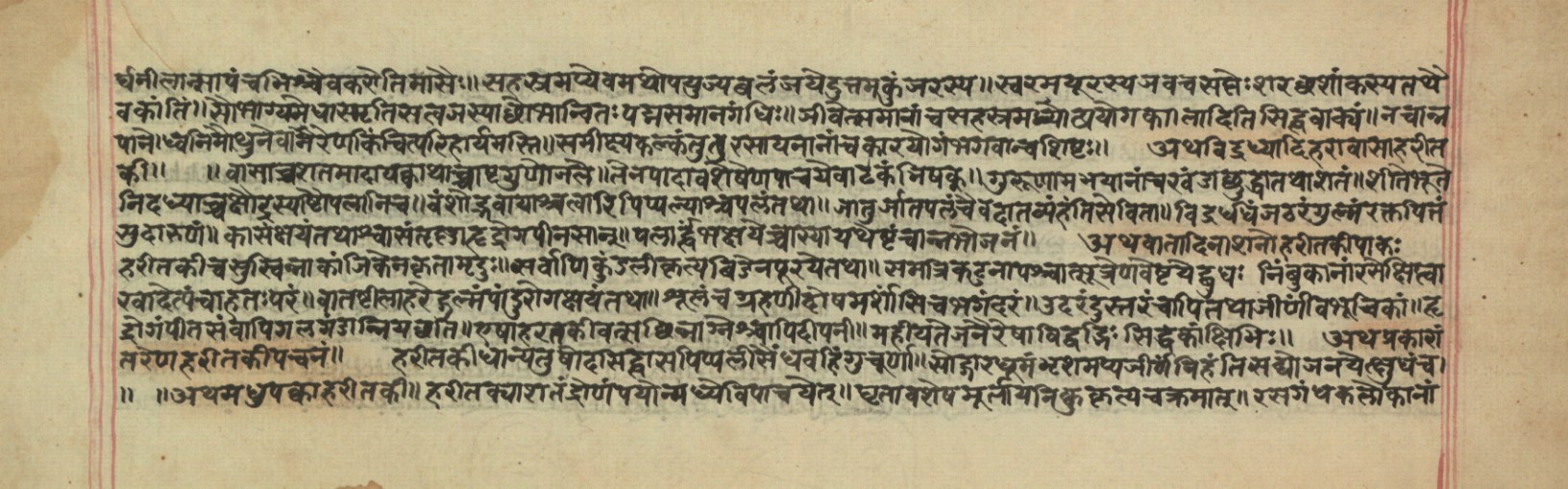
Terminalia chebula harītakī, appears in Ayurvedic medicine as a near-universal remedy. Explore the five-folio Harītakī-prayoga and its dozens of precise preparations.
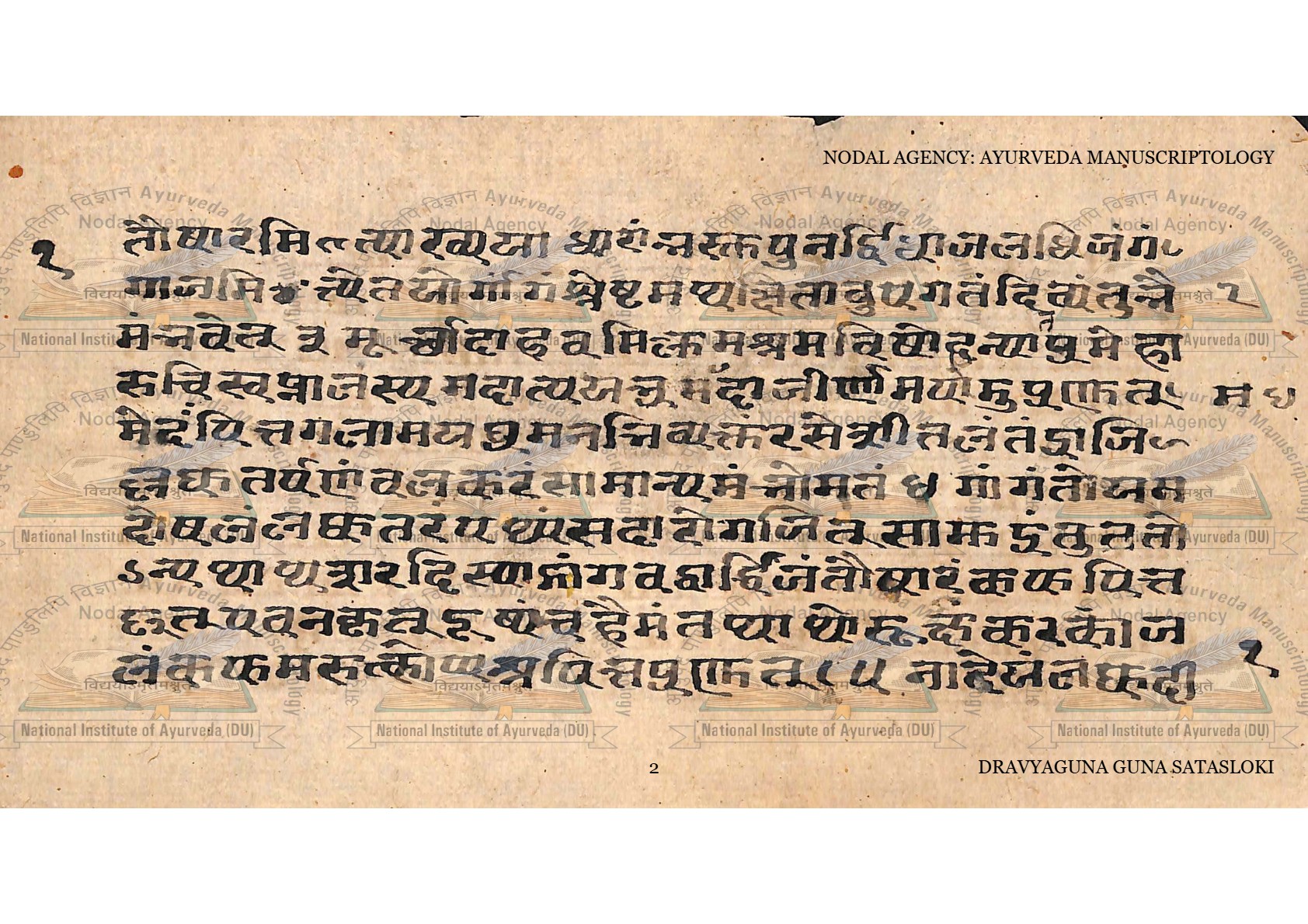
The Dravyaguṇa Śataślokī catalogs medicinal properties of foods, herbs, and substances—water, milk, grains, meats, fruits, oils—organizing the natural world into therapeutic categories.
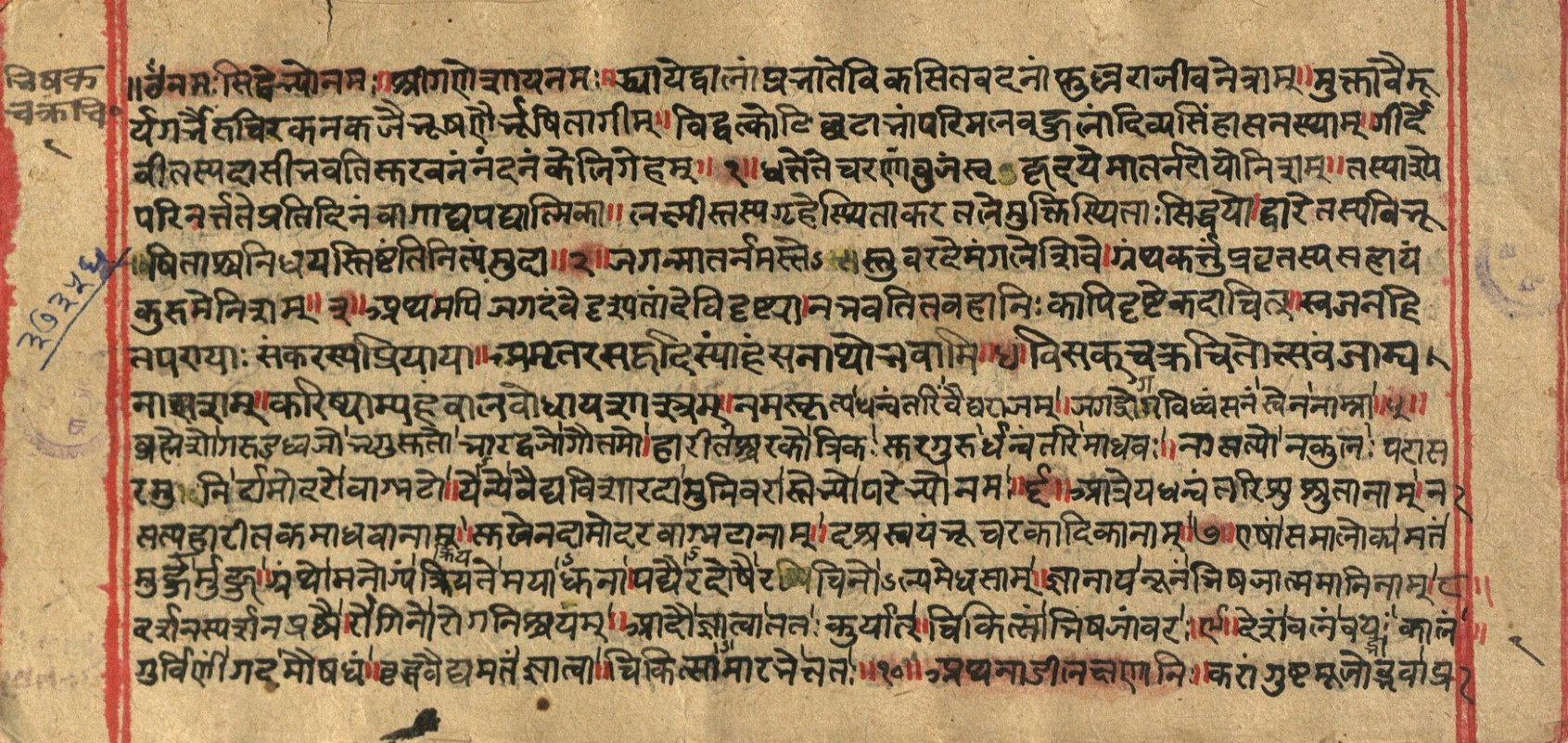
In 1945, the royal physician Haṁsarāja composed a medical treatise whose title announces its ambition: the Bhīṣakcakracittotsava, 'the festival of the physicia
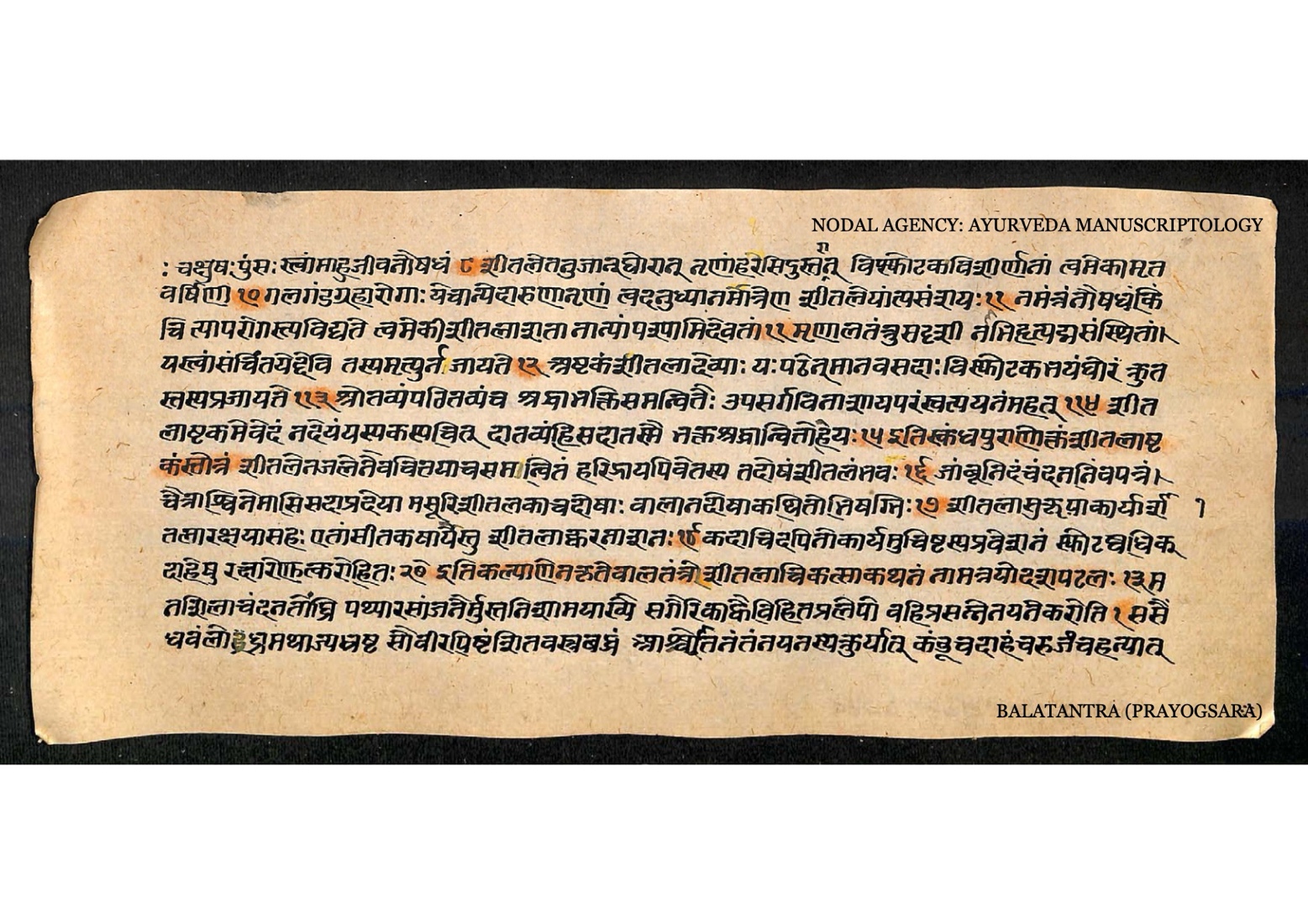
Kalyāṇa's Bālatantra pairs a hymn to Śītalā with cooling remedies for eruptive fevers — and catalogs child-seizing spirits and the wet nurse's exam.
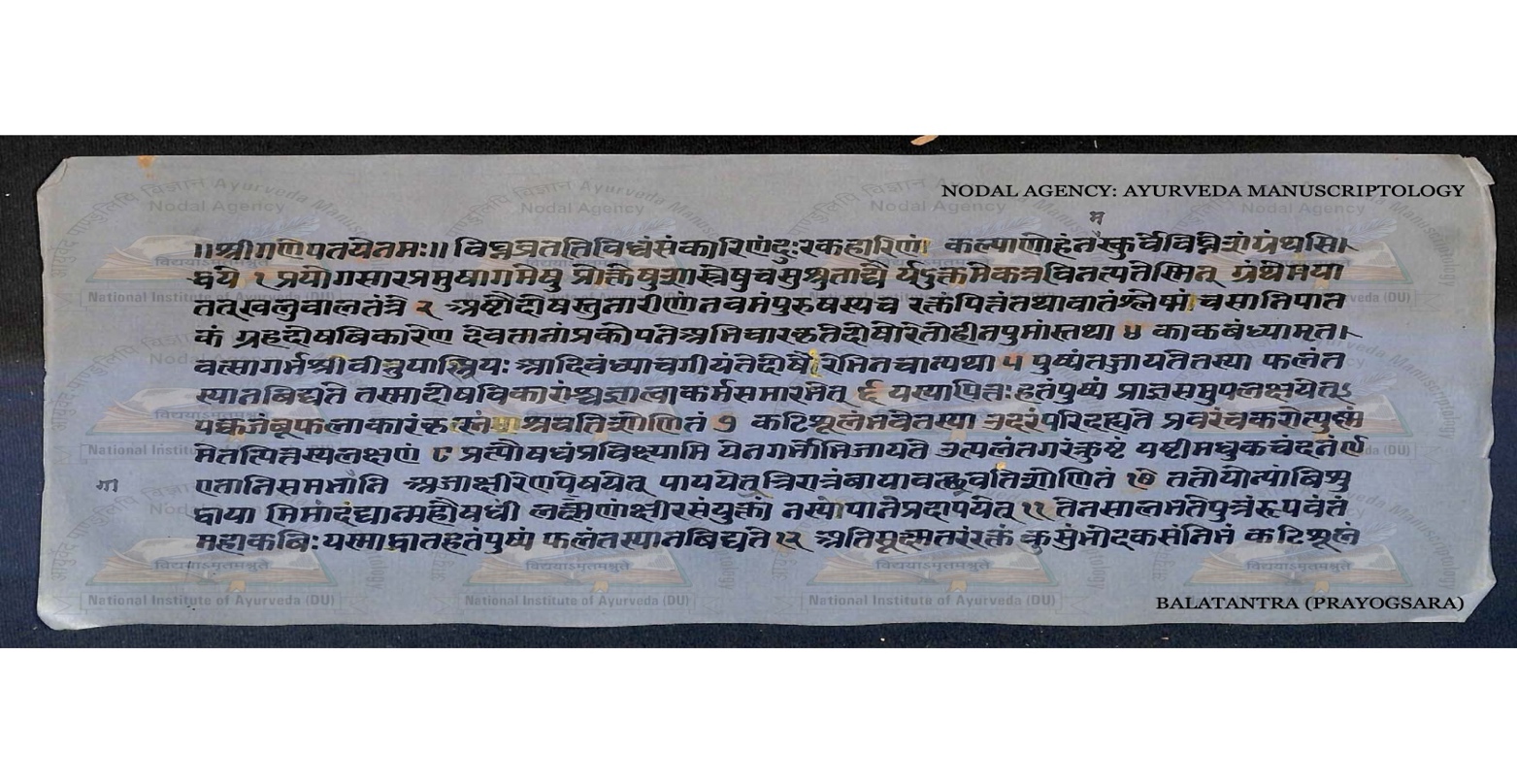
A 32-folio Ayurvedic manual of pediatric medicine — diseases unique to infants, age-graded dosing by the gunja, wet-nurse selection, and treatments for the umbilicus, mouth, and anus of a newborn.
Ayurvedic remedies for fertility, conception, and barrenness—herbs, timing, ritual, and humoral diagnosis woven into a complete system.