AyurvedaDecember 16, 2025
Reading the Pulse: Nāḍīparīkṣā's Diagnostic Art
A seventh-century Ayurvedic manual on pulse diagnosis reveals how classical Indian physicians read the three humors with three fingers, and predicted death by the hour.

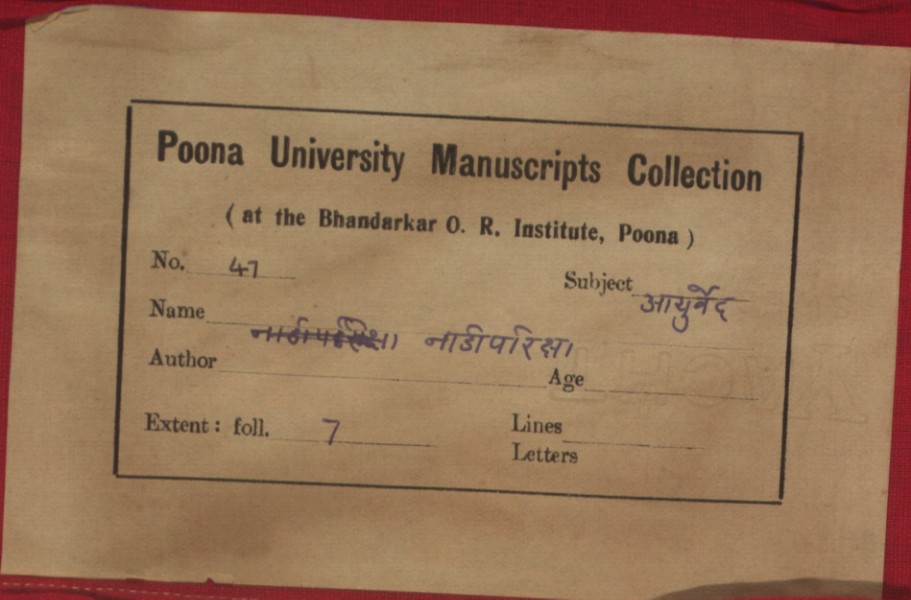
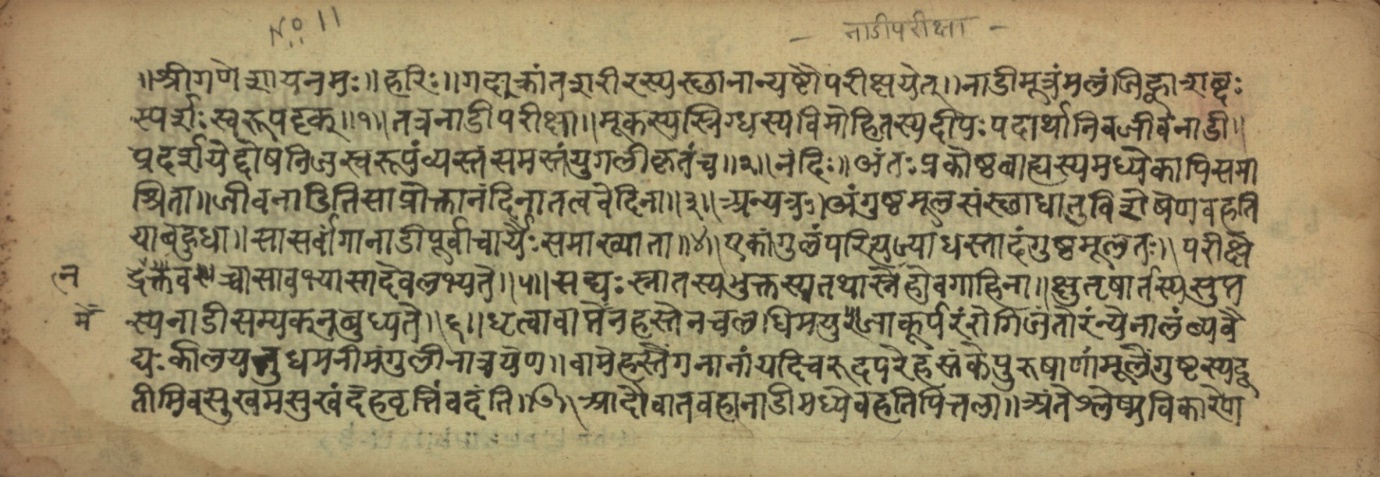
This Sanskrit manuscript from the Poona University Collection preserves a treatise on *nāḍīparīkṣā* (pulse diagnosis), a specialized branch of Āyurvedic medicine. The text systematically delineates methods for examining the radial pulse at the wrist, correlating specific pulse characteristics—such as location, temperature, movement patterns, and rhythm—with the three doṣas (vāta, pitta, kapha) and prognosticating mortality timelines measured in *praharas* (three-hour intervals) and *yāmas* (six-hour intervals). Notable features include its detailed metrical verses (ślokas) describing pathological pulse patterns (e.g., *ḍamarūkopama* resembling a drum, *cakra* like a wheel) and the influential attribution to Nandi, reflecting early medieval Āyurvedic diagnostic theory. The manuscript's practical instructions for proper examination conditions and its integration of anatomical precision with humoral pathology exemplify the sophisticated empirical foundations of classical Indian medical literature.