
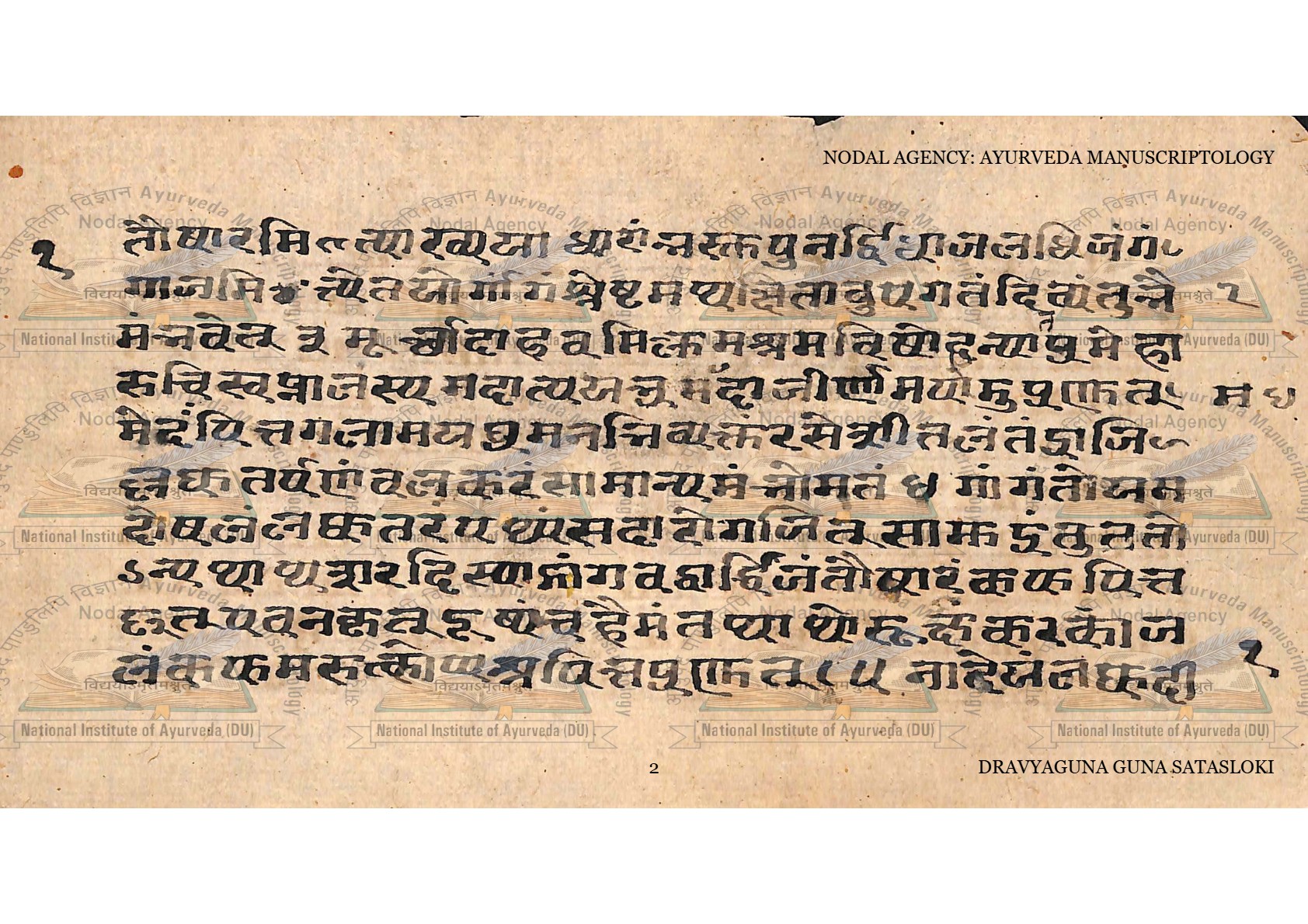
Some Ayurvedic texts are vast hospitals; others are a pantry. The Dravyaguṇa Śataślokī by Trimalla is the latter — a verse compendium of the properties (guṇa) of substances (dravya), arranged for easy recall. Its thirty-two folios, scribed by Lakṣī Nārāyaṇa and preserved by the Swami Lakshmiram Trust, classify the everyday world into medicine.
The Medicine of Water
Water receives a detailed taxonomy. Rainwater is rough, sweet, and cool; Gaṅgā water destroys kapha and vāta; seawater is sharp, alkaline, and tridoṣic; well water is heavy and pitta-aggravating. Hot spring water is phlegmatic and rough. The text prescribes specific waters for conditions from fever and fainting to diabetes and asthma, and warns that sea water and rainy-season water aggravate kapha and pitta.
Ganga water is phlegm-dose-causing, always disease-conquering; sea water is to be avoided. Water from wells and ponds is rough, destroys kapha and vata, stimulates digestion, aggravates pitta, and is heavy.
Milk, Ghee, and the Dairy Shelf
Dairy is treated with equal precision. Cow's milk is a rejuvenative that treats cough, asthma, fever, and bleeding disorders while promoting strength and intellect; goat's milk alleviates consumption and diarrhea but increases wind and phlegm. Buttermilk, when cold, is tridoṣa-alleviating — otherwise it produces doṣas. Cow ghee conquers all three doṣas, while buffalo ghee is heavy and kapha-increasing.
Cow's milk is sweet, unctuous, strength-giving, heavy, and breast-milk forming. It alleviates cough, asthma, intoxication, fever, fatigue, madness, difficult urination, and bleeding disorders.
The text also notes that fresh butter is cooling and blood-pitta-destroying, and describes different buttermilks: churned buttermilk destroys vata and kapha, while sweet buttermilk pacifies pitta but increases kapha. Each dairy product has its place in the therapeutic cabinet.
Grains and Legumes
The compendium continues through mung beans (cooling, pitta-reducing, promoting semen), wheat (sweet, unctuous, heavy, reducing pitta and vata), barley (rough, cold, vata-increasing), and black gram (aphrodisiac, nourishing, constipating). Each grain has distinct actions on the doshas and particular indications. The text is precise about which grain addresses which imbalance.
Meats and Fish
The meat section classifies by animal and by property. Deer meat is phlegm-destroying, slightly heating, and thirst-relieving. Goat meat is unctuous and nourishing. Sheep meat is heavy, heart-pleasing, promotes fat, and destroys wind. The text then covers various birds — partridge, quail, sparrow, crow, crane — each with specific effects. Fish and other aquatic creatures are treated separately, with tortoise noted as promoting virility and fish as alleviating consumption.
From Fruits to Spices
Mango (unripe) destroys the three doṣas and is very astringent; ripe mango is vāta-destroying, cold, heavy, nourishing to flesh, and aphrodisiac. Grapes destroy intoxication and contain worms; dates equal grapes in conquering fatigue and pitta. The text moves through tamarind (sour, alleviates pitta and blood), citron (vata-destroying, its bark heavy and sweet), and concludes with the pungent substances: dry ginger (unctuous, light, hot, alleviates vata and kapha, stimulates digestion), black pepper (aphrodisiac, destroys kapha and vata), and long pepper (pungent, astringent, hot).
Dry ginger is unctuous, pungent, with sweet post-digestive effect, unctuous, light, and hot. It alleviates vata and kapha, relieves obstruction, colic, cough, and asthma, stimulates digestion.
Oils and Metals
Sesame oil treats phlegm and wind disorders, promotes intelligence and virility, aids digestion, and benefits hair and complexion. Mustard oil treats piles, itching, worms, and skin diseases. Neem oil conquers worms, skin diseases, wounds, and phlegm. The text concludes with metals: gold is cooling and intellect-promoting; silver treats pitta and diabetes; iron is aphrodisiac.
The compendium is systematic without being dry. It presents the entire natural world as a pharmacy, where every substance — from rainwater to iron — has a specific medicinal action and a place in the healer's cabinet. The Dravyaguṇa Śataślokī is proof that knowing what to do does not require a massive treatise; a skilled observer with a good memory for verse can organize a lifetime's worth of practical knowledge into a slender book.