AyurvedaAugust 16, 2026
Vaidyavallabha: A Fever Formulary by a Poet-Physician
Vaidyavallabha: fever formulas, universal remedies, and a physician-poet's lineage preserved in 1850.

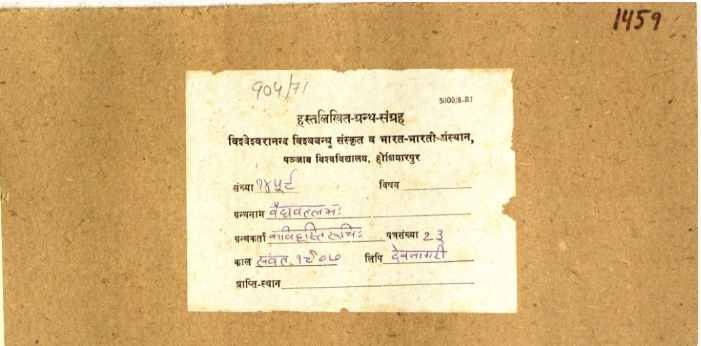
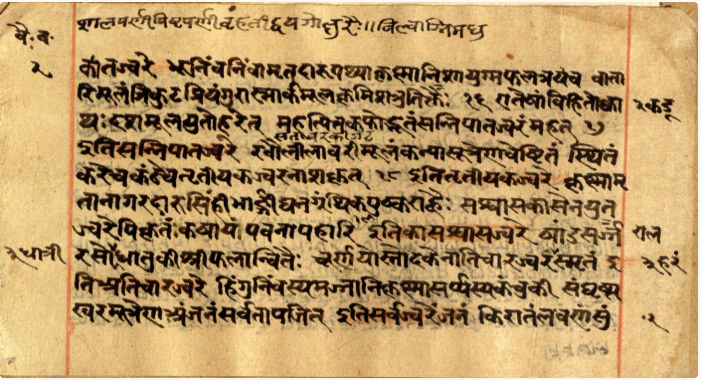
This 15th-century Sanskrit medical manuscript, titled *Vaidyavallabha* and composed by the physician-poet Kavihastiruci in Saṃvat 1907 (circa 1850 CE), represents a significant contribution to Ayurvedic therapeutics, specifically focusing on the classification and treatment of fever (*jvara*). The text systematically delineates diagnostic protocols and pharmacological remedies for various fever types—including *vāta*, *pitta*, *kapha*, *sannipāta*, *vātapiṭṭa*, *kaphapitta*, *śīta*, *cāturdhika*, *tṛtīyaka*, and *ekāntara* fevers—employing complex polyherbal formulations, decoctions (*kaṣāya*), medicated ghee (*ghṛta*), nasal preparations (*nasya*), fumigations (*dhūpa*), and external applications (*lepa*). The manuscript's structured versification and extensive materia medica, featuring ingredients such as *kaṇṭakārī*, *śuṇṭhī*, *mustā*, *nimba*, *bhṛṅgarāja*, and *daśamūla*, demonstrate sophisticated Ayurvedic nosological categorization and therapeutic precision characteristic of classical Indian medical literature.