AyurvedaJuly 13, 2026
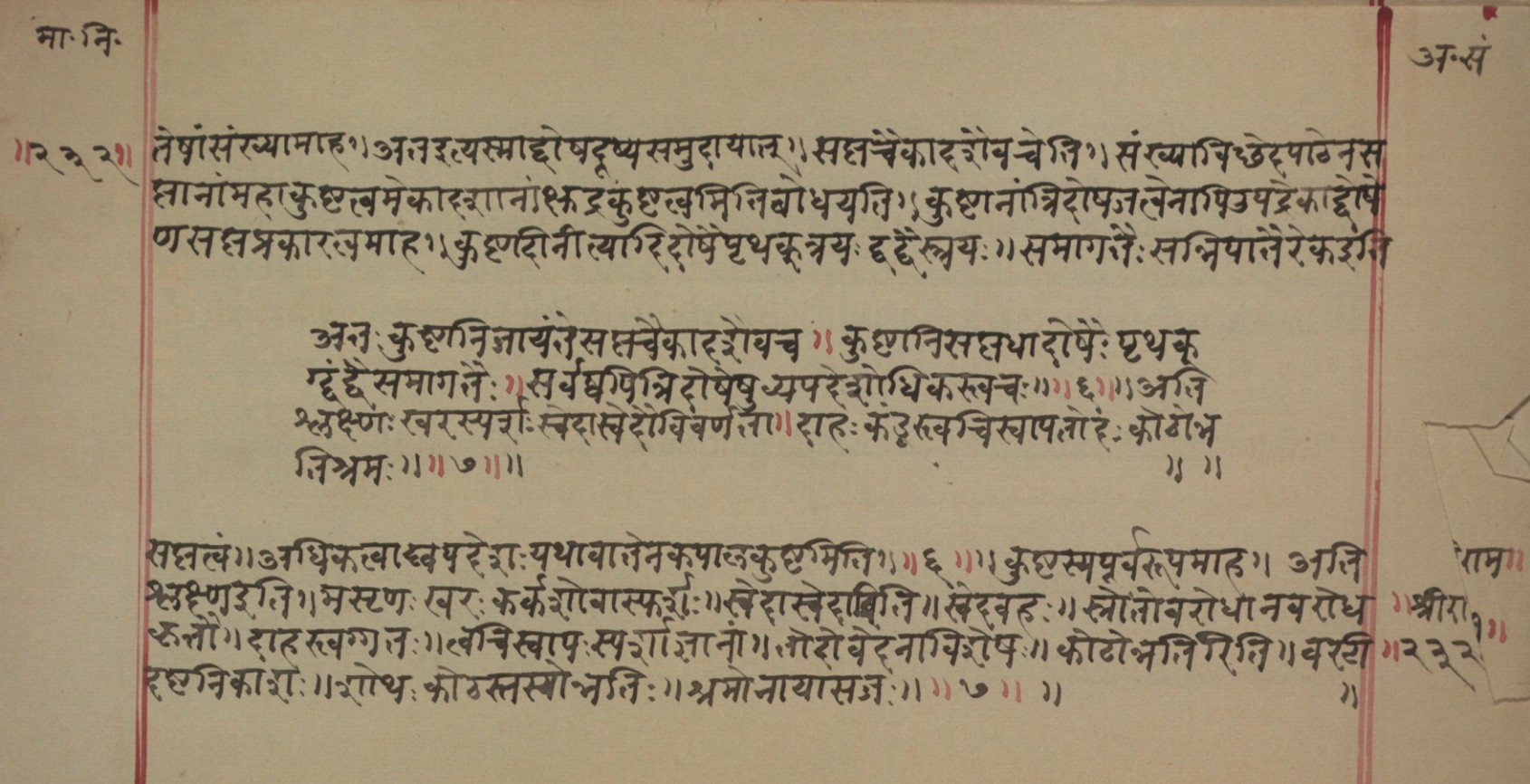
Mādhavanidāna's Kuṣṭha: Leprosy, Contagion, and Skin
The same Mādhavanidāna manuscript that dissects grahaṇī also carries one of the boldest chapters in classical Indian medicine: the nidāna of kuṣṭha, the grea...

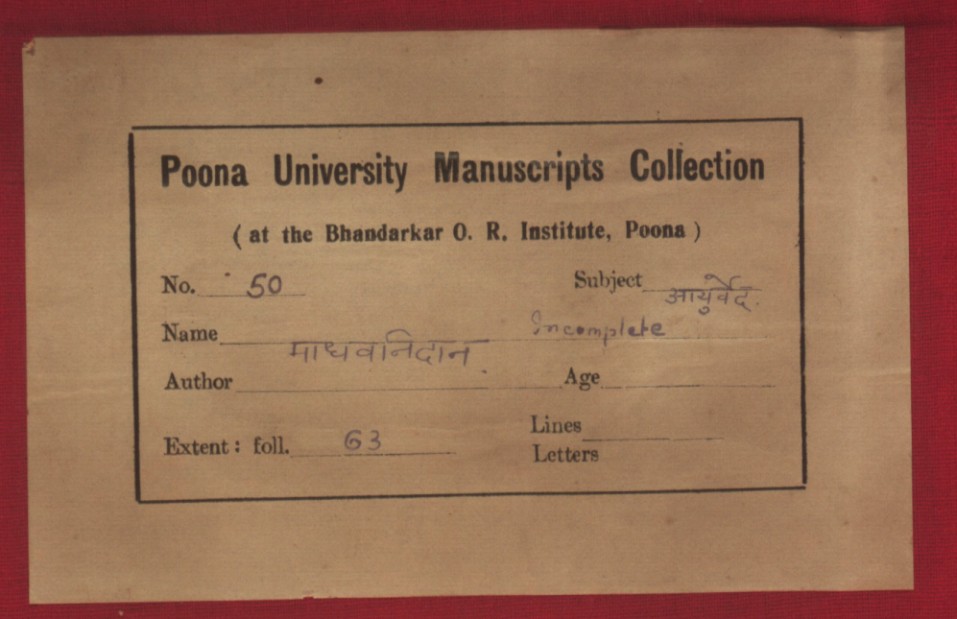
This incomplete manuscript from the Poona University Collection preserves a significant portion of the *Mādhavanidāna*, a foundational Ayurvedic text attributed to Mādhavakara (c. 7th–8th century CE), specifically its third chapter (*grahaṇīnidāna*) on the etiology and symptomatology of grahaṇī disorders (malabsorption syndromes). The sample reveals detailed clinical observations distinguishing three dosic variants—vāta, pitta, and kapha grahaṇī—along with the critical *saṅgrahaṇī* (chronic) and *ghaṭīyantra* (incurable) subtypes, characterized by distinctive stool patterns, timing of symptoms, and ominous signs such as intestinal gurgling resembling water-pouring (*jala-ghaṭī-dhvani*). The text exhibits typical Nidāna-śāstra structure, enumerating etiological factors (improper diet, daytime sleep, incompatible foods), prodromal symptoms, and pathognomonic features, while the marginal annotations and interlinear glosses suggest active scholastic engagement with this influential diagnostic treatise.
The same Mādhavanidāna manuscript that dissects grahaṇī also carries one of the boldest chapters in classical Indian medicine: the nidāna of kuṣṭha, the grea...
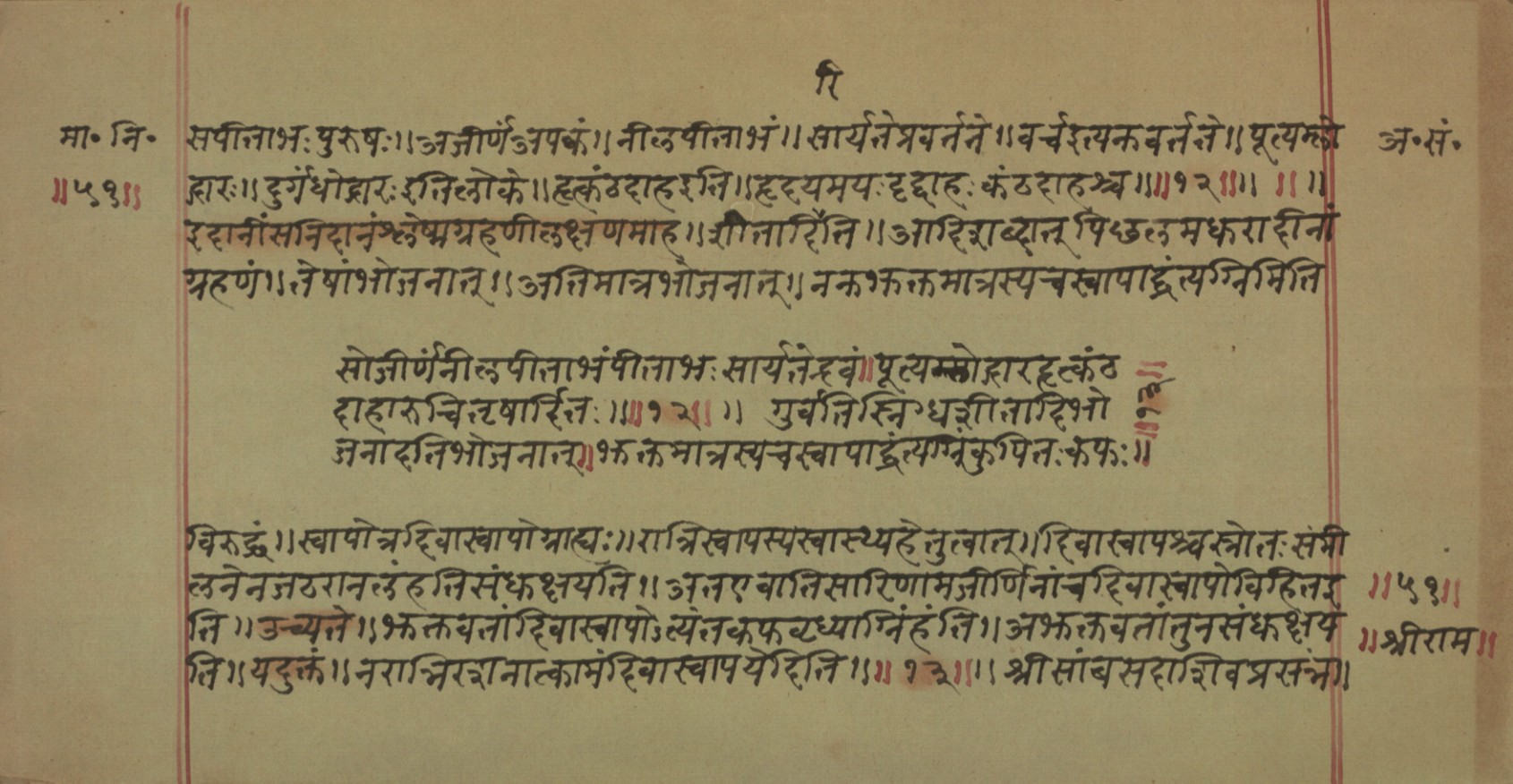
This incomplete Mādhavanidāna — 63 folios from the Poona University Collection at the Bhandarkar Oriental Research Institute — preserves the chapter on graha...