AyurvedaAugust 14, 2026
Eat by the Season: Vaidyasarvasva's Six-Season Regimen
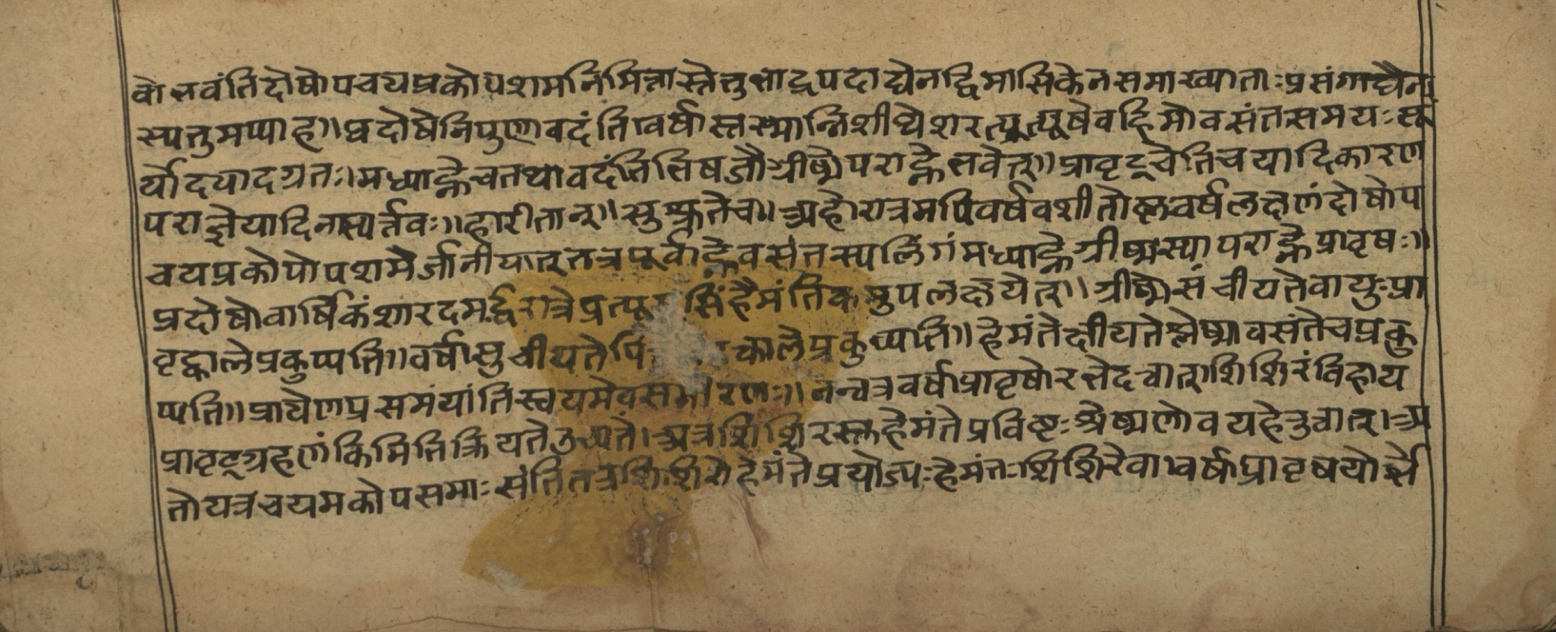
Kāśīrāma's Vaidyasarvasva maps every season to a doṣa — vāta in the rains, pitta in autumn, kapha in spring — with food, drink, and water rules for each.

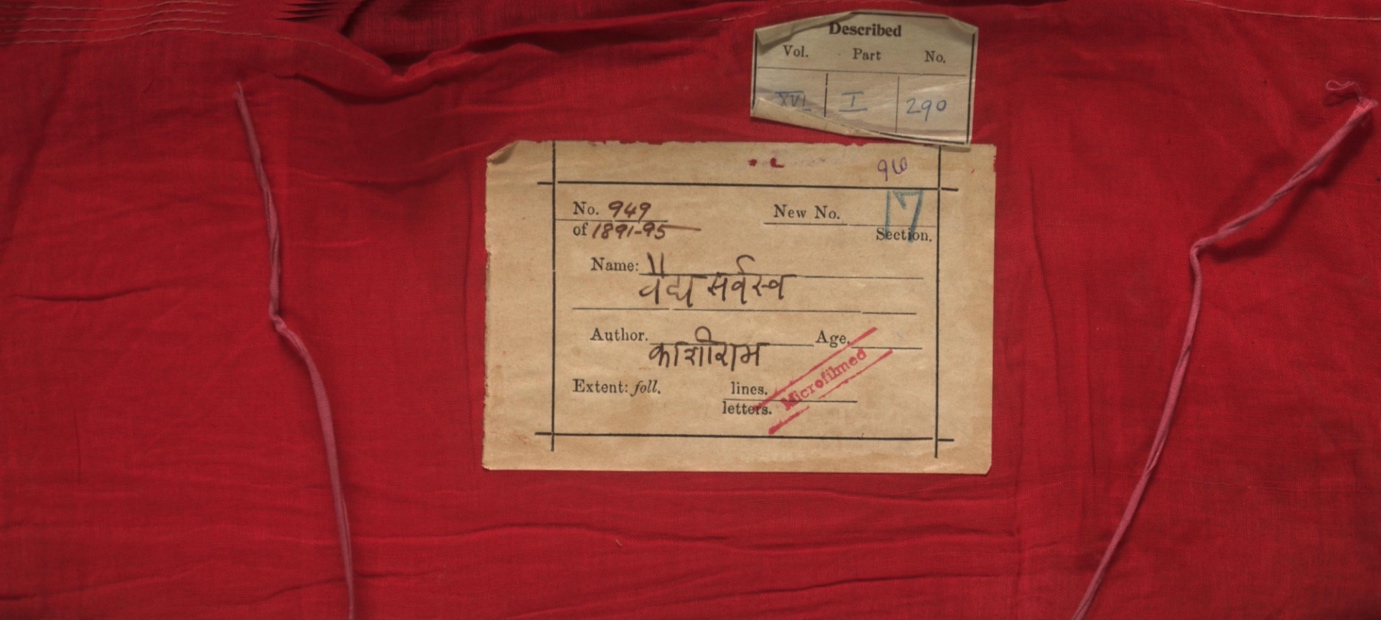
This Sanskrit medical manuscript, titled *Vaidya Sarvasva* (The Entirety of Medicine) by Kāśīrāma, constitutes a comprehensive Ayurvedic treatise preserved in the Bhandarkar Oriental Research Institute collection (No. 949 of 1891–95). The excerpted folio presents detailed discussions of doṣa pathology, including the sixfold classification of morbid humors (ṣaḍdoṣabheda) and their symptomatic manifestations in states of excess (vṛddhi). The text further elaborates pharmacological properties of honey (madhu) across its four varieties—mākṣika, paitṭika, kṣaudra, and bhrāmara—followed by an anatomical enumeration of the 900 snāyu (tendons/ligaments) and 210 sandhi (joints) according to classical Ayurvedic osteology. Notable features include metrical verses interspersed with prose commentary, technical terminology for surgical anatomy, and preservation marks indicating microfilm documentation, reflecting its significance for the history of Indian medicine and manuscript traditions.
Kāśīrāma's Vaidyasarvasva maps every season to a doṣa — vāta in the rains, pitta in autumn, kapha in spring — with food, drink, and water rules for each.
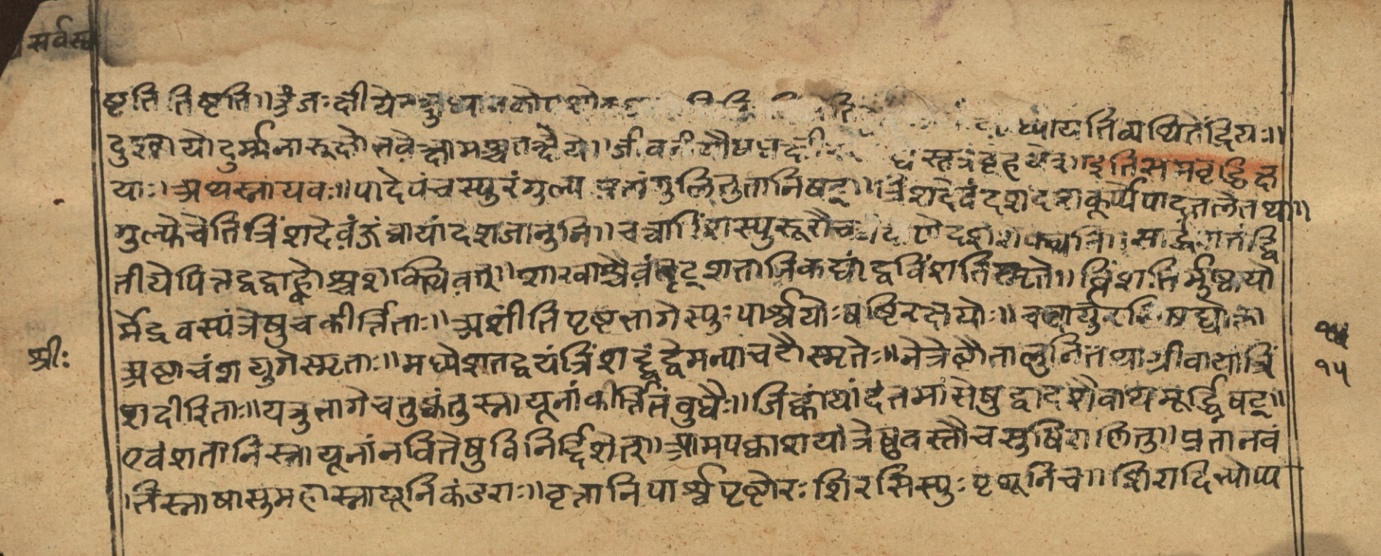
Kāśīrāma's Vaidyasarvasva numbers the body — 900 snāyu, 210 sandhi, 700 srotas — and catalogs honey's four varieties and twenty drug qualities.