Dravyaguṇaśataślokī
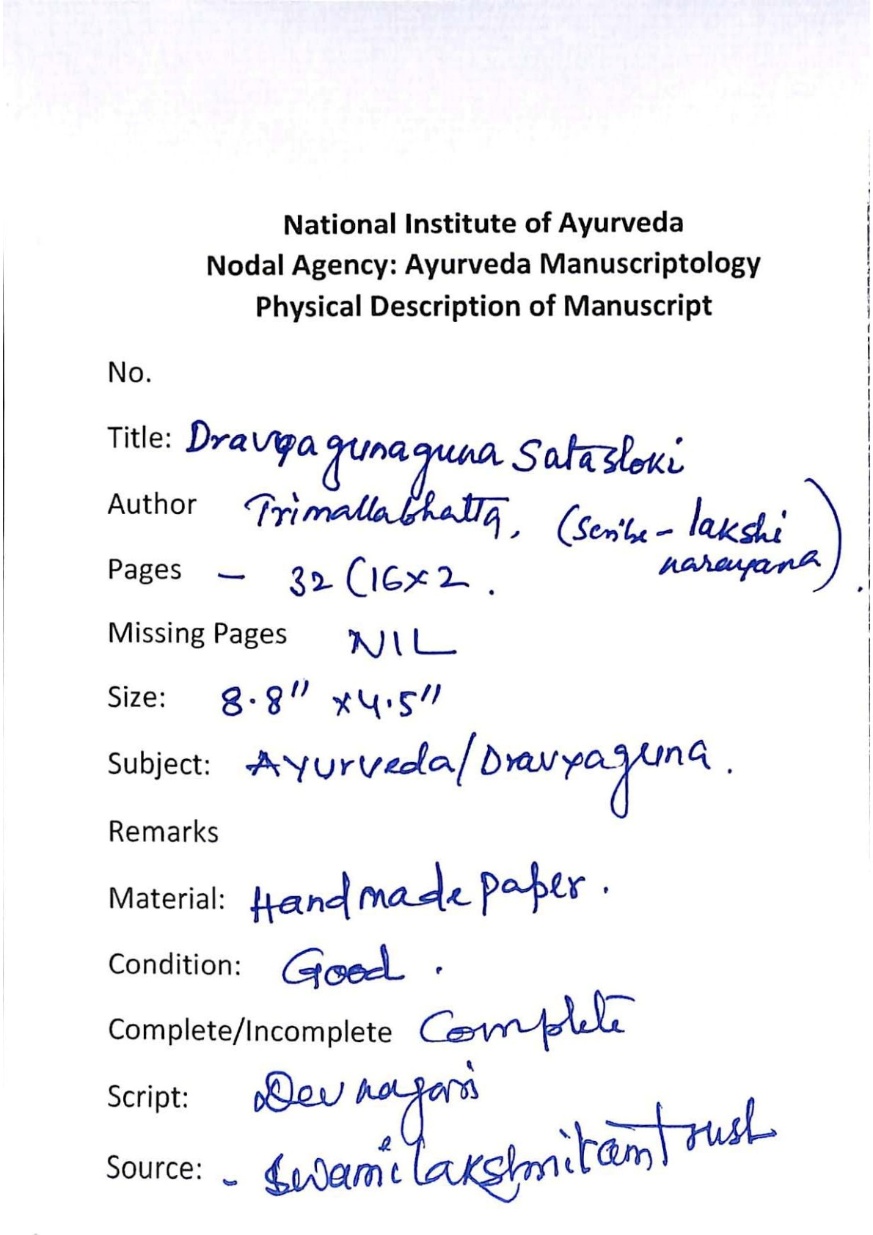
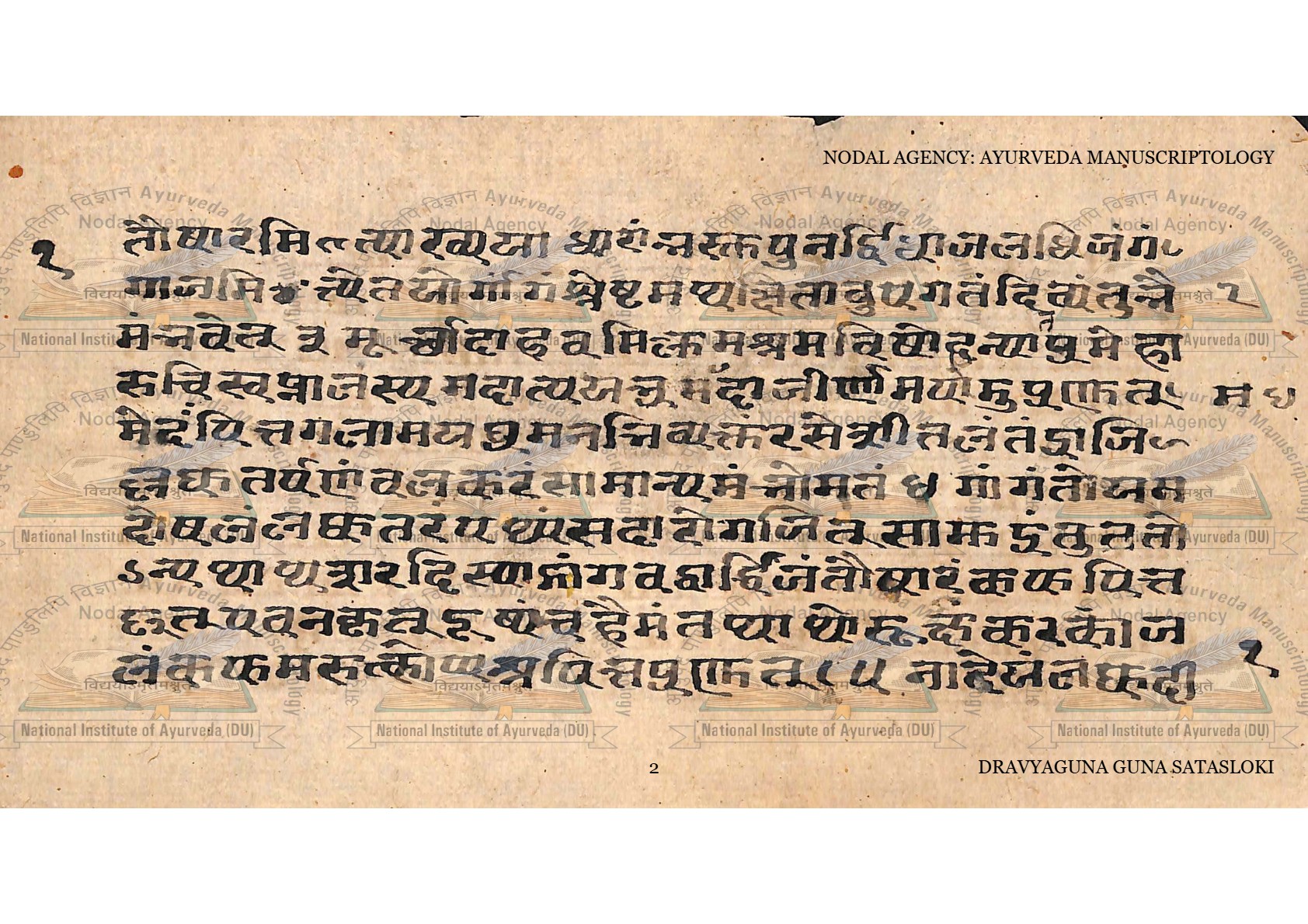
This 32-folio Devanagari manuscript, titled *Dravyaguṇa Śataślokī* by Trimallabhaṭṭa, represents a significant contribution to Ayurvedic *dravyaguṇa* (materia medica and pharmacology), systematically cataloguing the therapeutic properties of natural substances in Sanskrit verse. The text sample reveals a sophisticated taxonomic framework classifying waters (jala) by their source—celestial, terrestrial, and subterranean—according to their *rasa* (taste), *guṇa* (qualities), and *doṣa* effects, followed by detailed analysis of milk (*kṣīra*) and fermented dairy preparations (*dadhi*, *takra*). Notable is the integration of seasonal (*ṛtu*) and temporal (*kāla*) considerations in dietary prescriptions, demonstrating the text's alignment with classical Ayurvedic chronotherapeutics. The manuscript's preservation at the National Institute of Ayurveda, sourced from the Swami Lakshmiram Trust, underscores its value for the study of early modern Ayurvedic compendia and scribal practices in Rajasthan.