Carakasaṁhitā - Gyan Bhandaar
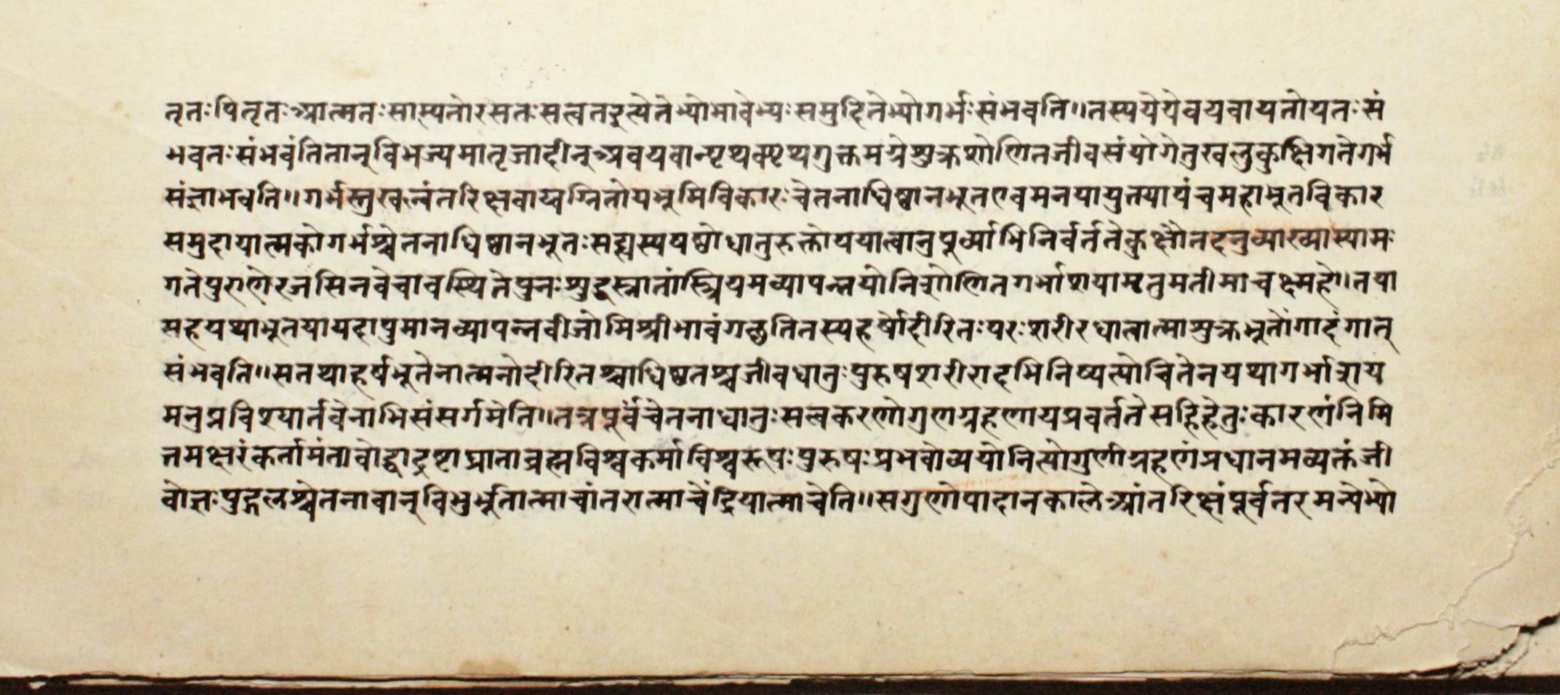
This ancient Sanskrit manuscript page discusses the nature of the self (atman) and its relationship to conception, embryonic development, and karma. It explores how the self generates existence through states of being, including the womb-state, and explains the embryo's lack of agency, influenced instead by past actions (karma) and instrumental capacities like prana (vital breath) and apana. Key concepts include self-knowledge (atma-jnana), mind (manas), senses (indriyas), pleasure (sukha), pain (duhkha), desire (iccha), and memory (smriti). The text distinguishes between attributes born of the self and those of the physical body, emphasizing the role of the womb, lifespan (ayus), and the self's abode in shaping human experience.
Sanskrit

Carakasaṁhitā

This Sanskrit manuscript fragment presents a sophisticated discourse on embryology and reproductive theory from classical Ayurvedic medicine, specifically examining the multifactorial origins of the fetus (garbha) through the interplay of maternal (mātṛja), paternal (pitṛja), self-generated (ātmaja), nutritional (rasaja), habitual (sātmyaja), and constitutional (sattvaja) elements. The text engages in rigorous philosophical debate regarding the formation of human identity, addressing apparent paradoxes in hereditary transmission—particularly why offspring may not resemble parents in cases of congenital defects—while maintaining that the ātman (self) remains unmodified despite bodily variations. The dialogue between Bhagavān Ātreya and Bharadvāja demonstrates the sophisticated epistemological frameworks of classical Indian medicine, integrating metaphysical concepts of causation (kāraṇa), potentiality (śakti), and the tripartite guṇa theory (sattva-rājas-tāmas) within a systematic analysis of generative biology.

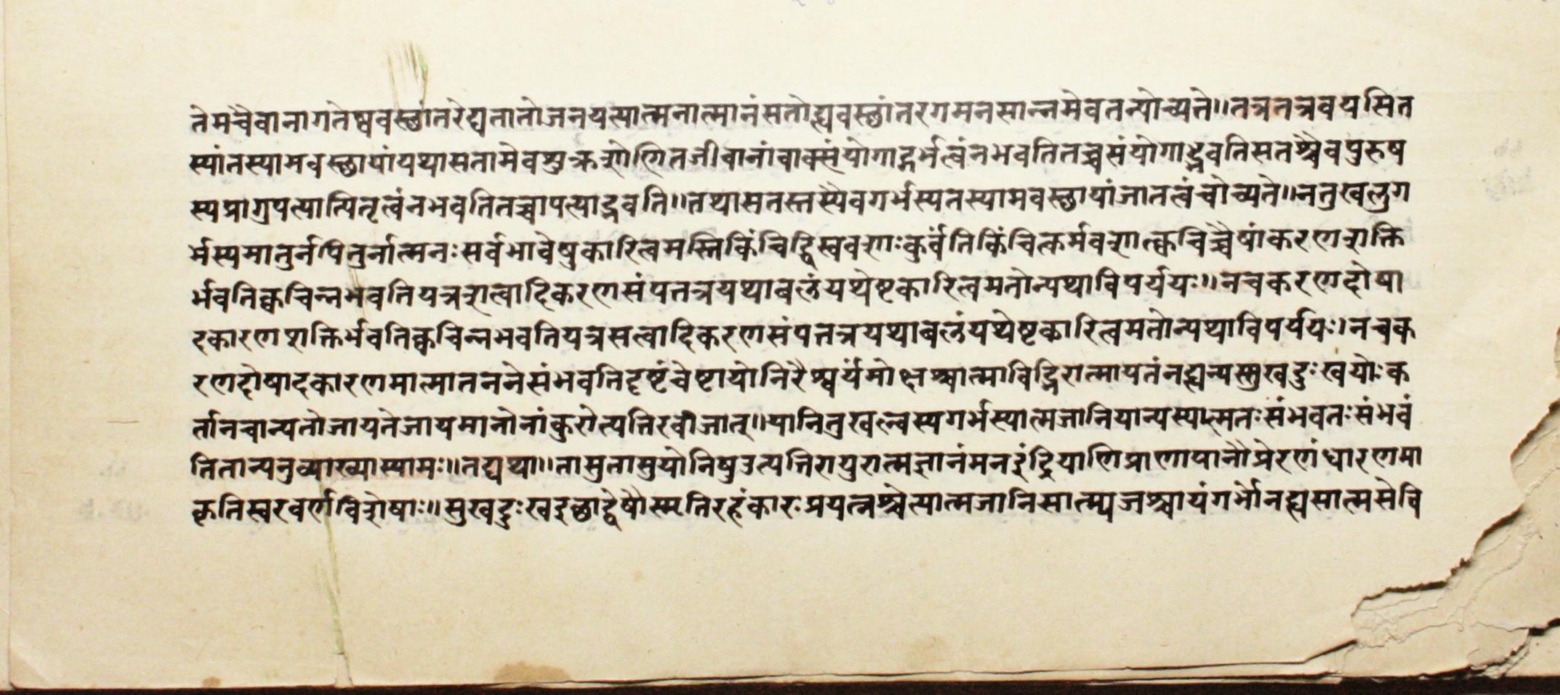
Page of the Carakasaṃhitā describing the formation of the embryo from semen, blood, and self
AyurvedaOctober 11, 2025

Charaka's Embryology: The Fetus as a Mirror of the Universe

A Carakasaṃhitā manuscript on embryology describes the fetus built from six elements and a self — and quotes Atreya: whatever exists in the world exists in the human being.