Nāḍīparīkṣā
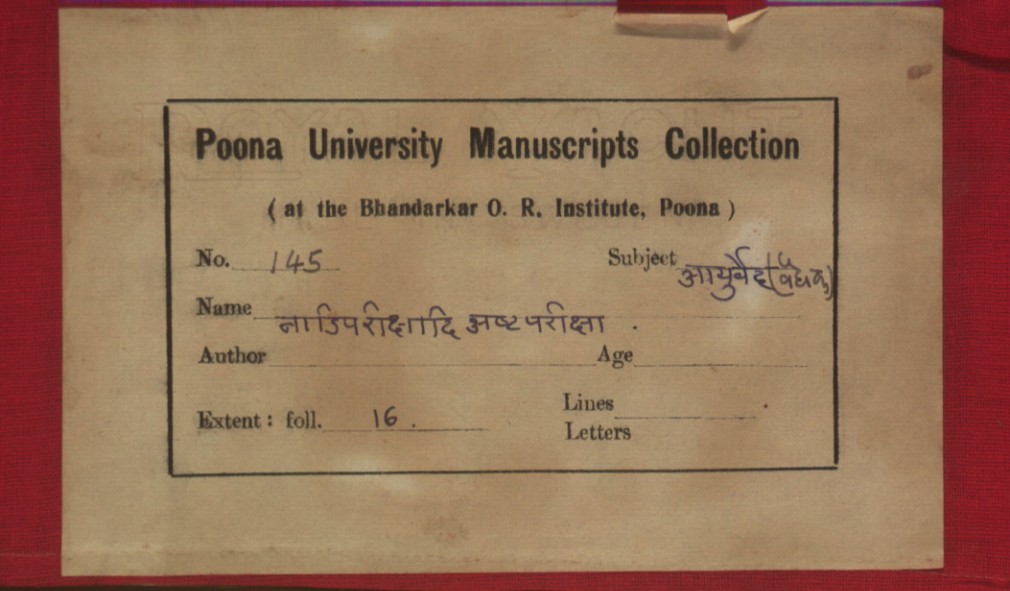
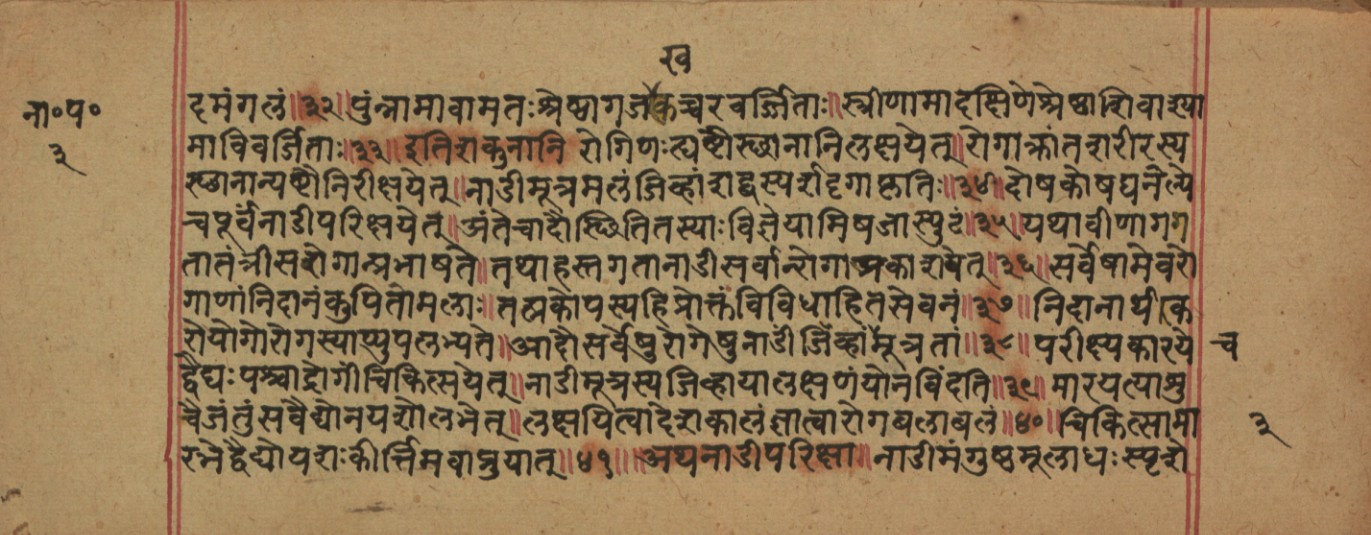
This sixteenth-century Ayurvedic manuscript from the Poona University Collection presents the *Nāḍīparīkṣādi Aṣṭaparīkṣā*, a specialized treatise on the eightfold diagnostic examination (*aṣṭaparīkṣā*) with particular emphasis on pulse diagnosis (*nāḍīparīkṣā*). The text opens with a distinctive invocation sequence and contains rare verses on the ethical obligations of physicians, including the controversial enumeration of patients whom a vaidya should refuse to treat (thieves, foreigners, butchers, and meat-sellers). Notably, the manuscript preserves unique diagnostic methodologies including the *dūtaparīkṣā* (examination of the patient's messenger) and *śakunaparīkṣā* (prognostic omens), alongside practical instructions for pulse examination at the thumb's base (*aṅguṣṭhamūla*). The text's integration of humoral theory (*doṣa*), karmic etiology of disease, and empirical observation exemplifies the synthetic character of early modern Ayurvedic practice.