AyurvedaJuly 05, 2026
Kūṭamudgara: The Six Tastes as a Dosha Balance Sheet
Kūṭamudgara, a compact Ayurvedic treatise, maps the six tastes across the body's three regions, the day, and a lifetime — each stage ruled by a different dosha.

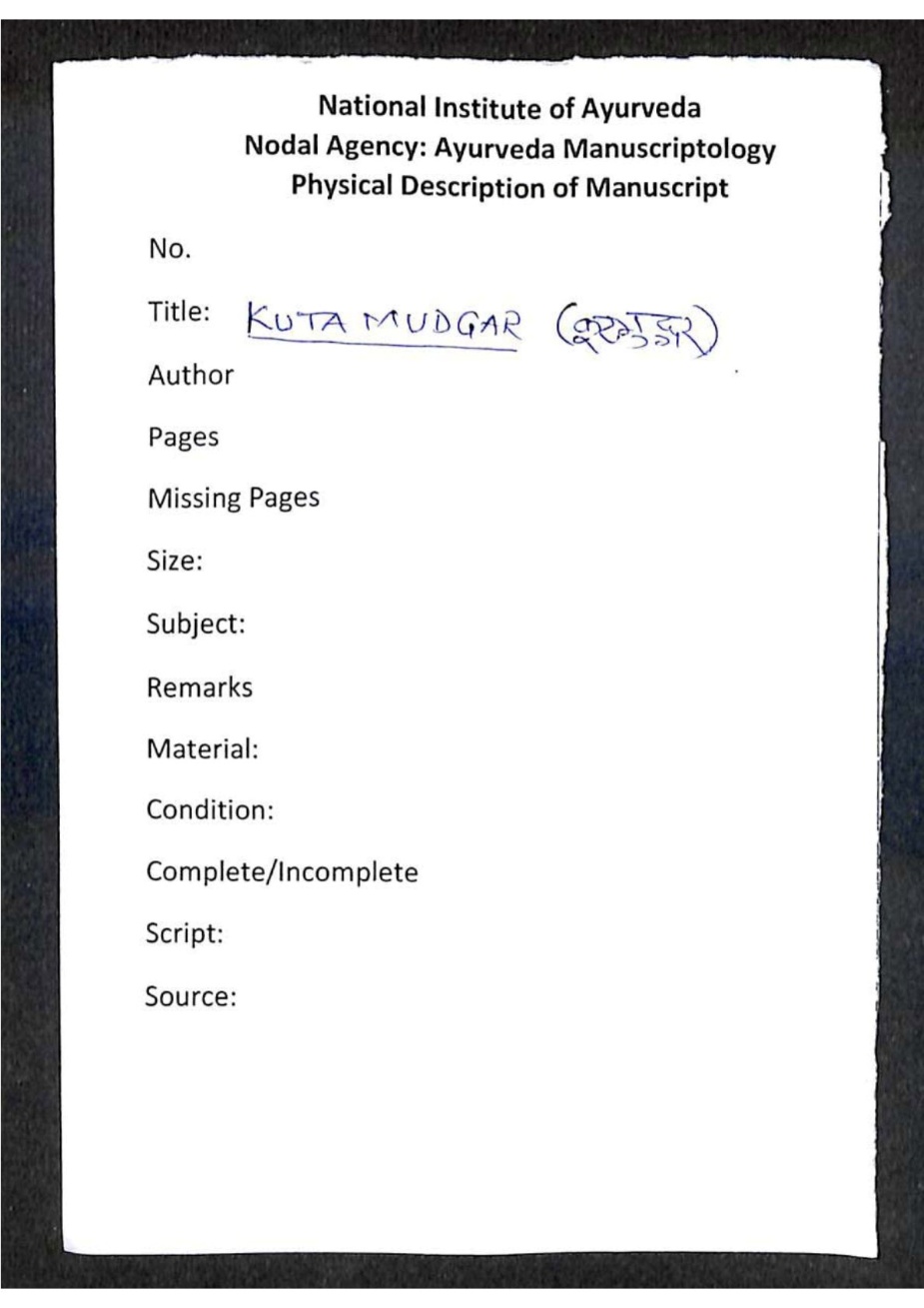
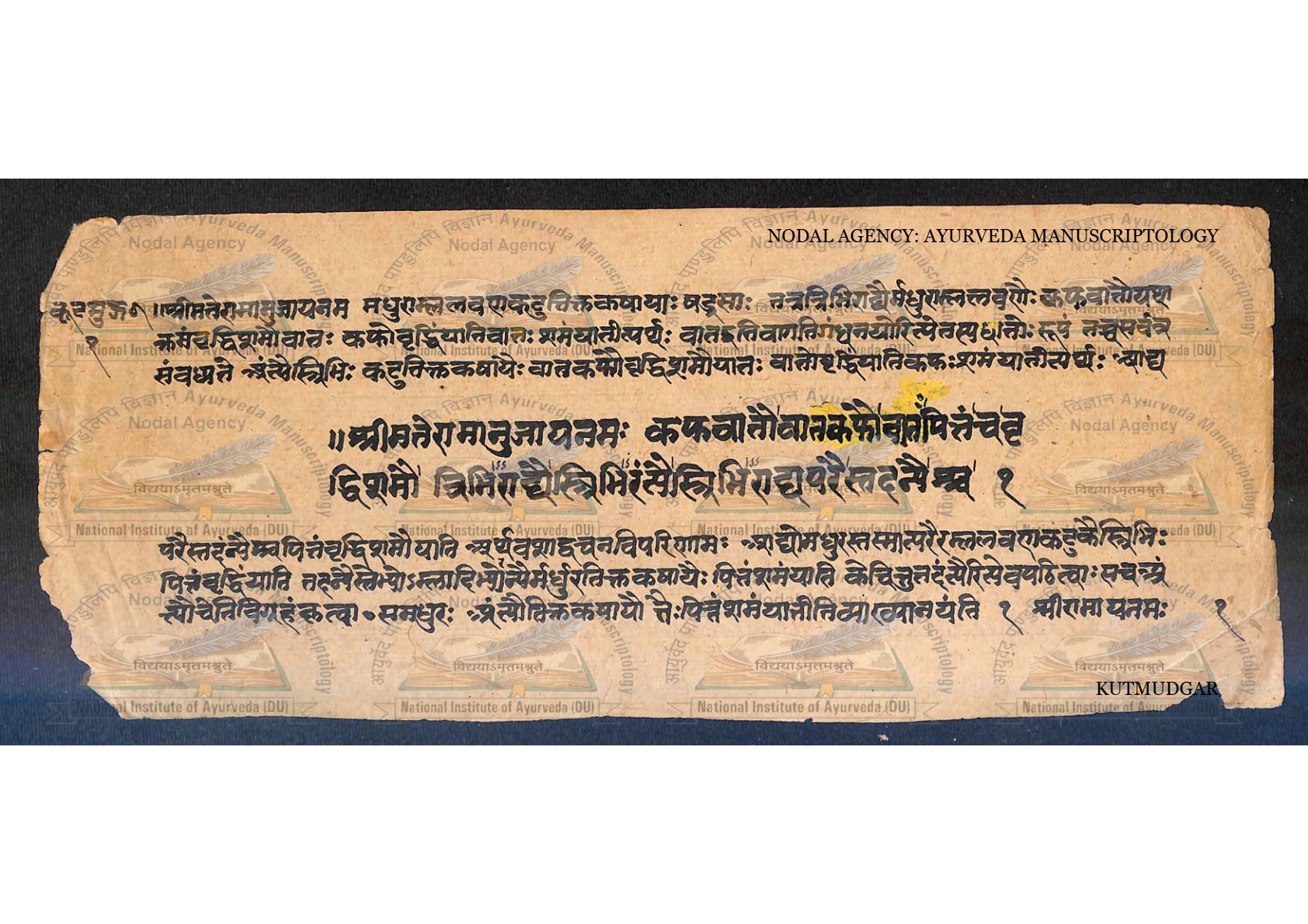
This Sanskrit manuscript, titled *Kūṭamudgara* (कूटमुद्गर), is a specialized Ayurvedic treatise on the therapeutic application of the six tastes (ṣaḍrasas) in relation to the three doṣas—vāta, pitta, and kapha. The text systematically analyzes how sweet (madhura), sour (amla), salty (lavaṇa), pungent (kaṭu), bitter (tikta), and astringent (kaṣāya) tastes respectively increase or pacify the doṣas when consumed at the beginning (ādya), middle (madhya), or end (anta) of meals, days, and life stages. Notably, the manuscript employs a sophisticated tripartite schema correlating gustatory effects with temporal and somatic locations, including the innovative concept of *saṃdhi* (junctures) between body regions, diurnal periods, and age phases. The invocation of Śrī Rāmānuja and the structured verse-commentary format suggest a Vedāntic-influenced medical scholasticism characteristic of early modern South Indian Ayurvedic manuscript traditions.