AyurvedaSeptember 17, 2025
Harītakī Prayoga: The Many Preparations of One Fruit
Terminalia chebula harītakī, appears in Ayurvedic medicine as a near-universal remedy. Explore the five-folio Harītakī-prayoga and its dozens of precise preparations.

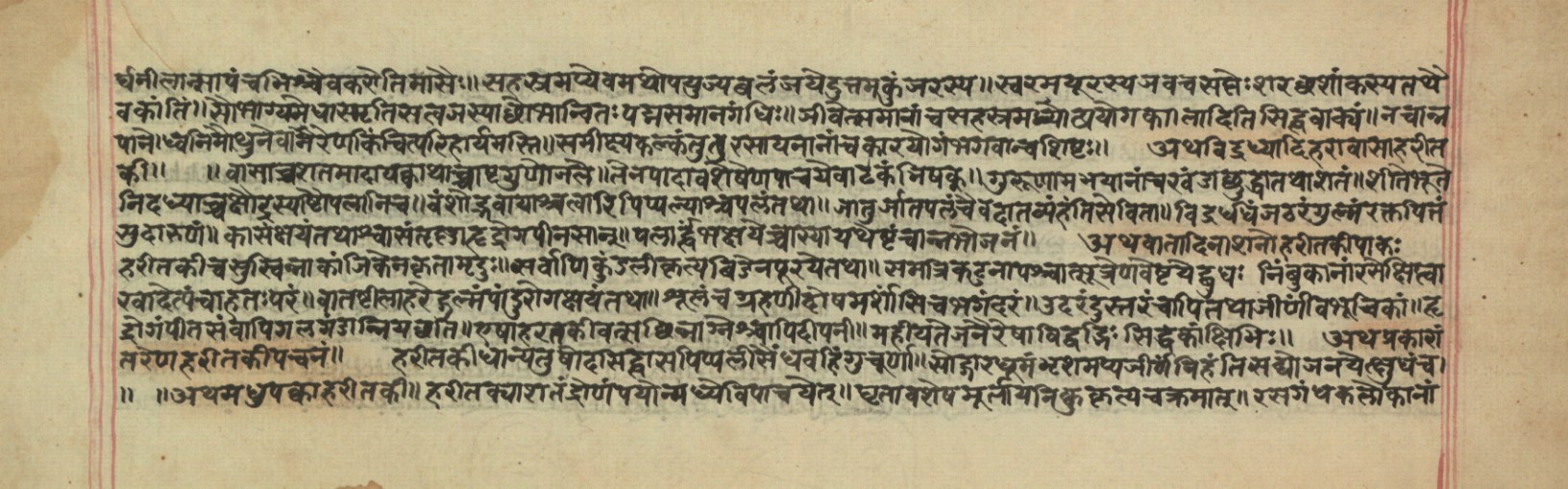
This 5-folio Sanskrit manuscript from the Poona University Collection preserves the *Harītakī-prayoga*, a specialized Āyurvedic treatise focused on therapeutic preparations using Terminalia chebula (harītakī). The text documents multiple pharmaceutical formulations—including *madhupaka* (honey-based preparations), *kṣudā-harītakī*, and *śoṣa-daśamūla-pathyā*—for treating diverse conditions ranging from digestive disorders (*āma-atisāra*), splenic enlargement (*plīhodara*), and respiratory ailments to complex systemic diseases such as *kuṣṭha* (leprosy) and *prameha* (diabetes). Notable features include detailed processing instructions involving fermentation, decoction (*kvātha*), and maturation periods, as well as attributions to mytho-medical authorities like Dhanvantari and claims of efficacy for legendary figures including Bhīmasena and Kubera. The manuscript exemplifies the sophisticated polyherbal compounding traditions of classical Indian medicine, with precise metrological specifications and multi-stage preparation protocols characteristic of elite rasāyana (rejuvenative) and therapeutic practice.