Sanskrit
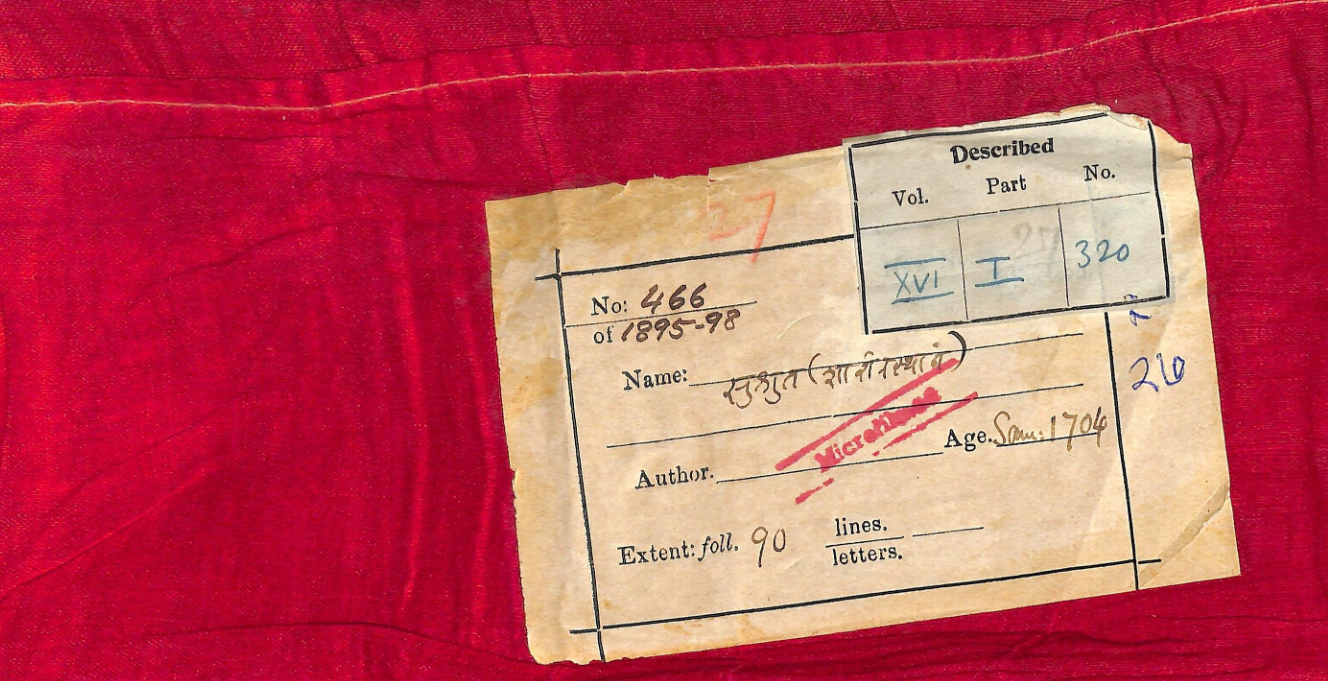
Suśruta (Śārīrasthāna)
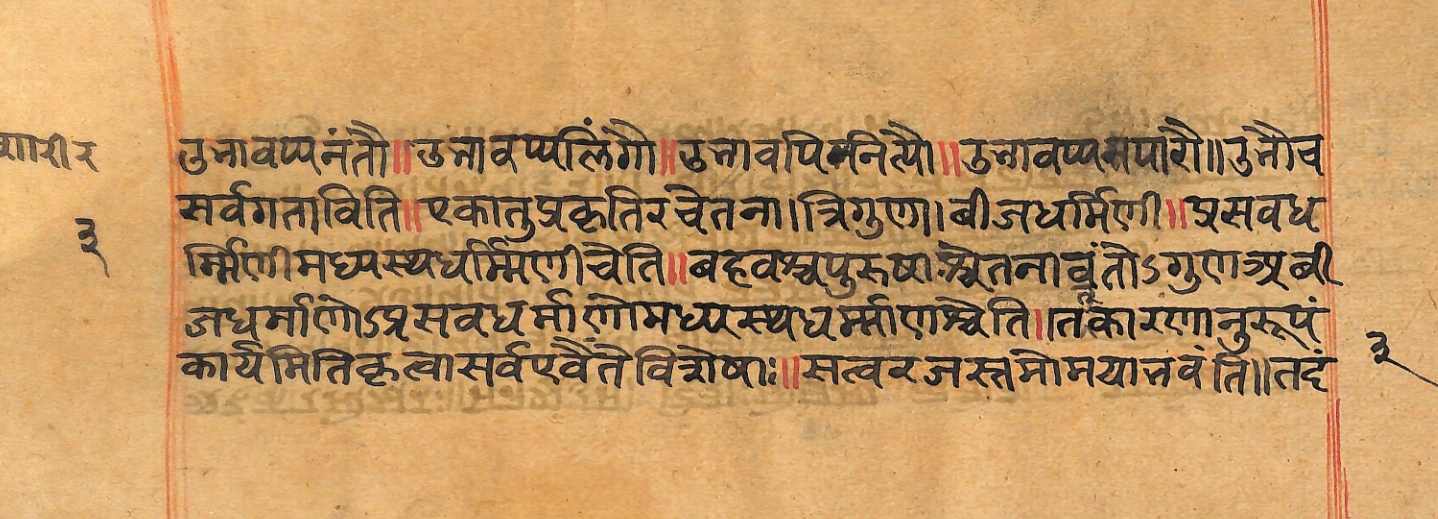
This 1895-98 manuscript (No. 466) preserves a significant portion of the Śārīrasthāna from the Suśrutasaṃhitā, the foundational Sanskrit text of Ayurvedic medicine attributed to Suśruta. The sample reveals sophisticated engagement with Sāṃkhya philosophical cosmology, detailing the twenty-four tattvas from primordial avyakta (unmanifest prakṛti) through mahat, ahaṃkāra, and the evolution of the eleven indriyas and five tanmātras. Notably, the text integrates medical epistemology with metaphysical inquiry, asserting that puruṣa—the sentient principle embodied in the pañcamahābhūta constitution—constitutes the proper object of therapeutic intervention (cikitsā), thereby establishing the theoretical groundwork for Ayurvedic practice. The manuscript's marginal annotations and verse numbering suggest active scholarly use, while its Samvat 1704 dating places it within a continuum of sustained medical textual transmission in early modern South Asia.