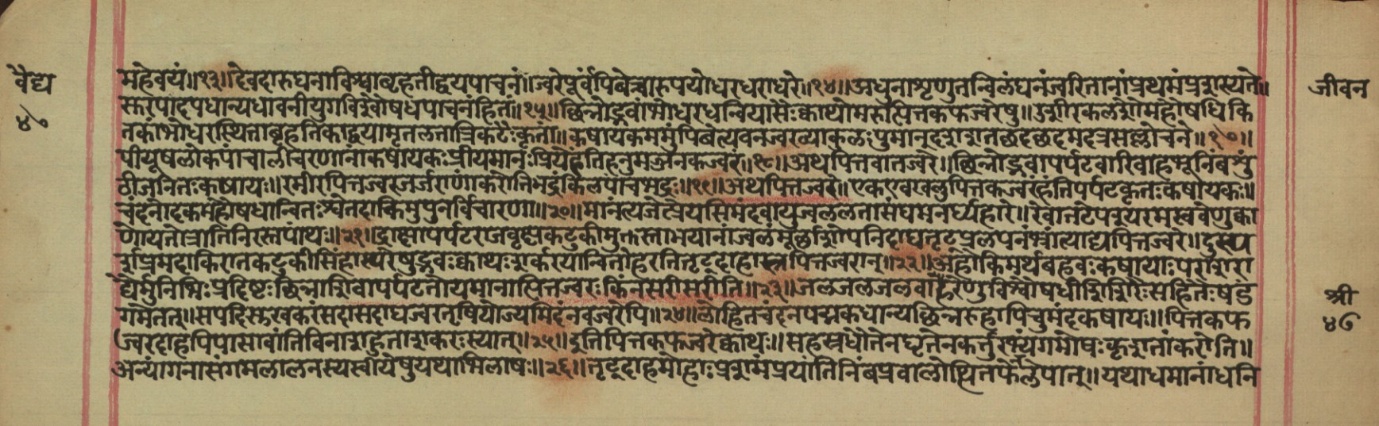
AyurvedaJuly 01, 2026
Vaidyajīvana: A Physician-Poet's Guide to Fever
Rudra's fever manual blends pharmacy and poetry, treating acute, chronic, and irregular fevers with decoctions drawn from roots, herbs, and generations of practice.

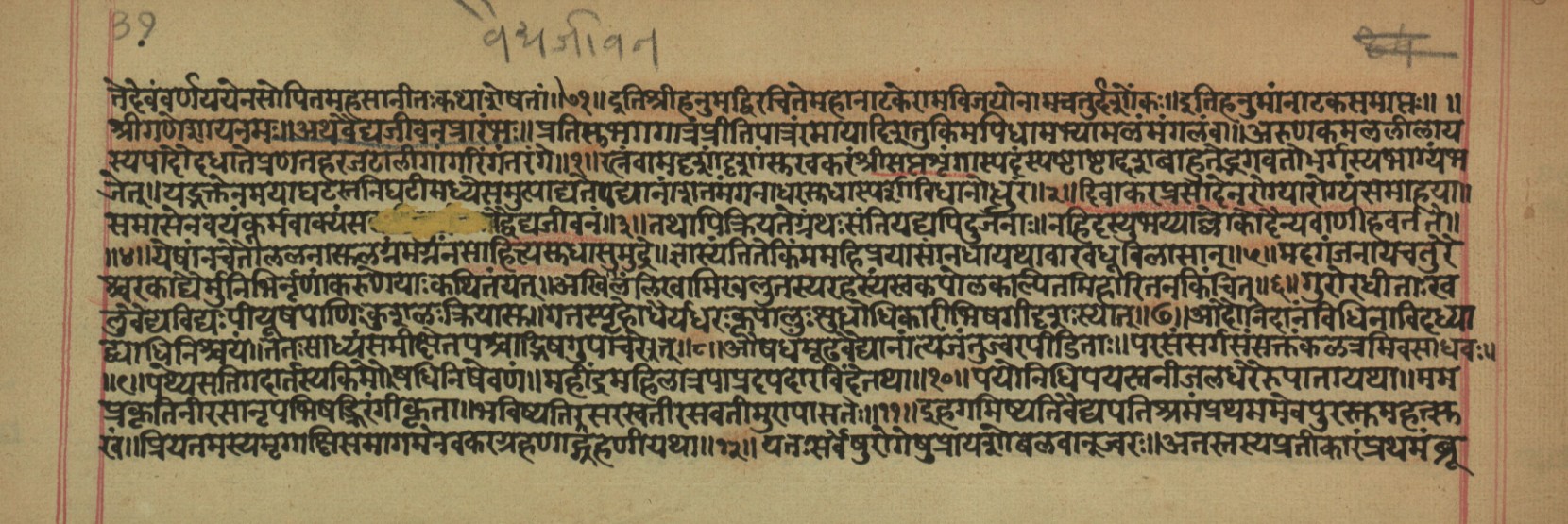
This Sanskrit manuscript fragment represents a significant medical treatise titled *Vaidyajīvana* (The Physician's Livelihood), attributed to the Hanumad tradition, focusing primarily on the diagnosis and treatment of fever (*jvara*). The text exhibits sophisticated Ayurvedic nosology, distinguishing between wind (*vāta*), bile (*pitta*), and phlegm (*kapha*) fevers, with detailed prescriptions for decoctions (*kaṣāya*) incorporating ingredients such as *devadāru*, *bṛhatī*, *parpaṭa*, and *kaṭukī*. Notable features include the integration of poetic verses (*śloka*) with practical pharmacological instructions, the employment of *rasaśāstra* (mercurial/mineral) preparations, and the explicit invocation of textual authority through references to sages like Paraśara. The manuscript demonstrates the characteristic Sanskrit medical literary form, blending theoretical framework (*nidāna*, *cikitsā*) with empirical therapeutics, while its colophonic structure suggests it originally formed part of a larger dramatic or encyclopedic compilation, as indicated by the closing reference to the fourteenth act (*caturdaśo 'ṅkaḥ*) of a *Mahānāṭaka*.