
Manuscript Archive
Every article on Gyan Bhandaar is drawn from a source manuscript. Browse the artifacts themselves and see everything written about each one.
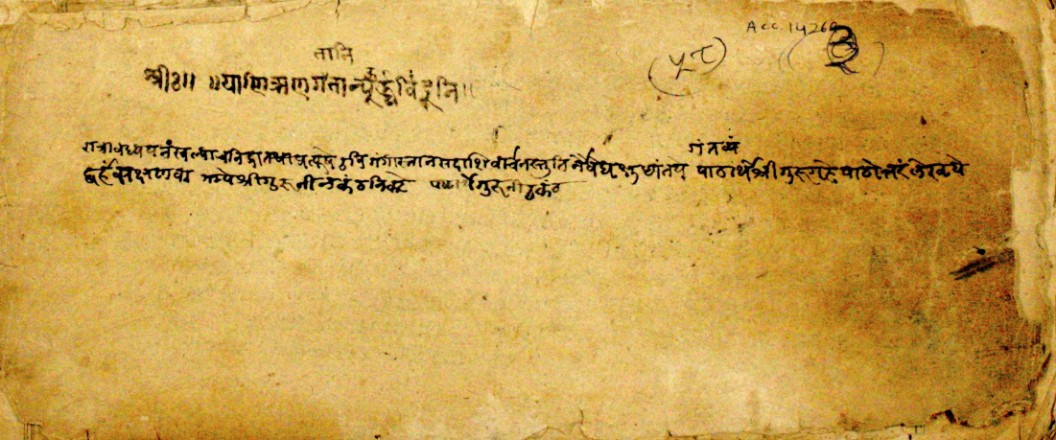
Līlāvatī
This Sanskrit manuscript appears to be a treatise on mathematics, covering topics such as units of measurement, arithmetic operations, square and cube root calculations, and algebraic formulations. The text employs a poetic style with verses and illustrative examples, suggesting its significance as a scholarly work aimed at disseminating mathematical knowledge in an engaging manner.
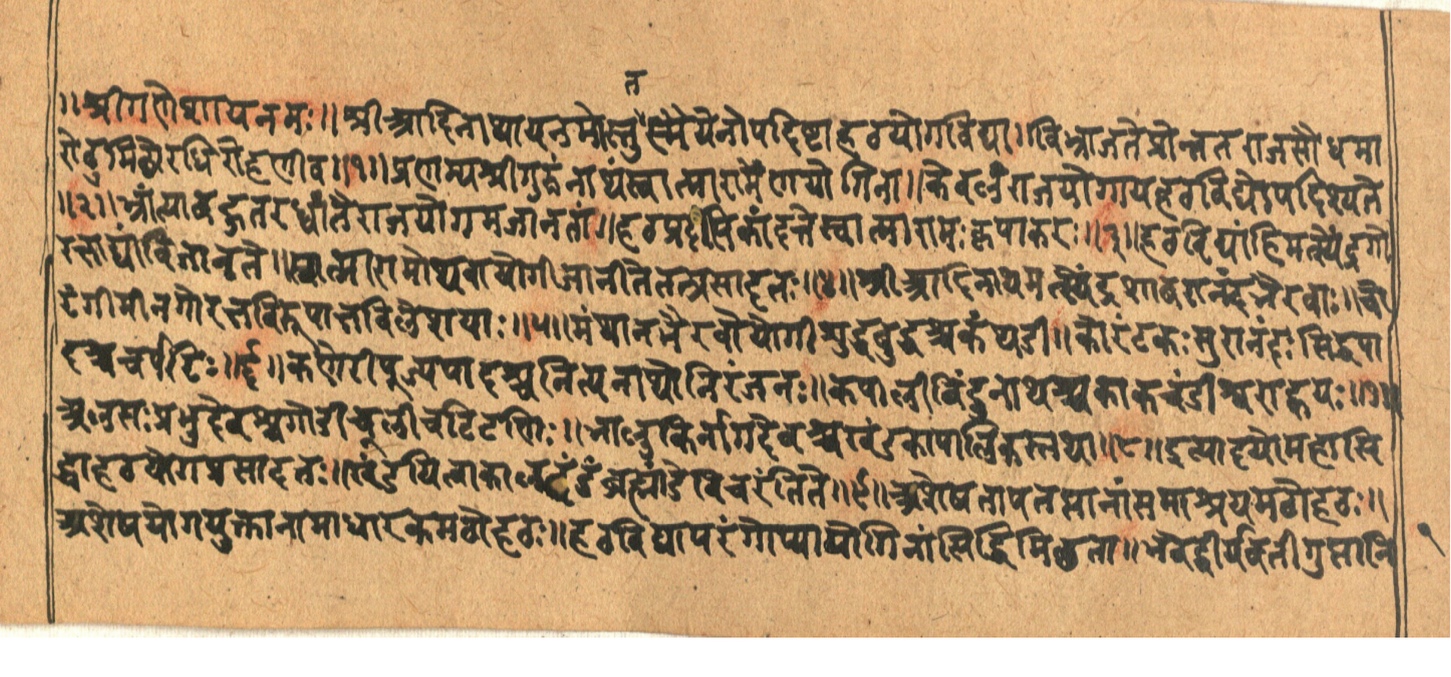
Haṭhayogapradīpikā
This ancient Sanskrit manuscript delves into the esoteric practice of Hatha Yoga, providing a comprehensive guide to various āsanas (postures) and their significance in attaining spiritual enlightenment. It extols the virtues of disciplined practice under the tutelage of a guru, while cautioning against the pitfalls that can hinder one's yogic progress. The text bears testimony to the profound wisdom of the celebrated Nātha yogis and Siddhas who mastered this profound art.
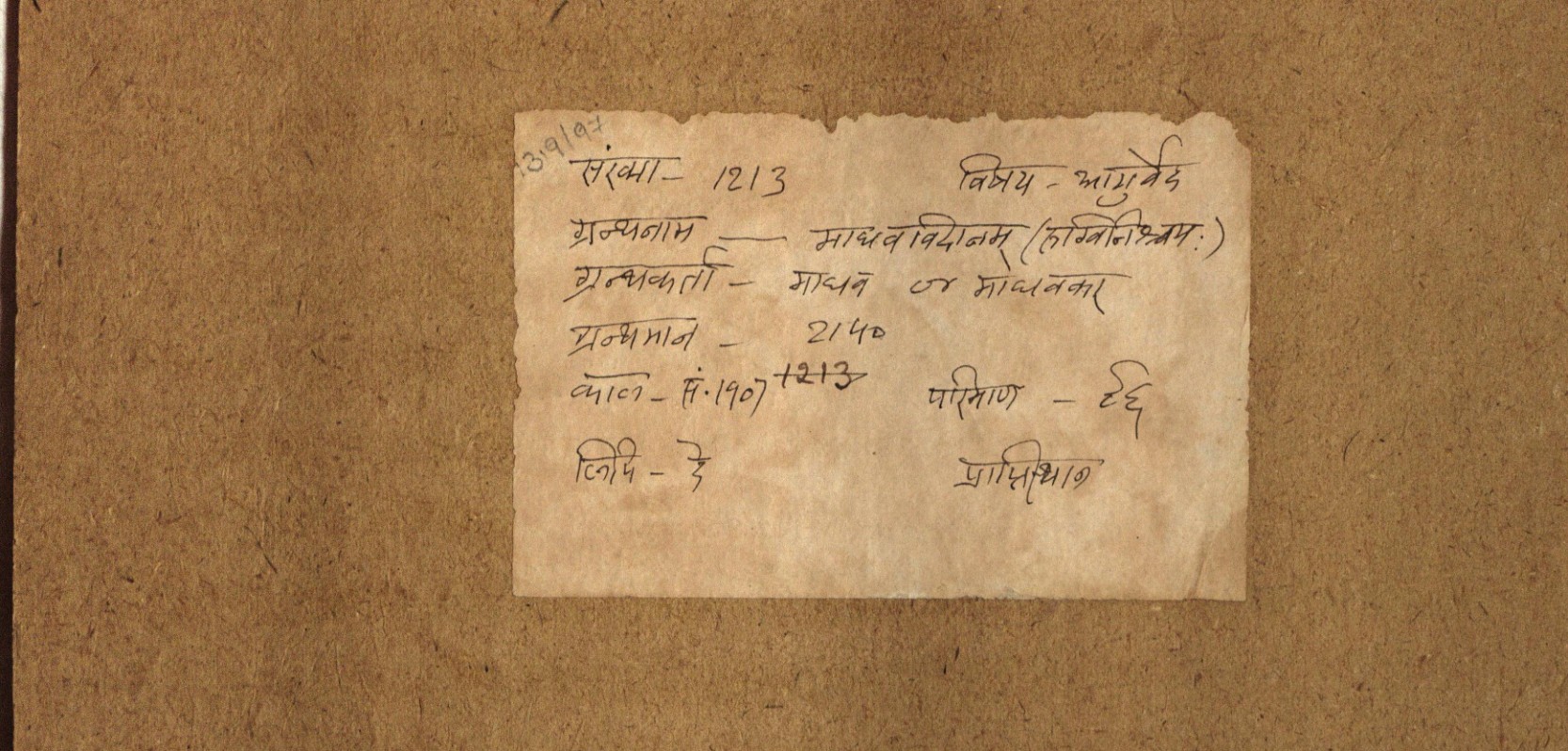
Mādhavanidānaṃ
This manuscript is a Sanskrit medical text identified as the Mādhava Nidānam (Rugviniścayaḥ), a foundational Ayurvedic treatise on disease diagnosis composed by Mādhava or Mādhavakara, dated to Samvat 1907. The text systematically presents the five-fold diagnostic framework (nidāna, pūrvarūpa, rūpa, upaśaya, and samprāpti) for understanding diseases, with particular emphasis on fever (jvara) classification and the principles of therapeutic intervention based on opposing causative factors. Written in Devanagari script, this scholarly work demonstrates the classical Ayurvedic methodology of disease identification through detailed exposition of symptoms, etiological factors, and pathological progressions.
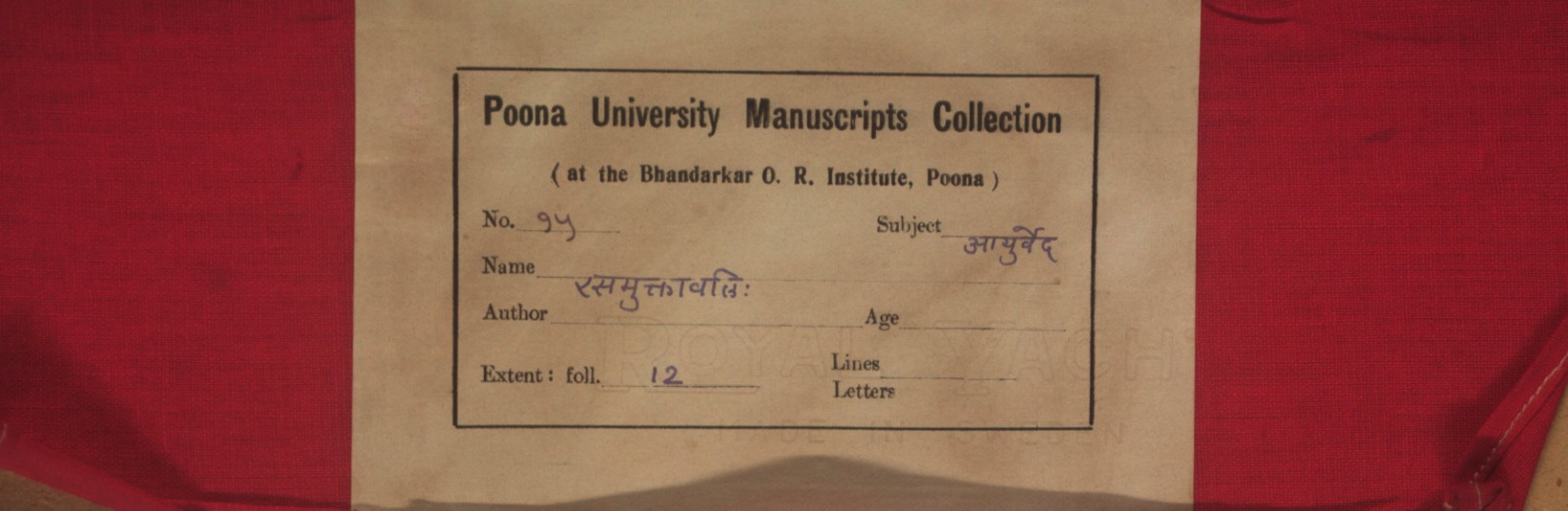
Rasamuktāvalī
This manuscript, titled Rasamuktāvaliḥ, is a treatise on Āyurvedic alchemy (rasaśāstra) focusing on the preparation, purification, and therapeutic properties of metallic and mineral substances, particularly gold (suvarṇa/hema). The text systematically describes various methods for calcining gold into medicinal ash (bhasma), detailing precise proportions of mercury, sulfur, and other ingredients, along with specific heating procedures (puṭa) and their therapeutic applications for treating consumption, fever, skin diseases, and other ailments. Notable is the inclusion of specialized alchemical preparations such as bālamṛgāṅka and rājamṛgāṅka, which combine gold with pearls, mercury, and sulfur, demonstrating the sophisticated metallurgical and pharmaceutical knowledge characteristic of medieval Indian medical literature.
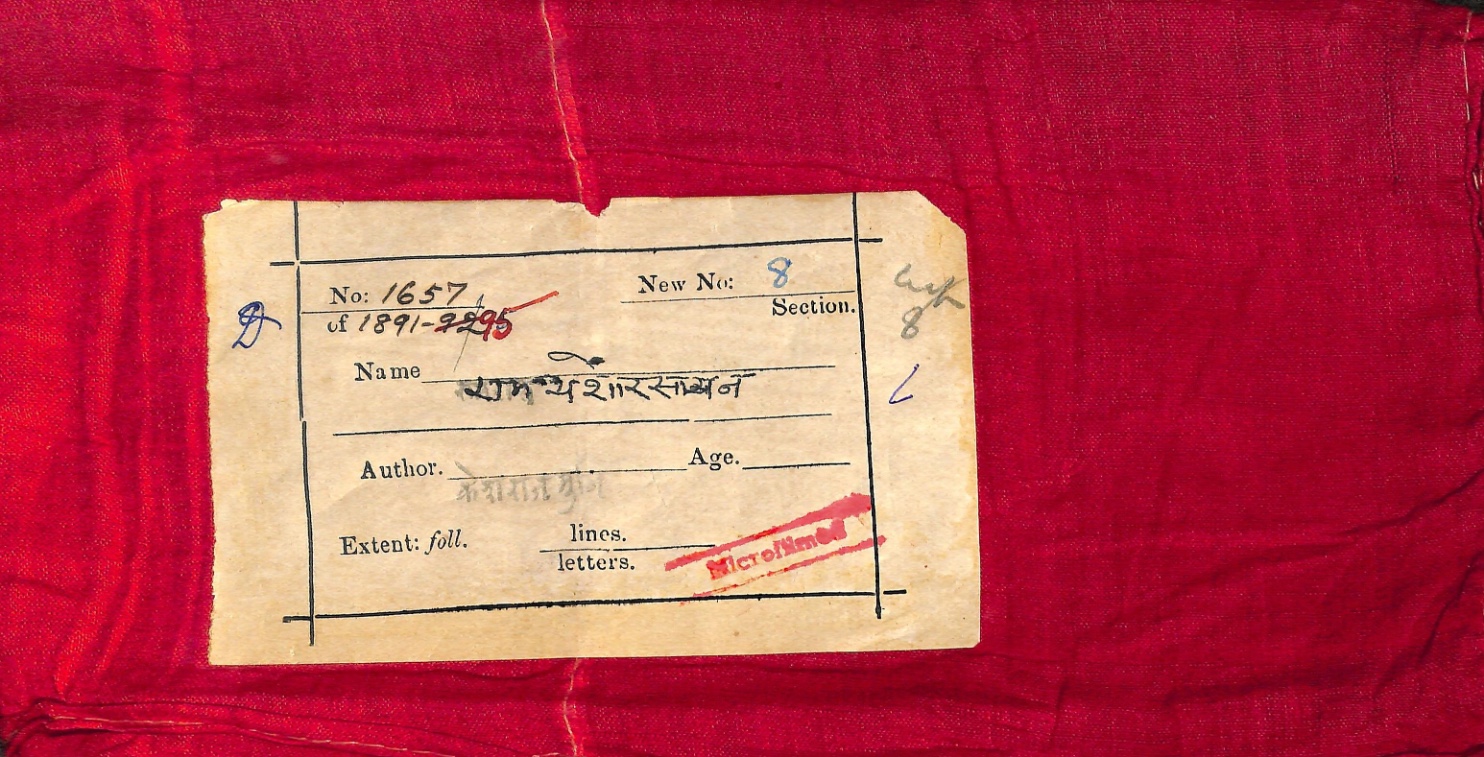
Rāmayaśorasāyana
This manuscript, titled Rāmayaśorasāyana and authored by Keśavarāja, is a vernacular narrative poem (rasāla) recounting the epic story of Rāma, Lakṣmaṇa, Sītā, and Rāvaṇa, composed in a Rajasthani or Gujarati dialect with Devanagari script. The text opens with invocations to the guru, Sarasvatī, and Jain tīrthaṅkaras, situating the work within a Jain devotional and literary tradition that emphasizes dharma, mokṣa, and the purifying power of Rāma's narrative. The manuscript includes detailed genealogical and cosmological references, such as the kingdoms of Laṅkā and Kiṣkindhā, the lineage of rākṣasa and vānara kings, and episodes involving ascetics, battles, and moral instruction, reflecting a syncretic blend of Hindu epic material and Jain ethical philosophy. Administrative marginalia and accession stamps indicate its cataloging history, with the manuscript bearing the accession number 1657 (1891-92-95) and new number 8, and marked as microfilmed.
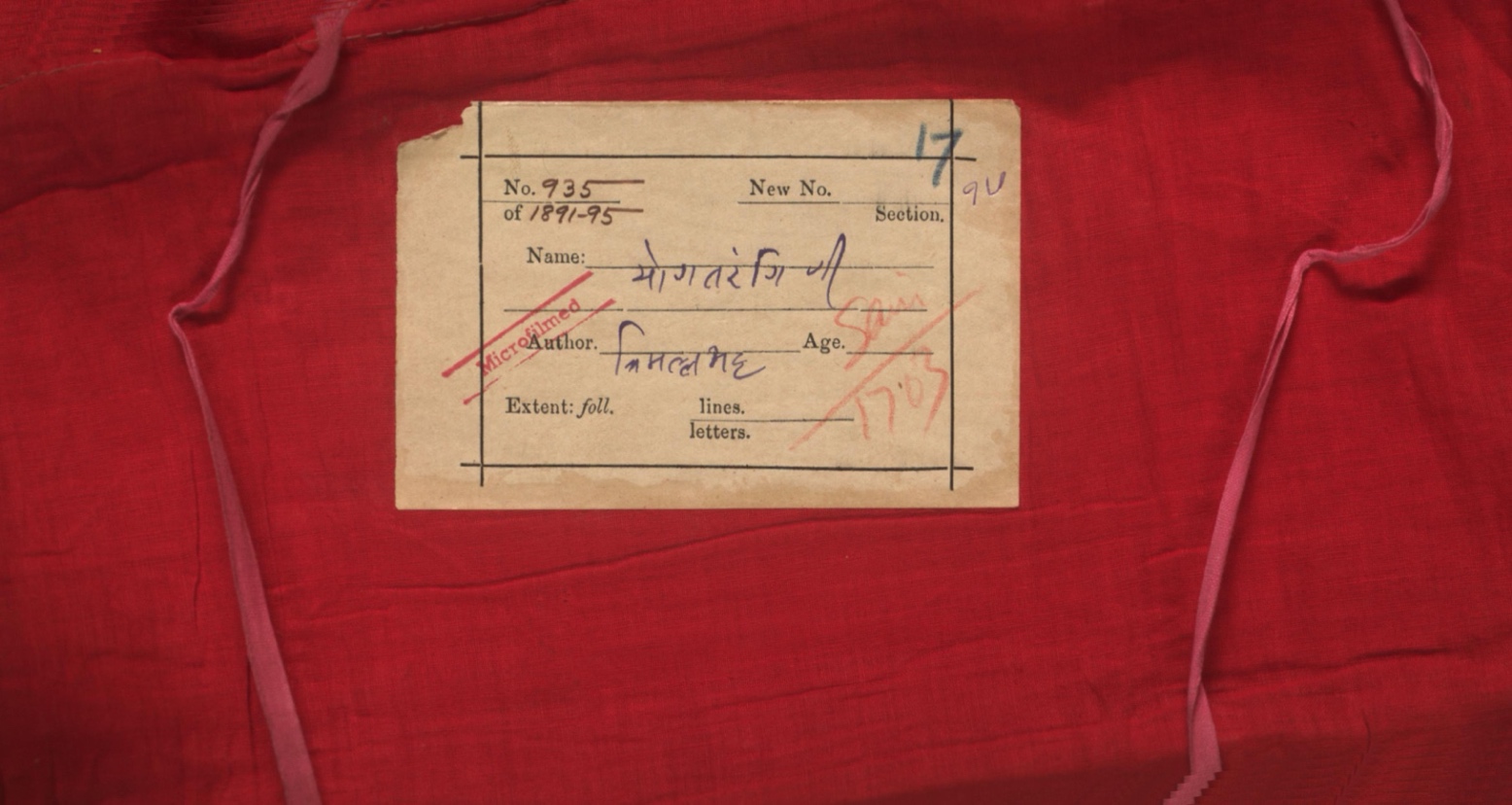
Yogataraṅgiṇī
This manuscript is the Yogataraṅgiṇī (also titled Laghuyogataraṅgiṇī), a medical treatise composed by Trimallabhaṭṭa in Samvat 1703, belonging to the Āyurvedic tradition of Indian medicine. The text systematically addresses the principles of disease diagnosis and treatment (cikitsā), discussing the three doṣas (vāta, pitta, kapha), their seasonal variations, bodily locations, and the qualifications required of physicians, patients, medicines, and attendants. The work emphasizes the integration of karma theory with medical practice, distinguishing between diseases arising from doṣic imbalance (doṣaja) and those originating from past actions (karmaja), while providing detailed guidelines for therapeutic intervention and the ethical responsibilities of the physician.
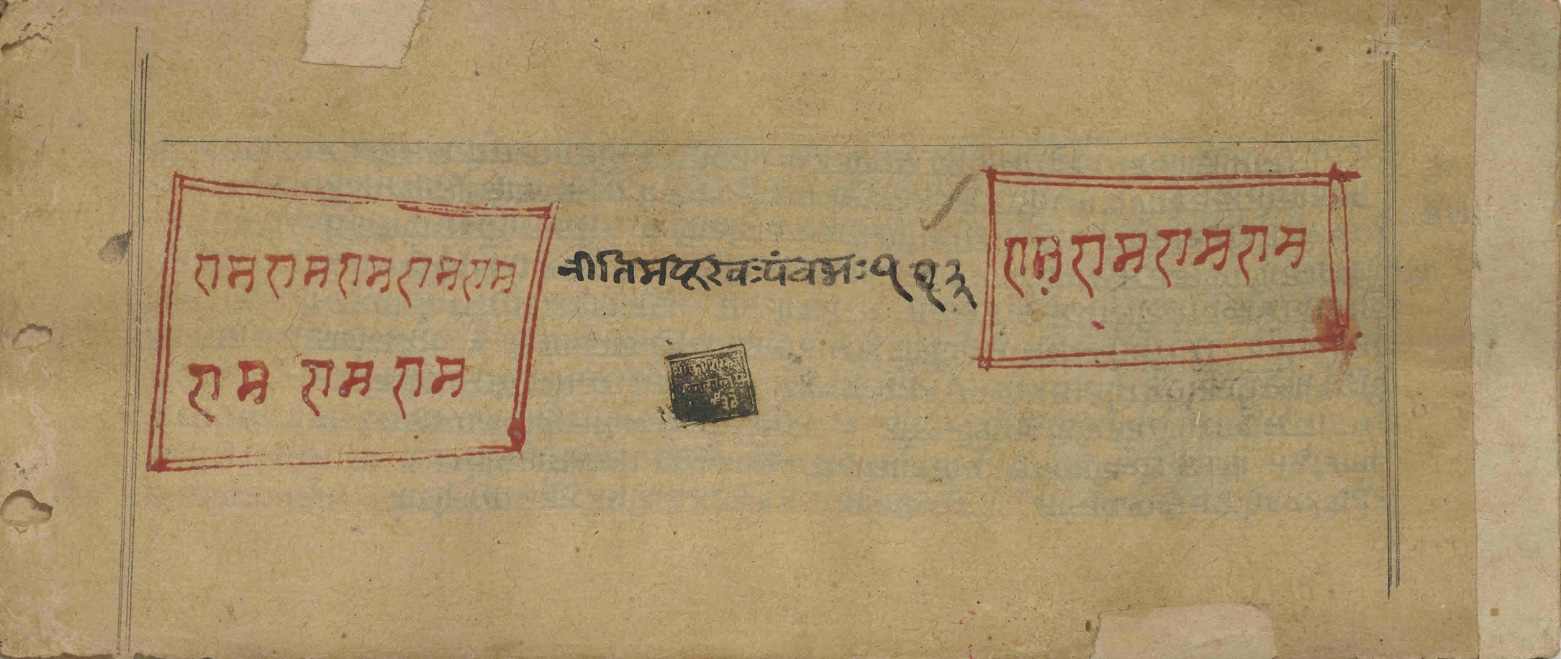
Nitimayukha
This manuscript is a Sanskrit text titled 'Nītimayūkha' (Beam of Polity), specifically the fifth section, dated 1793 in the Vikrama era. Composed by Nīlakaṇṭha based on the political philosophy of Siṃhasena, it presents a comprehensive treatise on royal governance (rājadharma) and statecraft. The text includes detailed prescriptions for royal consecration rituals (abhiṣeka), genealogical accounts of ruling dynasties, and elaborate instructions regarding auspicious timing, ritual purification with earth from sacred sites, and ceremonial procedures involving Vedic mantras. This work represents classical Indian political theory integrating dharmaśāstra principles with practical administrative guidance for rulers.
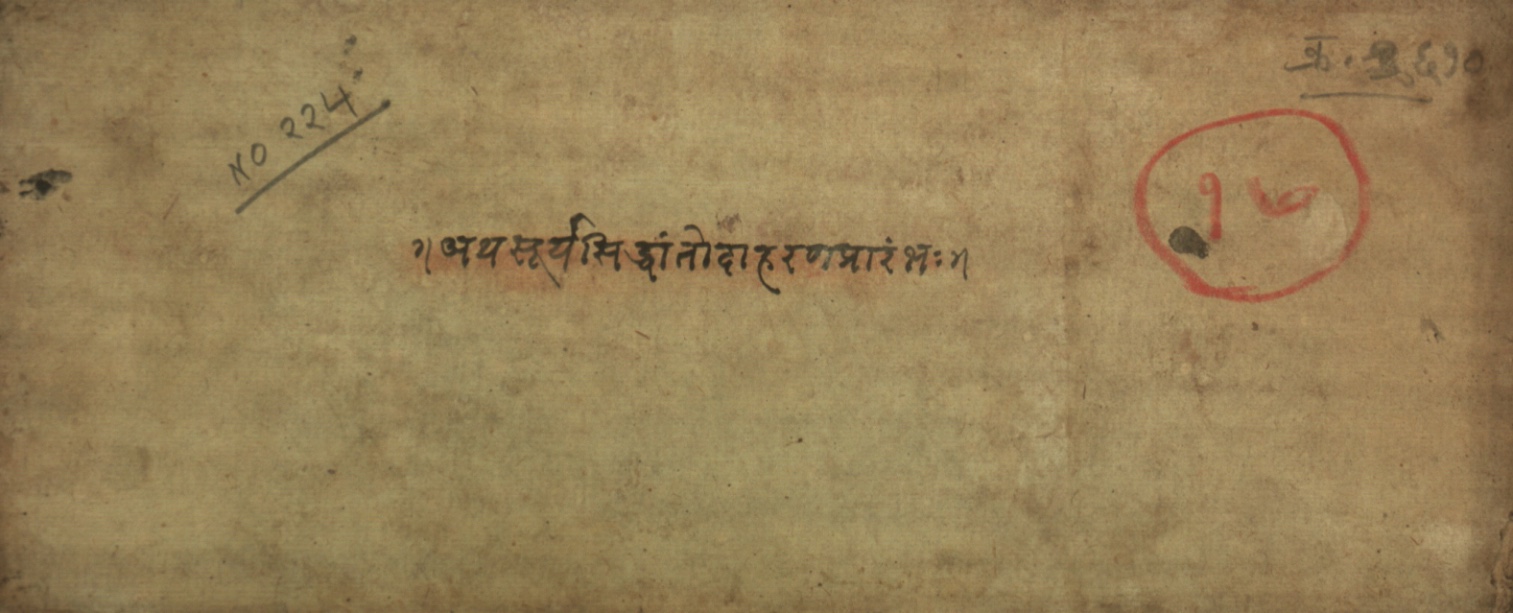
Sūryasiddhāntaudāharaṇa
This Sanskrit manuscript represents a commentary (ṭīkā) on the Sūryasiddhānta, one of the foundational texts of Indian mathematical astronomy, composed by Viśvanātha, a scholar from a distinguished lineage of astronomers and mathematicians. The text opens with invocations to Gaṇeśa and Brahman, followed by a genealogical account tracing the author's scholarly heritage through figures such as Rāma, Divākara, Kṛṣṇa, and Keśava, establishing the transmission of astronomical knowledge. The manuscript then recounts the mythological origin of the Sūryasiddhānta, describing how the asura Maya received this sacred astronomical knowledge directly from the Sun god (Vivasvat/Sūrya) after performing severe penance, thereby framing the text as divinely revealed wisdom and affirming its authority as a Vedāṅga essential for understanding celestial phenomena.
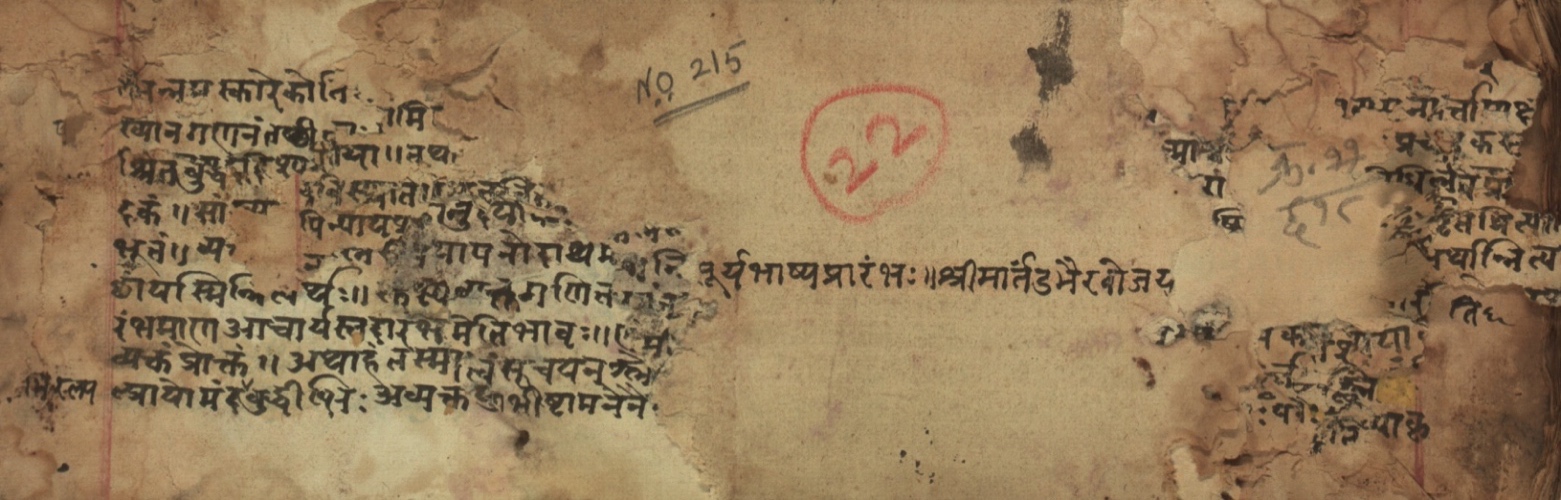
Sūryabhāṣya
This Sanskrit manuscript represents a scholarly commentary (vyākhyāna) on mathematical treatises, specifically addressing bījagaṇita (algebra) and related computational sciences. The text features invocations to deities including Mārttaṇḍa Bhairava and references to prominent mathematical authorities such as Bhāskara, while discussing foundational concepts of vyakta (manifest) and avyakta (unmanifest) mathematical principles. The manuscript demonstrates the traditional pedagogical structure of Sanskrit scientific literature, combining philosophical discourse with technical mathematical exposition, and includes metrical verses (śloka) alongside prose commentary, indicating its use as an instructional text for students of gaṇita-śāstra (mathematical sciences).
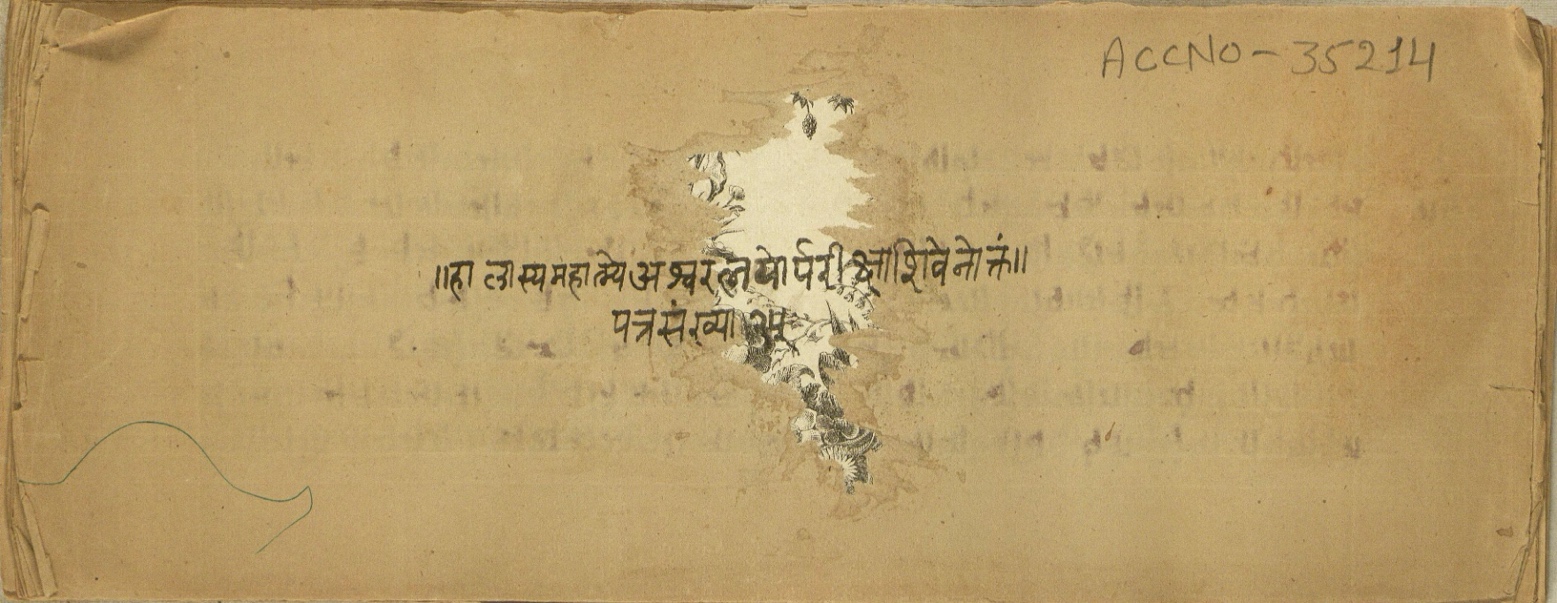
Aśvaratnaparīkṣā
This Sanskrit manuscript fragment presents a vivid narrative from a medieval Indic literary or religious text, likely belonging to the *Purāṇic* or *Śaiva* tradition. The passage describes a royal examination of horses (*aśvalakṣaṇaparīkṣā*), intertwined with divine intervention by Śiva, who manifests supernatural steeds and attendant *gaṇas* (celestial beings). Notable for its rich mythological imagery, the text blends courtly drama with theophanic elements, illustrating the interplay between kingship, devotion (*bhakti*), and cosmic order. The use of ornate descriptions, rhythmic prose, and dialogic structure underscores its performative and didactic significance within the broader corpus of Sanskrit kāvya or stotra literature.
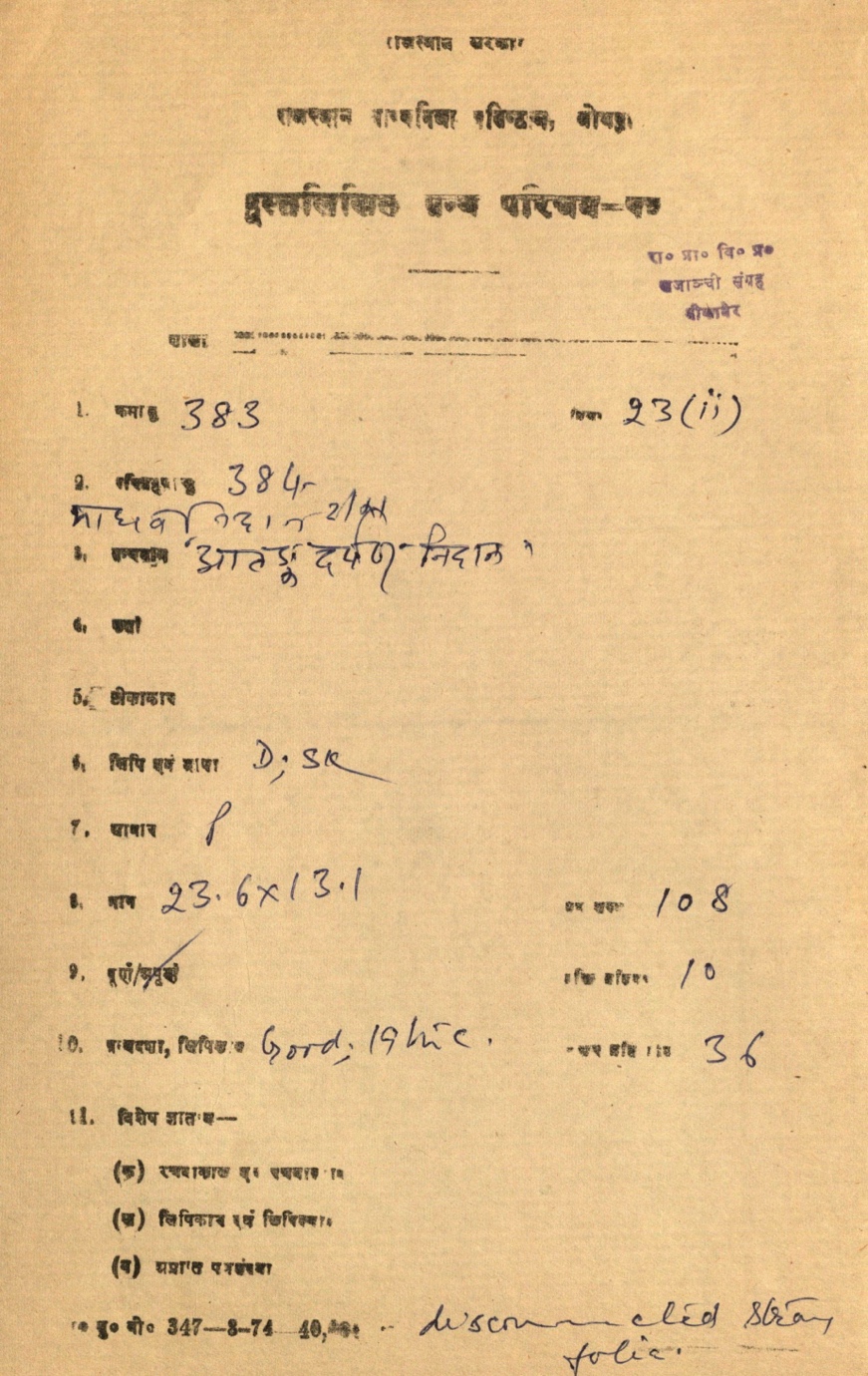
Ātaṅkadarpaṇanidāna
This manuscript represents a 19th-century handwritten catalog entry from the Rajasthan Oriental Research Institute, documenting an Ayurvedic medical treatise titled *Ātaṅkadarpaṇa Nidāna* (alternatively noted as *Mādhavanidāna Ṭīkā*). The text focuses on *sannipāta-jvara* (tridoshic fevers) and their complex symptomatology, diagnostic criteria, and prognostic indicators, reflecting advanced classical Ayurvedic nosology. Written in Devanagari script with Sanskrit terminology, the fragment preserves detailed discussions on dosha interactions, pathological manifestations, and therapeutic challenges, including distinctions between curable, difficult-to-treat, and incurable conditions. Its significance lies in its preservation of nuanced Ayurvedic epistemology, particularly the interplay of *vāta*, *pitta*, and *kapha* in febrile disorders, alongside references to authoritative sources like the *Suśruta Saṃhitā* and *Navanīta Tantra*.
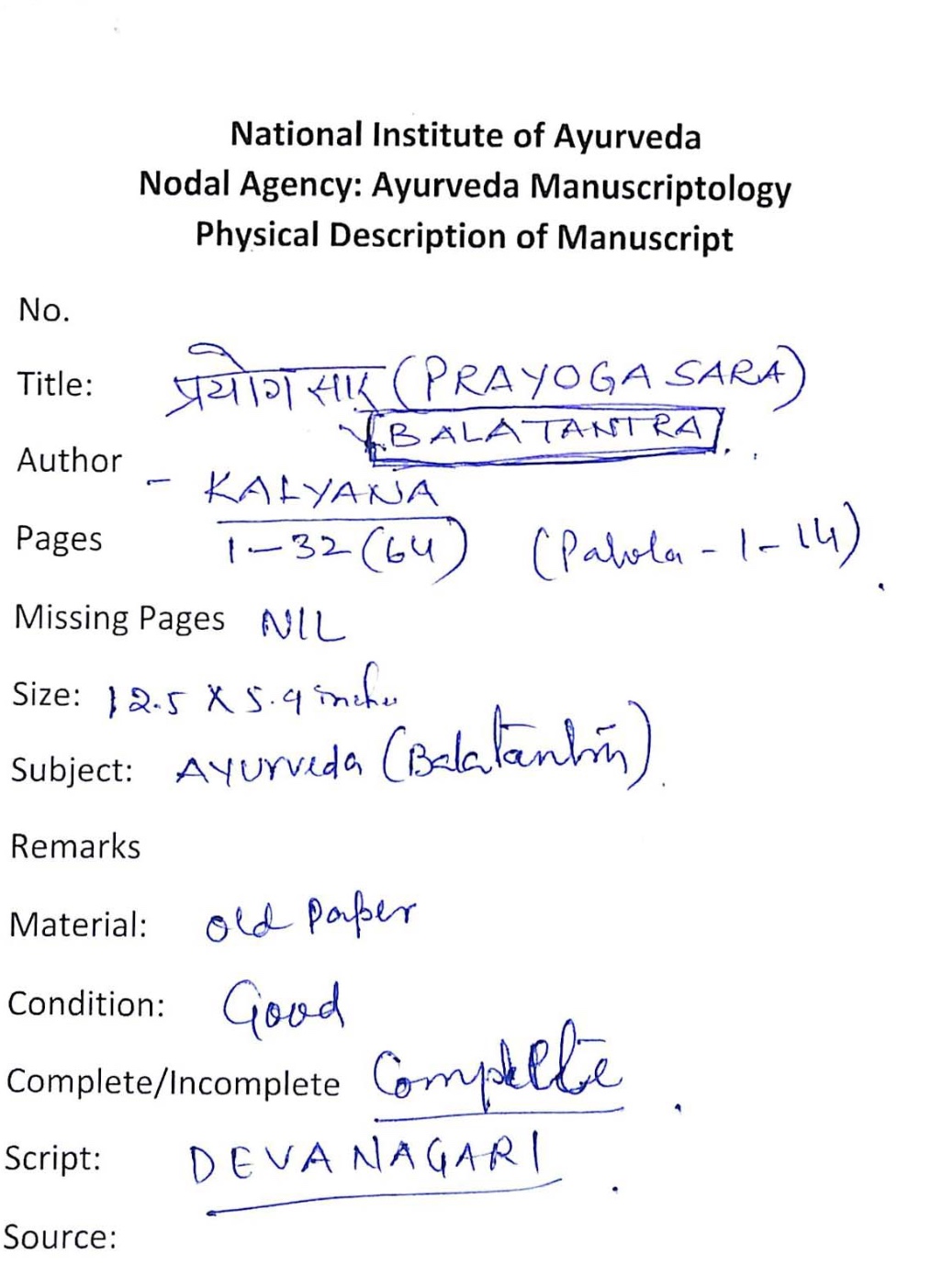
Bālatantra (Prayogasāra)
This Ayurvedic manuscript, titled *Prayoga Sara* (with a focus on *Balatantra*—pediatric medicine), is attributed to the author Kalyana and presents a systematic compendium of therapeutic practices. The text uniquely synthesizes diagnostic frameworks for reproductive and pediatric disorders, detailing etiologies of infertility, menstrual irregularities, and fetal health while prescribing pharmacopeial remedies derived from herbal, mineral, and animal-based ingredients. Its significance lies in the integration of humoral pathology (*tridosha* theory) with ritualistic and astrological considerations, reflecting the holistic epistemology of classical Ayurveda. Written in Devanagari script on aged paper, the manuscript preserves a complete, well-conditioned treatise that bridges empirical medicine and esoteric traditions, offering insights into premodern South Asian medical praxis.