Nitimayukha - Gyan Bhandaar
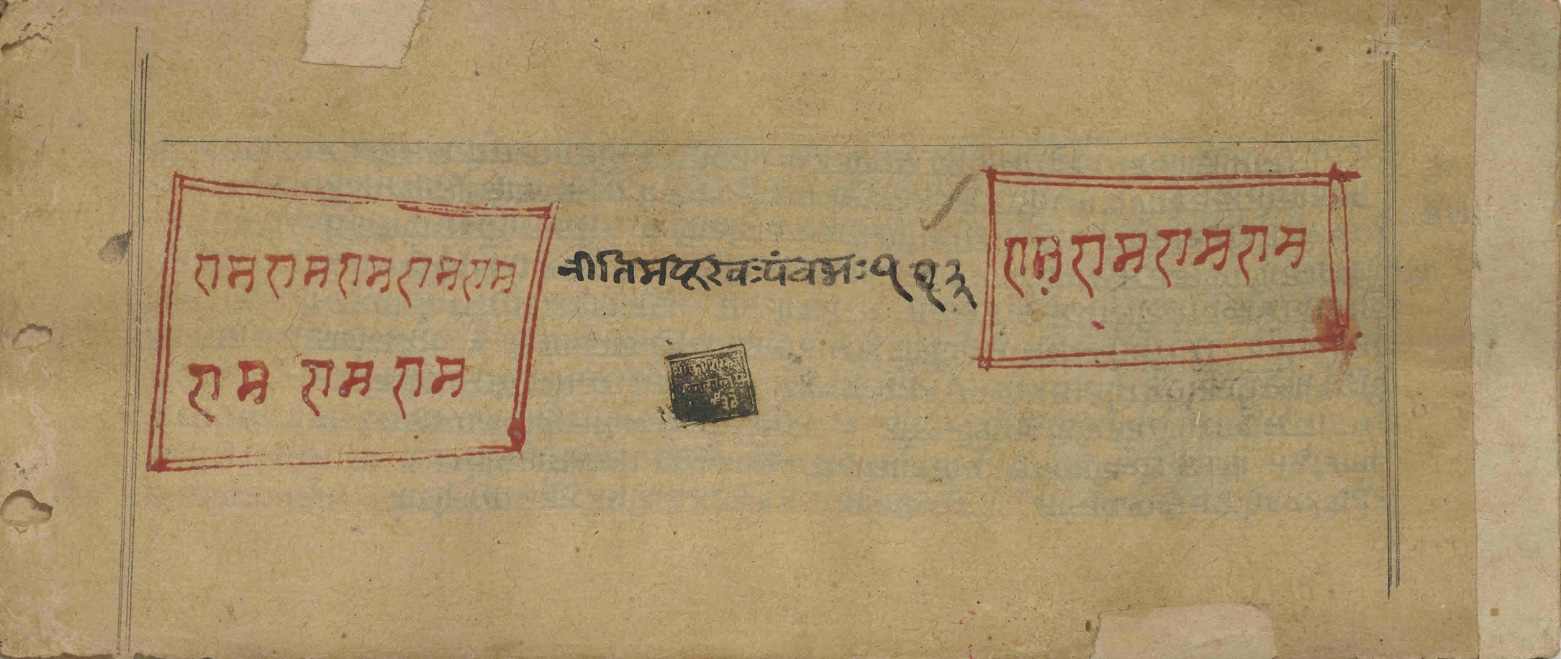
This page is a title or colophon page from the Nitimayukha (Nītimayūkha), specifically marking the fifth chapter or section, dated 1793. The page features repeated invocations of Rama (rāma) written in red ink on both sides, which are devotional mantras or auspicious markings. A partially legible stamp appears in the center, possibly indicating ownership or institutional affiliation with text beginning 'Shri'. The Nitimayukha is a classical Sanskrit text on ethics, statecraft, and moral conduct (niti), making this page relevant for searches on Indian political philosophy, dharma literature, ethical treatises, and manuscript provenance from the late 18th century.
Sanskrit

Nitimayukha

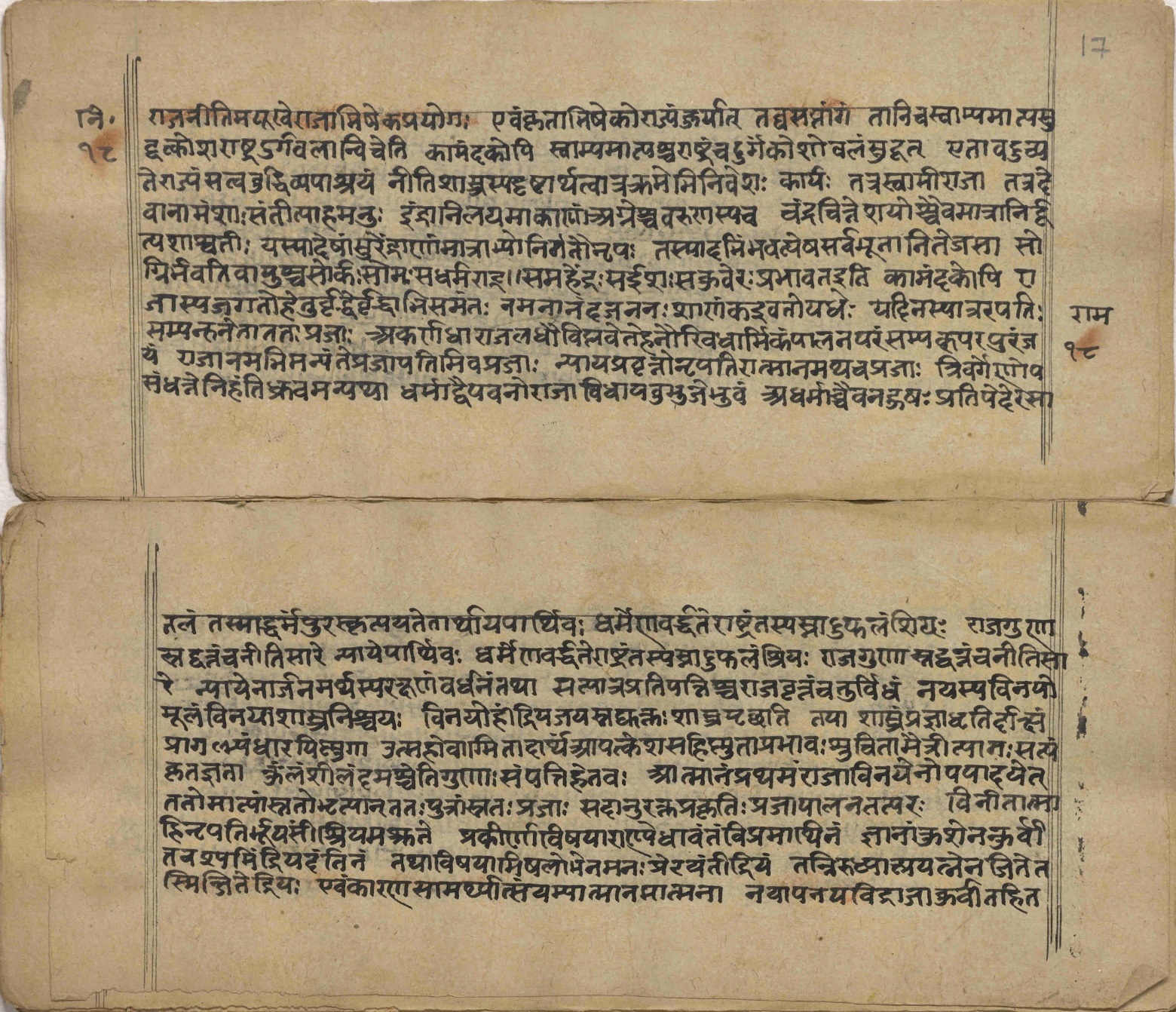
This manuscript is a Sanskrit text titled 'Nītimayūkha' (Beam of Polity), specifically the fifth section, dated 1793 in the Vikrama era. Composed by Nīlakaṇṭha based on the political philosophy of Siṃhasena, it presents a comprehensive treatise on royal governance (rājadharma) and statecraft. The text includes detailed prescriptions for royal consecration rituals (abhiṣeka), genealogical accounts of ruling dynasties, and elaborate instructions regarding auspicious timing, ritual purification with earth from sacred sites, and ceremonial procedures involving Vedic mantras. This work represents classical Indian political theory integrating dharmaśāstra principles with practical administrative guidance for rulers.
Page of the Nītimayūkha describing the seven limbs of the kingdom
NeetishastraOctober 24, 2025

The Kingdom's Seven Limbs: A Manual for Kings

Nītimayūkha, a 1793 manual of statecraft, defines the kingdom as seven limbs — sovereign, minister, ally, treasury, territory, fort, army — and warns that the senses can destroy even a wise ruler.