Sanskrit
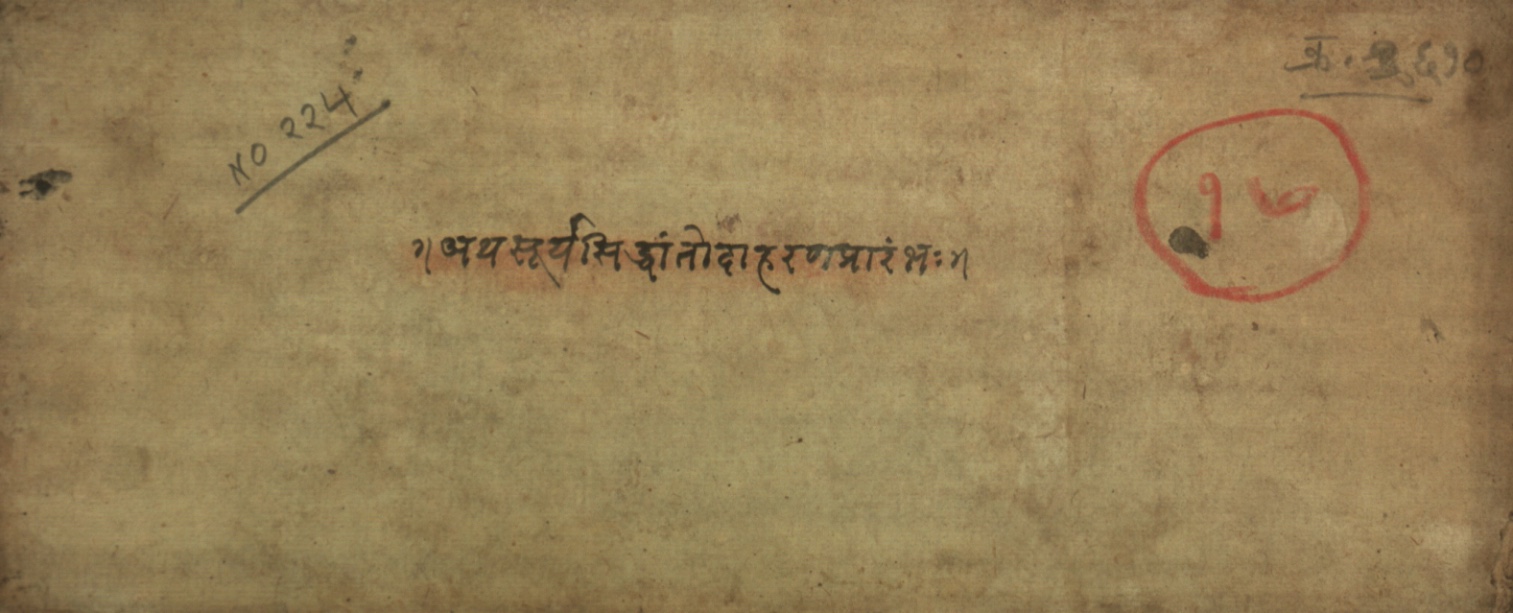
Sūryasiddhāntaudāharaṇa
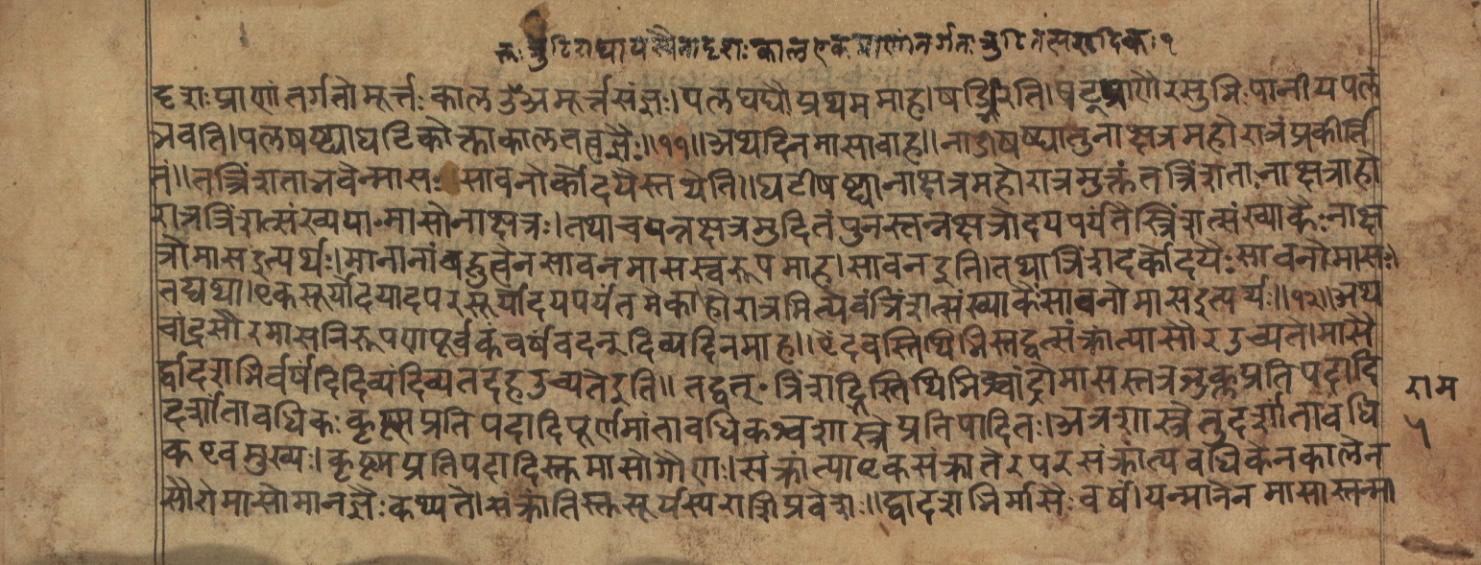
This Sanskrit manuscript represents a commentary (ṭīkā) on the Sūryasiddhānta, one of the foundational texts of Indian mathematical astronomy, composed by Viśvanātha, a scholar from a distinguished lineage of astronomers and mathematicians. The text opens with invocations to Gaṇeśa and Brahman, followed by a genealogical account tracing the author's scholarly heritage through figures such as Rāma, Divākara, Kṛṣṇa, and Keśava, establishing the transmission of astronomical knowledge. The manuscript then recounts the mythological origin of the Sūryasiddhānta, describing how the asura Maya received this sacred astronomical knowledge directly from the Sun god (Vivasvat/Sūrya) after performing severe penance, thereby framing the text as divinely revealed wisdom and affirming its authority as a Vedāṅga essential for understanding celestial phenomena.