Sanskrit
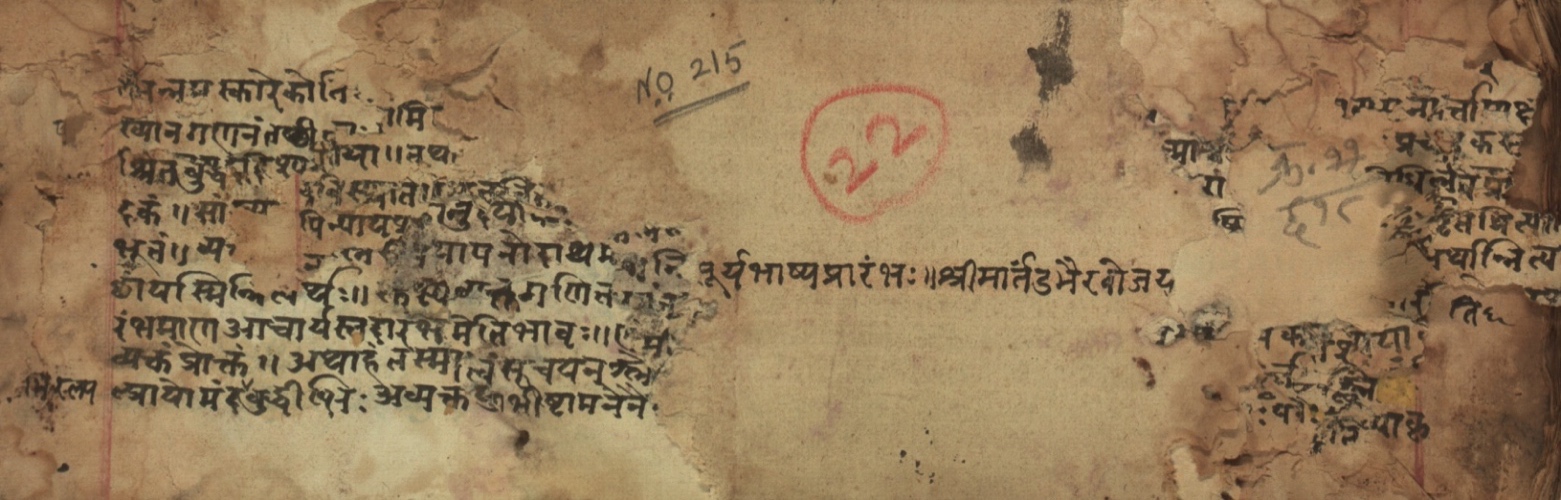
Sūryabhāṣya
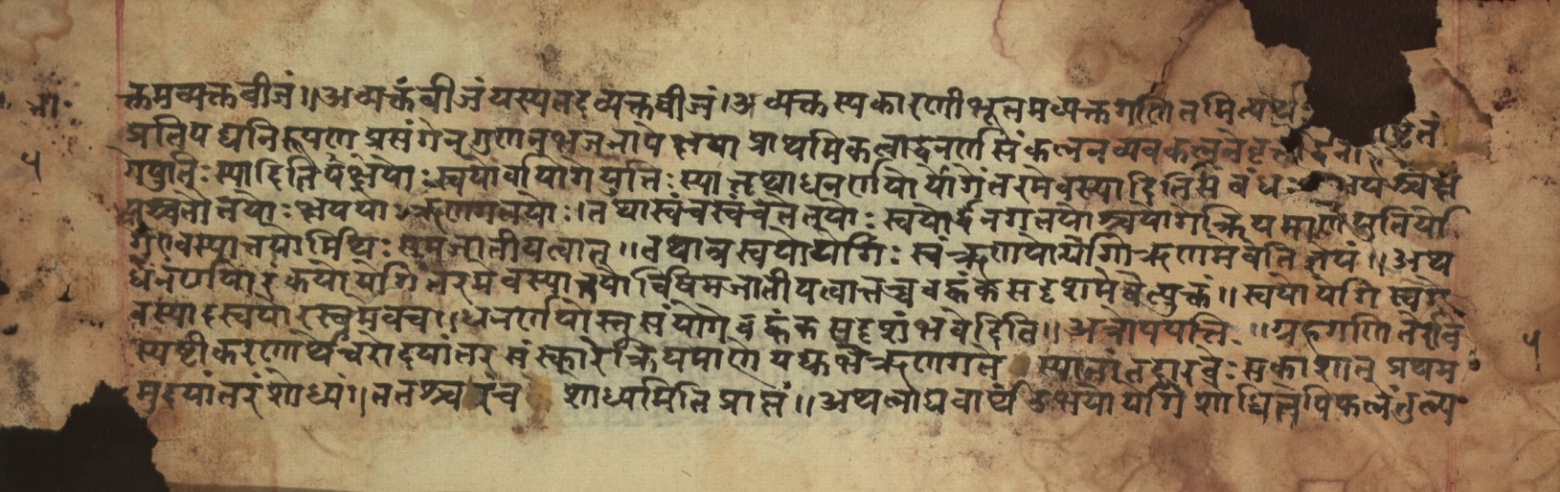
This Sanskrit manuscript represents a scholarly commentary (vyākhyāna) on mathematical treatises, specifically addressing bījagaṇita (algebra) and related computational sciences. The text features invocations to deities including Mārttaṇḍa Bhairava and references to prominent mathematical authorities such as Bhāskara, while discussing foundational concepts of vyakta (manifest) and avyakta (unmanifest) mathematical principles. The manuscript demonstrates the traditional pedagogical structure of Sanskrit scientific literature, combining philosophical discourse with technical mathematical exposition, and includes metrical verses (śloka) alongside prose commentary, indicating its use as an instructional text for students of gaṇita-śāstra (mathematical sciences).