Yuddha KalaJuly 08, 2026
The Festival of Victory: A Compendium of War and Medicine
Yuddhajayotsava, 'the festival of victory,' mixes messengers' omens, fever remedies, and mercury alchemy into a working handbook of war and healing.

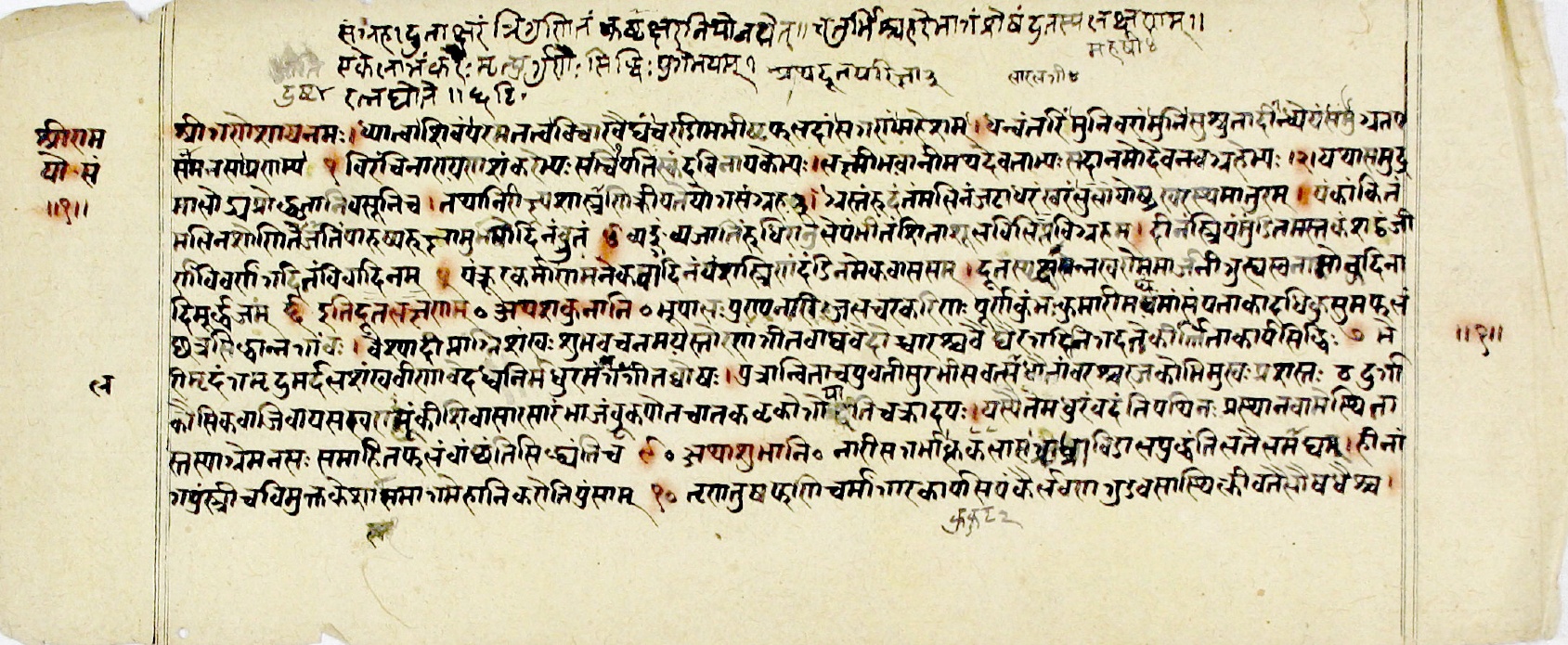
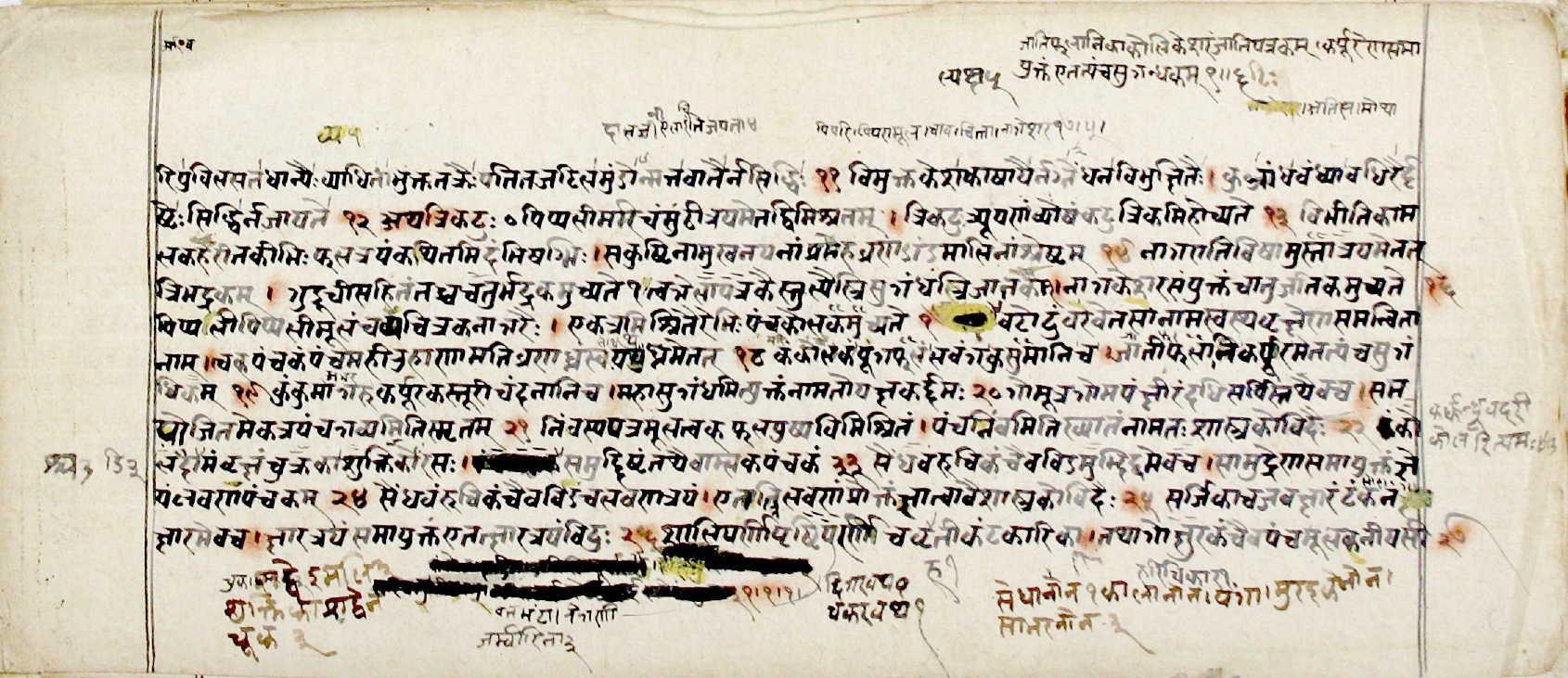
This Sanskrit manuscript fragment constitutes a significant specimen of classical Indian medical literature, specifically belonging to the *Rasaśāstra* (alchemical medicine) tradition. The text presents a systematic pharmacopeia enumerating compound formulations (*yoga*) such as Trikaṭu, Triphalā, Pañcakola, and Pañcagavya, alongside detailed protocols for the *māraṇa* (calcination) of metals including gold, silver, lead, and tin. Notable features include technical instructions for mercury purification using *valuka-yantra* (sand-bath apparatus), auspicious and inauspicious omens (*śakuna*) for medical practitioners, and marginal annotations suggesting active scholarly engagement with the text. The presence of vernacular glosses and metrical verses indicates this was a working medical manual intended for practical *rasāyana* (rejuvenation therapy) and iatrochemical preparations.