KrishishastraJune 23, 2026
Finding Water: The Art of the Well-Digger
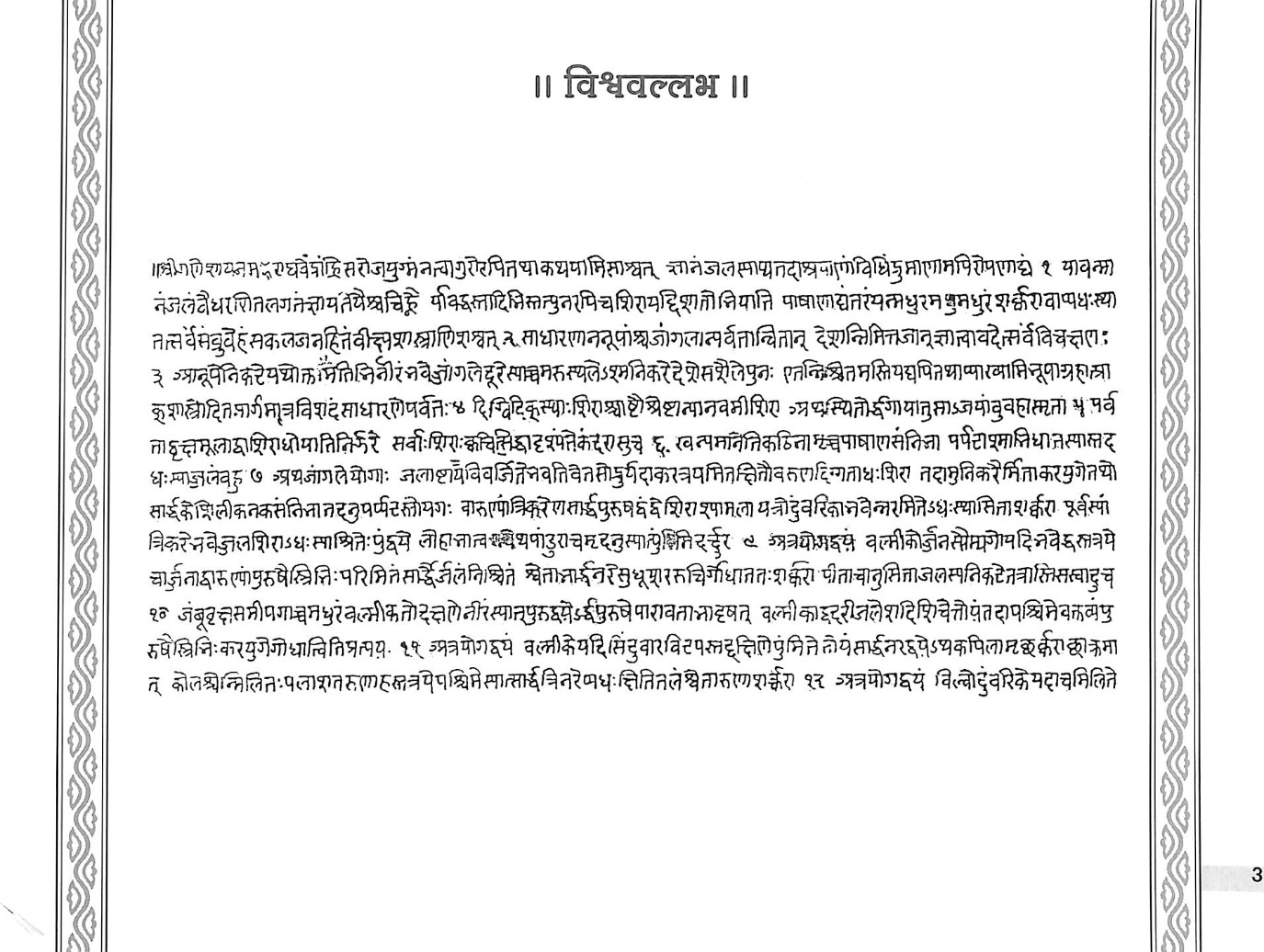
The Viśvavallabha teaches how to find underground water by reading trees, soil, and landscape signs—a systematic hydrology based on centuries of agricultural observation.

This Sanskrit manuscript presents a sophisticated treatise on hydrology and geological divination, specifically concerning the identification of underground water sources through observation of natural indicators. The text systematically catalogues diverse yogas (combinations) correlating botanical, topographical, and zoological signs—such as the presence of specific trees (vallīka, śirīṣa, pīlu), termite mounds (valmīka), snake species, and soil characteristics—with precise measurements (in puruṣa and hasta units) to predict water quality, depth, and taste. Notable is its integration of directional cosmology (digvidikṣu), with detailed prescriptions for different landscapes (anūpa, jāṅgala, sādhāraṇa) and the classification of water as madhura, śarkarā, or kaṣāya based on these environmental markers. The work exemplifies classical Indian scientific empiricism, combining practical hydrological knowledge with ritual invocations to Gaṇeśa and Raghuvaṃśa lineage, suggesting its use by specialized practitioners of divination (śāstra) and civil engineering.