
Where is the water? The Viśvavallabha — a treatise on trees, water, and the land — is a manual for answering that question. It reads the ground the way a physician reads a pulse: ant-hills, trees, and the lie of the earth all give signs, and the well-digger who knows them finds water before the first spade falls. This is not divination; it is the agricultural science of observing the landscape.
Knowledge and water as metaphors
The Viśvavallabha opens with an image that carries its whole program. Knowledge is water — both hidden, both waiting to be found, both turning the hard world sweet. The treatise says:
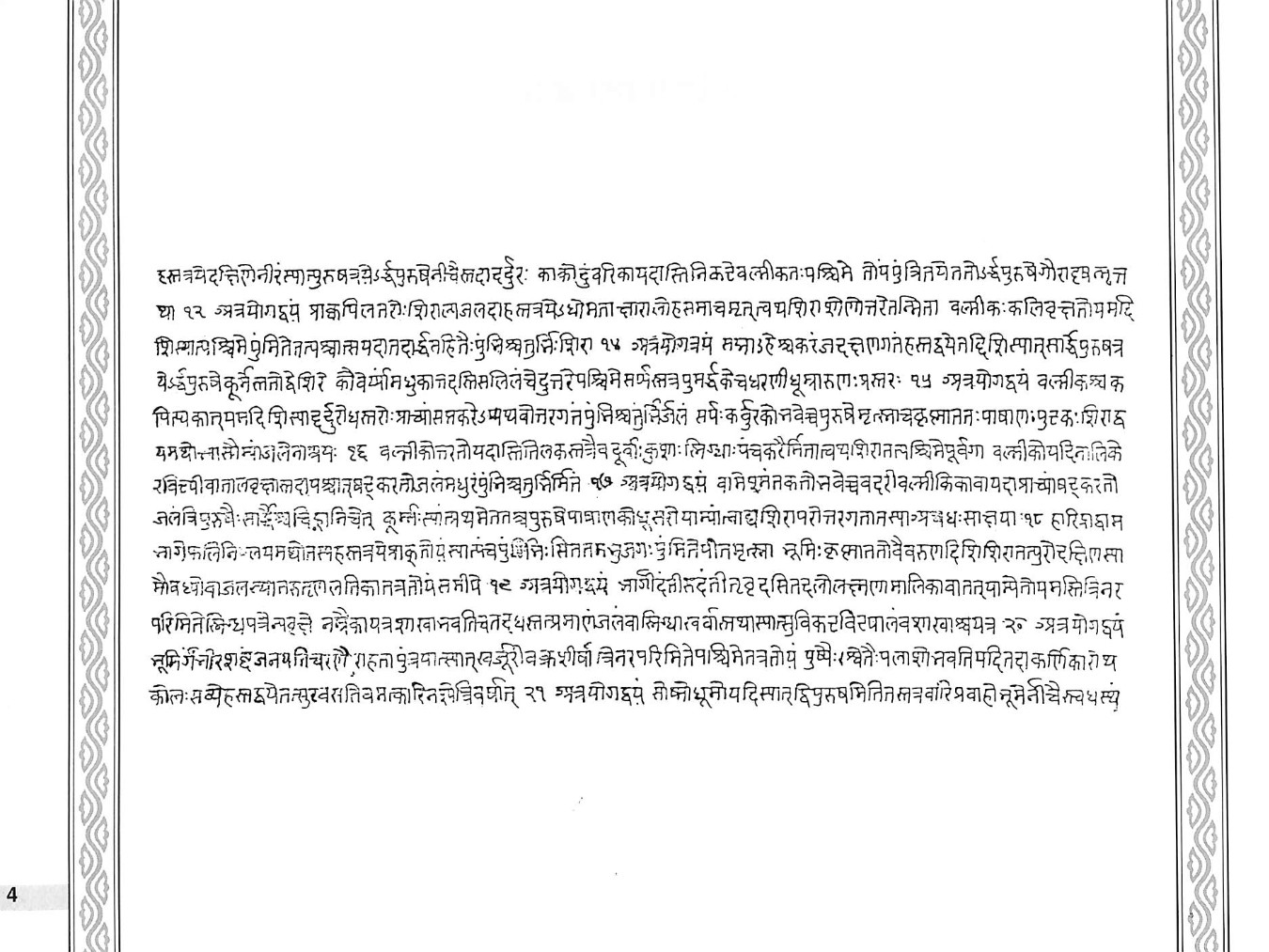
Having bowed to the pair of lotus feet of the best of Raghus and also to the guru, I shall speak accurately. Knowledge is like water, and the hands of that (knowledge) are for planting the trees of proper conduct. As long as water remains in its natural source, supported by the earth, and is increased by favorable signs — that which is hard like stone becomes sweet, very sweet sugar at the bottom.
This is not mere poetry. The metaphor names the text's purpose: knowledge makes the bitter ground fertile. Water in stone becomes sweetness. The same wisdom applies to finding actual water beneath the earth.
The land speaks in four voices
The text divides the land into four types, each with its own hydrology and difficulty. Marshy land (anupa), where water lies near the surface, is the easiest to work. Dry land (jangala), where water lies deeper, demands more skill. Stony land is harder still, and mountainous land hardest of all. The treatise focuses on dry and marshy ground — the land a farmer actually worked — and teaches how to read each one.
In dry land, the Viśvavallabha names specific plant combinations that mark water. If the vetasa reed (a plant of moist places) stands alone in a waterless desert, the text promises water at one and a half *koṣṭhī* — a unit of measurement — below the ground. The quality will be golden, not very sweet, with gravel and iron deposits. Move west three and a half hand-breadths, and the sign changes: the water head turns dark blue, and the water below will be white, even sweet, marked by white sugar deposits.
Now the combinations for dry land. In a waterless desert, when the Vetasa (reed) is the chief, standing at a distance of three hands, Varuna's direction below the head, then measured by the Nikaras, at the pair of hands, the water is at one and a half Koṣṭīs, golden in quality, not very sweet, with a little gravel and iron. In the western direction, at three and a half hands, the head is dark blue, the water is below, measured by the Udumbara and Vijñara, with white sugar.
The precise catalog of markers
The text becomes more intricate as it proceeds. When the creeper (vallī) and arjuna tree grow together — a specific pairing — water is certain. The quality will be white, copper-colored, grayish, pulled from the earth, sweet like sugar, yellow and inferred from other signs. But if the creeper grows near a red jambu tree, with an ant-hill to the south, then the water comes sweet from that exact spot, as if from a pigeon's beak — an image that suggests its purity and smallness.
The Viśvavallabha teaches measurement as carefully as it teaches observation. Distances are reckoned in hastas (hand-breadths), purushas (man-lengths), and karas (small hand-spans). A post stands exactly six hastas from a pool. An ant-hill marks a compass point. A jujube tree on the east means saline water — and the text lists the chain of signs below: first saline, then iron-colored earth, then sirisha flowers to the north.
Every combination narrows the search. The text moves systematically through the land, layer by layer, adding precision with each verse. It is a logic of elimination: if these trees stand here, water is there. If the soil shows these colors, the quality will be this. The well-digger who learns this catalogue need not dig blindly.
Water divined from land
The genius of the Viśvavallabha is that it turns hydrology into practice. A farmer in the dry season, facing a choice of where to sink a well, could use this text as an atlas. The combinations of trees, the measurements, the soil signs — all were observable without instruments, without expense, without risk. The text encoded centuries of observation into a system.
This is krishiśāstra — the science of agriculture and water — the most practical branch of the Sanskrit tradition. In a land of monsoons and wells, finding water was a skill with civilization's weight behind it. The Viśvavallabha preserves that skill's textbook: where to look, what to trust, how to read the earth's own testimony about the water it holds. To read this text is to understand that the ancients did not guess where water lived — they knew how to see it.