DharmashastraAugust 04, 2026
Ugrarathaśānti: Taming the Fierce Sixtieth Year
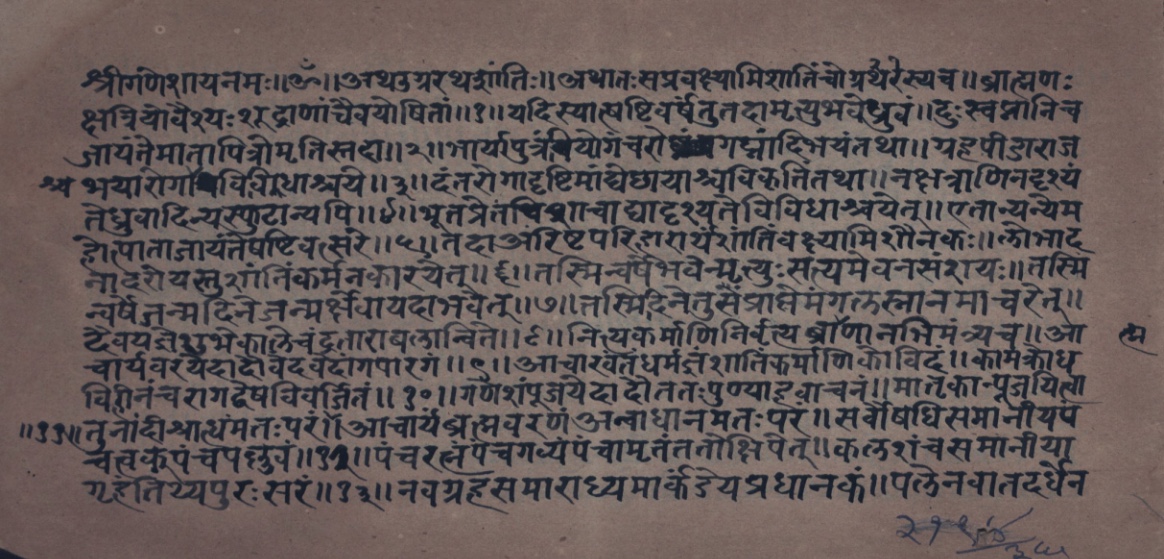
Ugrarathaśānti pacifies the dangers of the sixtieth year through ritual centered on Mārkaṇḍeya, the sage who conquered death.

This Sanskrit manuscript preserves the *Ugrarathaśānti*, a Hindu ritual text attributed to Śaunaka, detailing propitiatory rites (*śānti*) to avert calamities associated with one's sixtieth year—an astrologically inauspicious milestone believed to threaten longevity, familial harmony, and prosperity. The text prescribes an elaborate liturgical sequence including purification rites, invocation of deities (notably Gaṇeśa and Mārkaṇḍeya), fire offerings (*homa*) with specific mantras, Vedic recitations (Śrīsūkta, Rudrajāpya, Puruṣasūkta), and ceremonial gifting to Brahmins, reflecting the intersection of astrological fatalism, Ayurvedic longevity concepts, and Brahmanical ritual orthopraxy. Its significance lies in documenting medieval Indian gerontological ritualism and the textual codification of life-cycle (*saṃskāra*) protective ceremonies.