VyakaranaApril 04, 2026
Kṣemendra's Alphabet: The Discrimination of Letters
Kṣemendra's Lipiviveka turns the alphabet into a living cosmology — each letter mapped to a deity and a body part, each syllable weighed as guru or laghu.

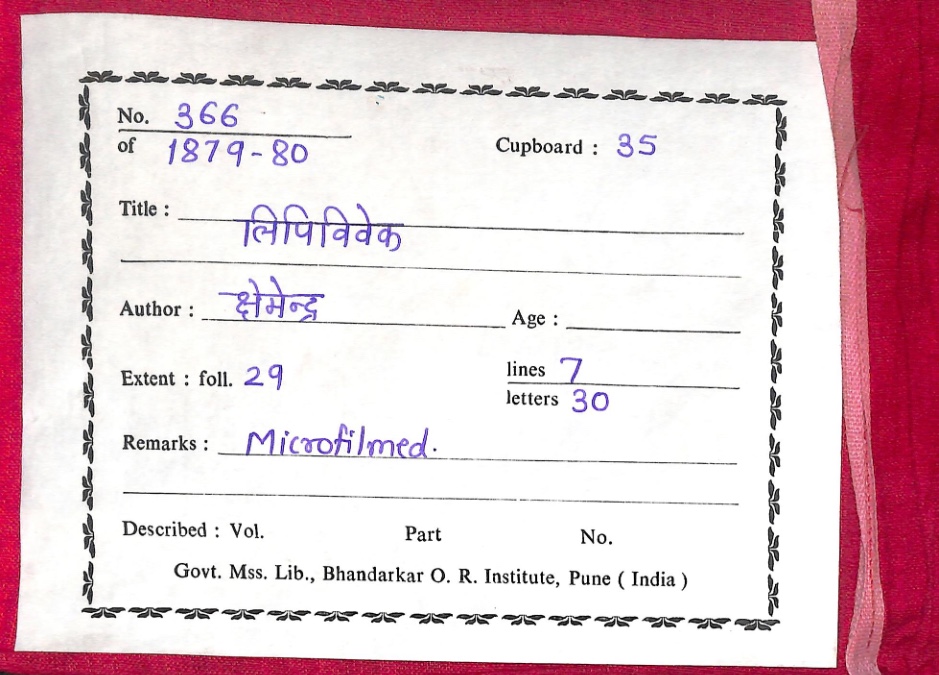
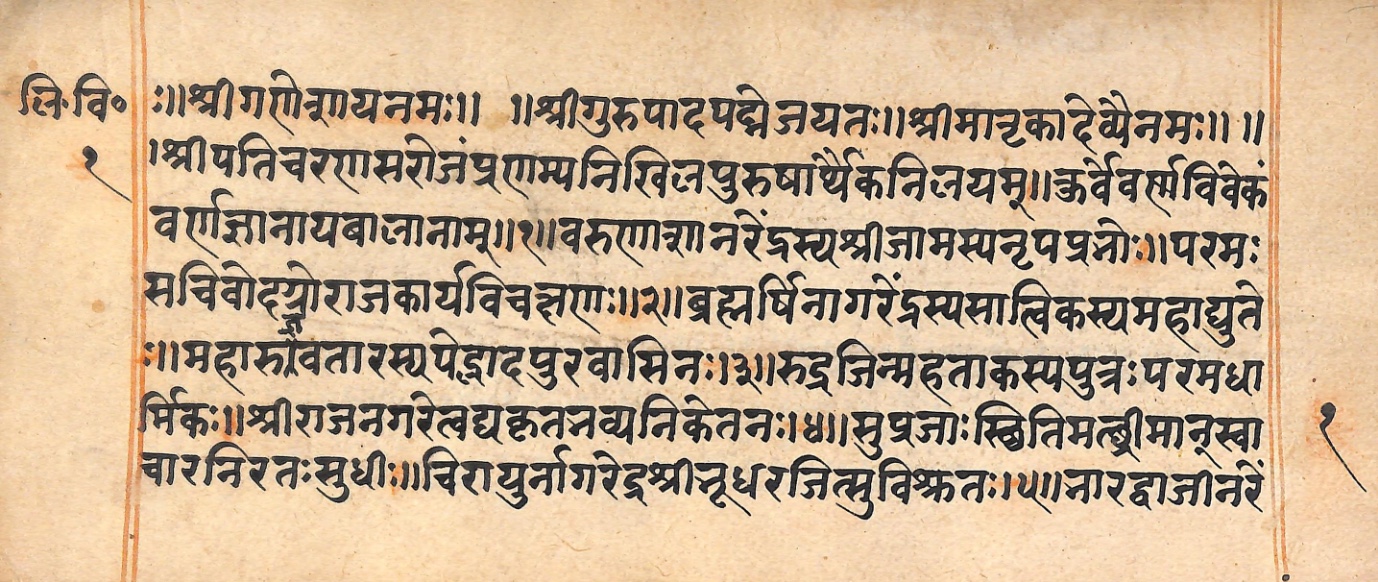
This 29-folio Sanskrit manuscript, titled *Lipiviveka* (Analysis of Writing) by the renowned Kashmirian polymath Kṣemendra (11th century CE), constitutes a pedagogical treatise on Sanskrit orthography and metrics. The preserved opening folios reveal a systematic exposition of the Sanskrit alphabet (*mātṛkā*), prosodic patterns (*chandas*), and the eight *gaṇa* combinations fundamental to classical versification, framed within a traditional benedictory structure invoking Gaṇeśa, the guru lineage, and the goddess Mātṛkādevī. The text's practical orientation toward instructing novices (*bālānām*) in correct letter recognition and scriptural recitation, combined with its explicit restriction against transmission to non-twice-born (*śūdra*) recipients, illuminates the sociolinguistic dimensions of medieval Sanskrit literacy education. The manuscript's preservation at the Bhandarkar Oriental Research Institute, Pune, with its distinctive seven-line, thirty-letter format, offers valuable material evidence for the transmission of Kṣemendra's lesser-known technical works beyond his celebrated literary compositions.