Sanskrit
Laghujātaka jyotiṣa(varāhamihirāchārya)
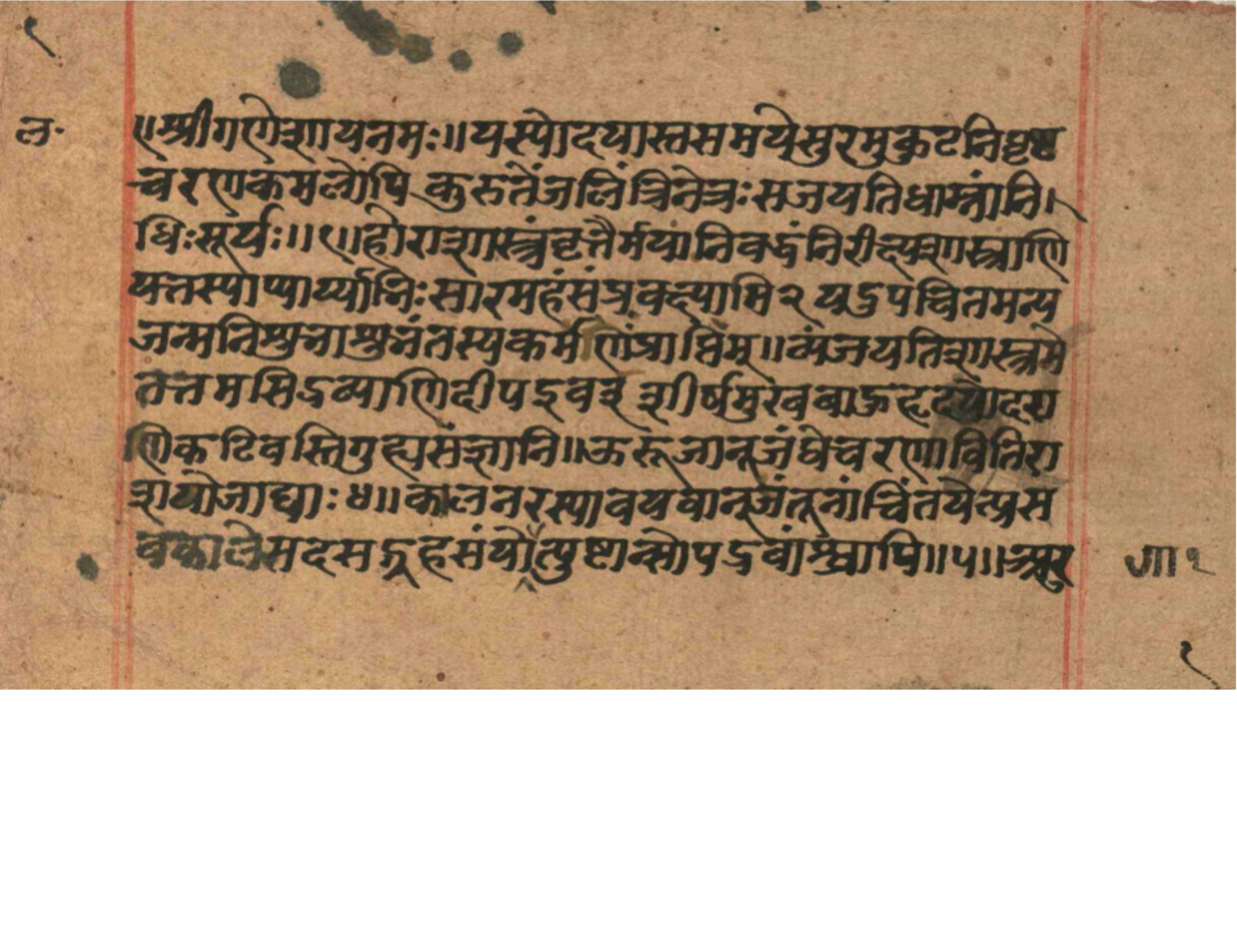
This Sanskrit manuscript presents the opening chapter (Rāśiprabhedādhyāyaḥ) of the *Laghu-Jātaka*, a seminal work on horoscopic astrology (*horāśāstra*) composed by the renowned sixth-century astronomer-astrologer Varāhamihira. The text systematically delineates fundamental astrological concepts including the twelve zodiac signs (*rāśi*), their bodily correspondences, directional associations, elemental qualities, and planetary rulerships, alongside intricate calculations for subdivisions such as *navāṃśa*, *dreṣkāṇa*, and *horā*. Particularly noteworthy is its sophisticated treatment of planetary dignities, strengths (*bala*), and mutual relationships (*mitra-śatru*), demonstrating the highly developed computational and interpretive frameworks characteristic of classical Indian astrology. The preserved verses exhibit the characteristic metrical structure and technical precision that established Varāhamihira's authority in the jyotiṣa tradition.