Sanskrit
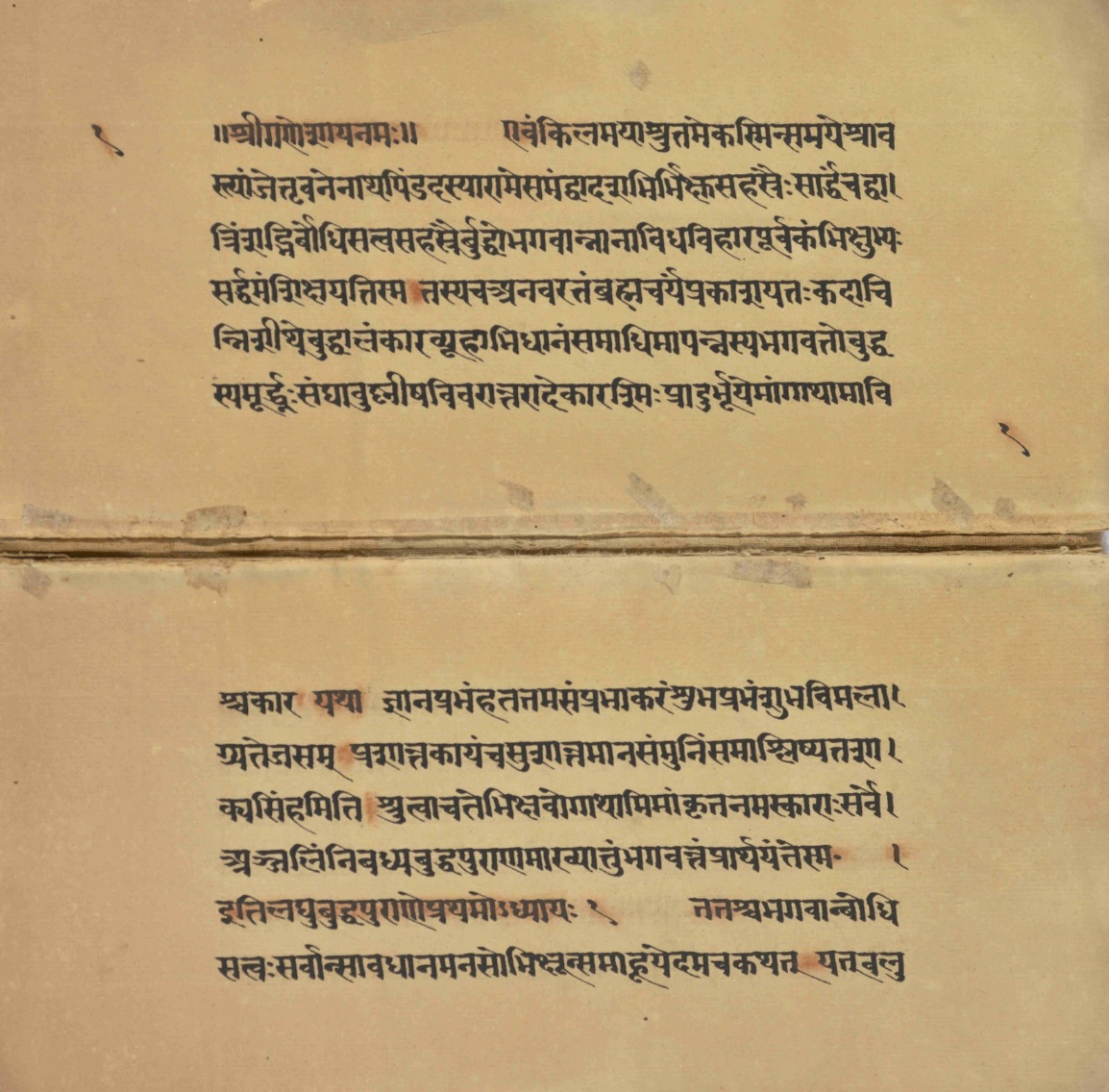
Laghubuddhapurāṇa
This Sanskrit manuscript leaf preserves a significant portion of the *Laghubuddhapurāṇa* (Concise Buddha Purāṇa), a Buddhist narrative text recounting the life of the Buddha from his residence in Tuṣita heaven through his birth at Lumbinī. The text exhibits characteristic Mahāyāna Buddhist literary features, including the invocation of Mañjuśrī, detailed descriptions of the Bodhisattva's descent and birth accompanied by miraculous signs (saptapada), and the prophetic examination of the infant's lakṣaṇas by the sage Asita. The manuscript's structure—with numbered chapters (adhyāyas), verse citations in Prakrit-influenced Sanskrit, and interlinear numerical notations—suggests it served as a liturgical or pedagogical text within a Nepalese or North Indian Buddhist milieu, likely dating to the late first millennium CE when such condensed Buddha-biographies flourished alongside expanding Purāṇic literature.