JyotishaNovember 15, 2025
Eclipse Arithmetic: Predicting When the Moon Vanishes
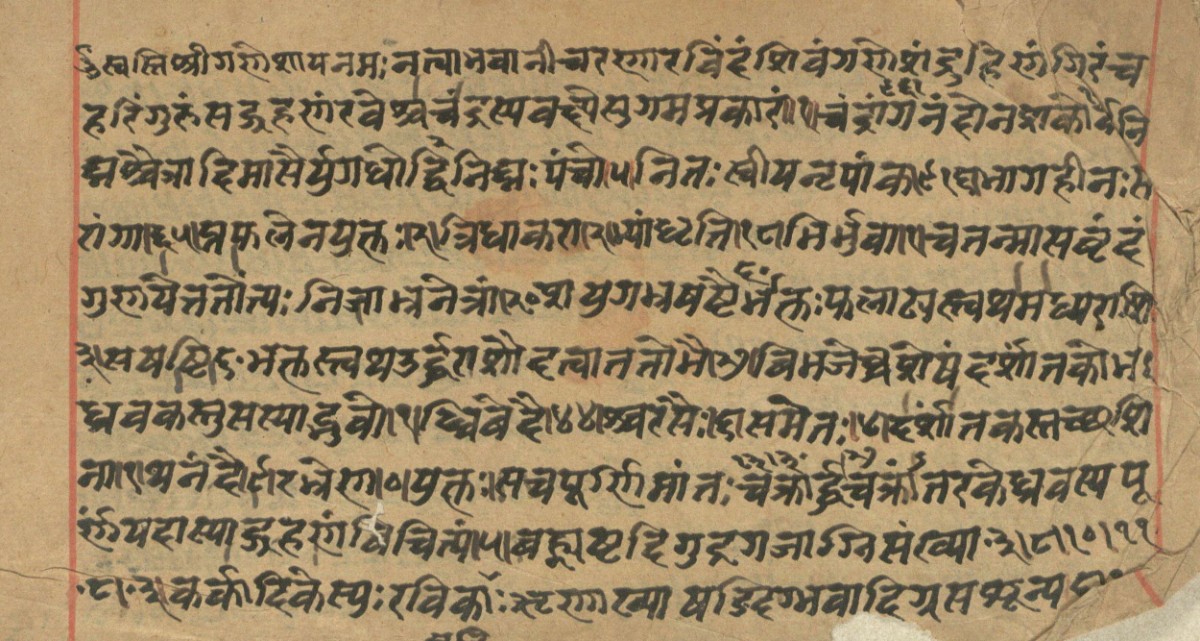
Indian eclipse mathematics: three pages of algorithmic verse predicting when the Moon vanishes and emerges from Earth's shadow.


This Sanskrit manuscript (Acc. No. 58923) presents a treatise on *Grahaṇagaṇita* (lunar eclipse computation), a specialized branch of Hindu mathematical astronomy (*Jyotiṣa*). The text contains algorithmic verses for calculating eclipse parameters—including *adhimāsa* (intercalary months), *madhyama-rāśi* (mean longitude), and *sparśa-sthiti* (contact and duration)—employing numerical constants (*guṇyas*) and sexagesimal values. Notable features include the invocation of Gaṇeśa and traditional planetary deities, the use of *bīja* (seed) numbers (3, 10, 11, 35, 56, 60, 139), and marginal annotations indicating *grāsa* (magnitude of obscuration). The fragment preserves technical terminology for eclipse phases (*sparśa*, *vimarda*, *mokṣa*) and demonstrates the computational methods of the *siddhānta* tradition, likely affiliated with the *Brahma* or *Sūrya* schools given its structural parallels to Bhāskara II's procedures.