TantraMarch 21, 2026
The Goddess Who Paralyzes Speech: Brahmāstra's Bagalāmukhī
Some deities grant wealth Some grant wisdom Bagalāmukhī grants silence — to your enemiesies. This short tantric hymn, the Brahmāstra, is devoted to the yellow g

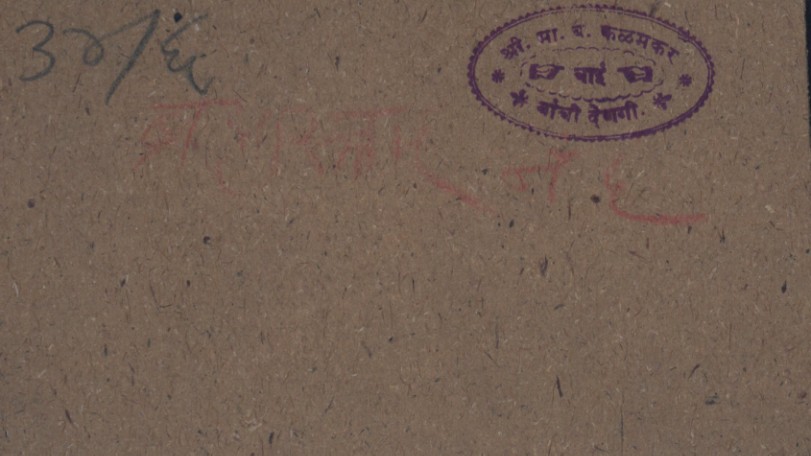
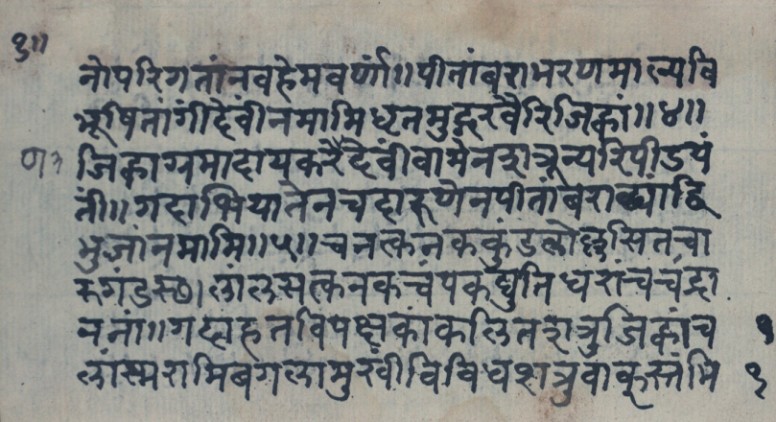
This 18th-century Marathi manuscript (Śaka 1755/1833 CE) presents a Tantric ritual text dedicated to the goddess Bagalāmukhī, a fierce deity associated with paralyzing enemies and silencing adversaries. The text contains detailed instructions for protective rituals (rakṣā), meditative visualization (dhyāna), and the deployment of mantras and yantras for stambhana (immobilization) and māraṇa (destruction) of enemies, reflecting the siddha-oriented practices of Hindu Tantra. Notable features include the precise anatomical deployment of the goddess's attributes—her tongue (jihvā), mace (mudgara), and noose (pāśa)—as well as the text's self-identification as the "Brahmāstra" weapon, restricted to guru-devoted initiates. The manuscript bears scribal annotations indicating its donation by Śrī Mā Bā Kaḷamkar and its completion by Ananta Bhaṭṭa, with visible evidence of devotional closing formulas (viśveśvarārpaṇamastu) and water damage affecting subsequent folios.