MathematicsJanuary 16, 2026
Algebra as Wealth and Debt: The Bījagaṇita's Numbers
The Bījagaṇita's metaphor of wealth and debt makes the algebra of positive and negative numbers vivid and practical — mathematics rooted in the merchant's ledger.

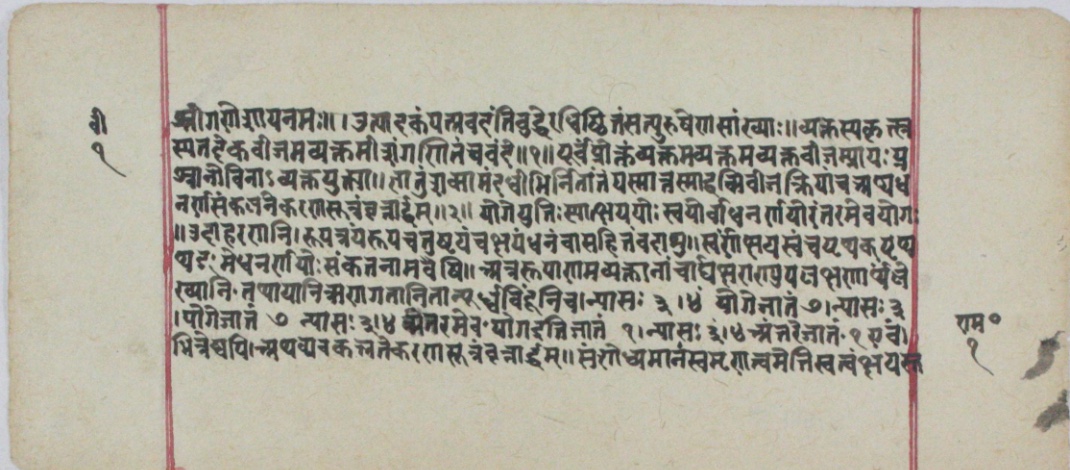
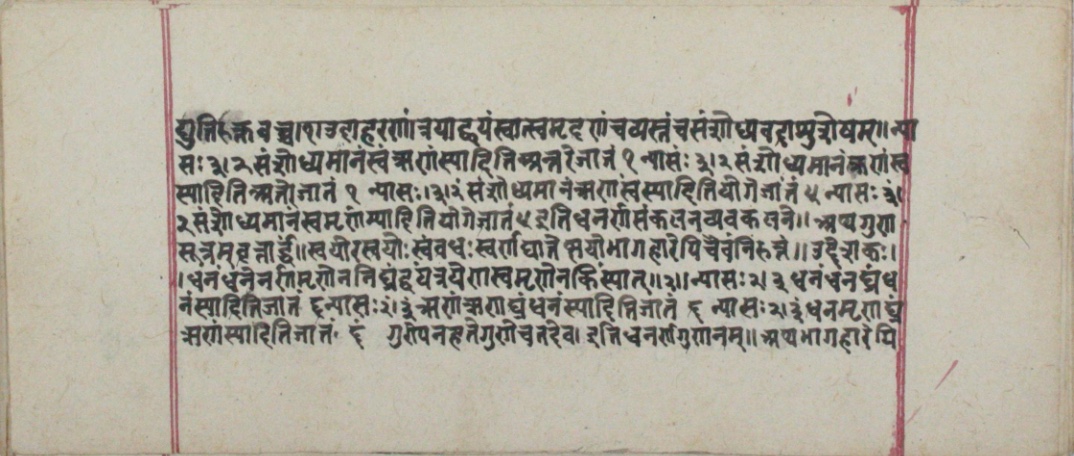
This Sanskrit manuscript presents a foundational treatise on Indian algebra (bīja-gaṇita), attributed to the mathematician Bhāskara II. The text systematically develops rules for operations with positive and negative quantities (dhanaṛṇa), zero (kha), and unknown quantities (avyakta), including addition, subtraction, multiplication, division, squaring, and root extraction. Notable features include the sophisticated treatment of zero as a number with defined operational properties, the use of color-coded symbols (yāvattāvat, kālaka, nīlaka) to represent unknowns, and the clear distinction between like and unlike terms in algebraic operations. The verse-commentary format, with invocatory verses to Gaṇeśa and Īśvara, exemplifies the classical Indian mathematical tradition's integration of technical content with poetic expression.