DarshanaJuly 29, 2026
Sāṃkhya: When Prakṛti Dances No More
Prakṛti the dancer performs until Puruṣa truly sees her, then stops — the Sāṃkhya path to liberation through knowledge of the twenty-five principles.

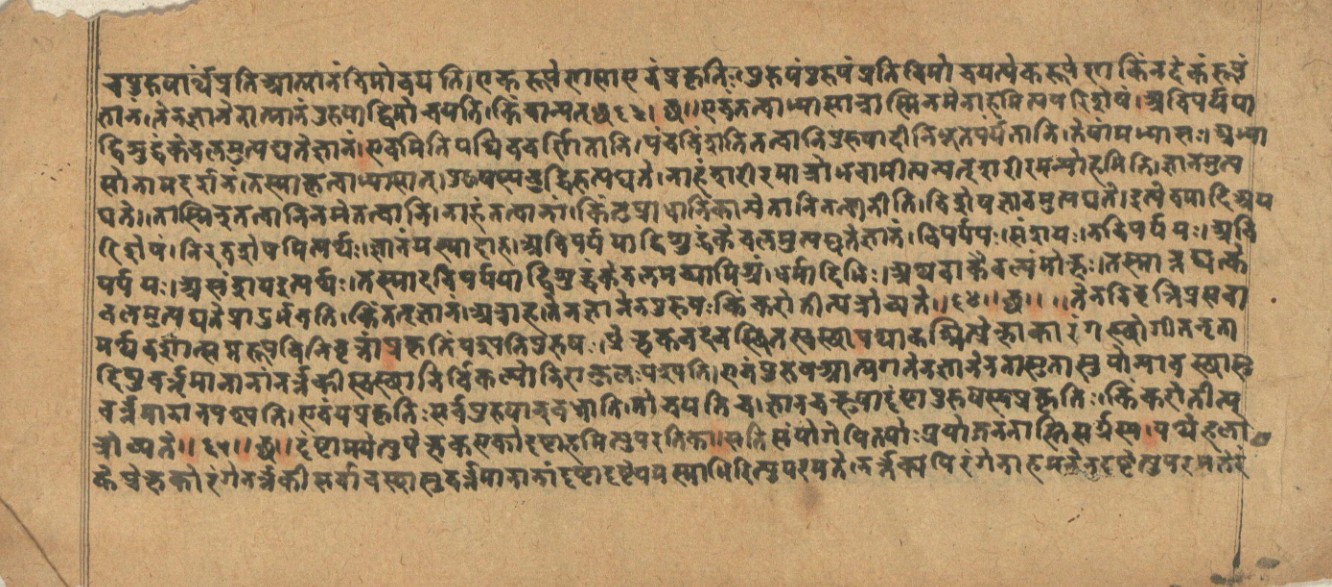
This Sanskrit manuscript fragment (Acc. No. 56810) presents a detailed exposition of Sāṃkhya philosophical doctrine, specifically addressing the nature of liberation (kaivalya/mokṣa) through discriminative knowledge (vivekajñāna). The text elaborates on the twenty-five tattvas, the cessation of prakṛti's activity upon the puruṣa's realization of its true nature, and employs the celebrated metaphor of the dancer (nartakī) ceasing to perform once witnessed by the audience. Notable features include extensive commentary on the dissolution of the puruṣa-prakṛti conjunction (saṃyoga), the role of residual impressions (saṃskāra) in maintaining embodiment post-liberation, and the analogy of the potter's wheel—demonstrating sophisticated engagement with classical Sāṃkhya epistemology and soteriology.