JainaJune 30, 2026
Hanuman the Jain: Wind-Born, Vow-Keeper, Monk
In the Jain Rāmāyaṇa, Hanuman is born to danger, married a thousand times, and finally takes the ascetic vow—a monkey's path to freedom.

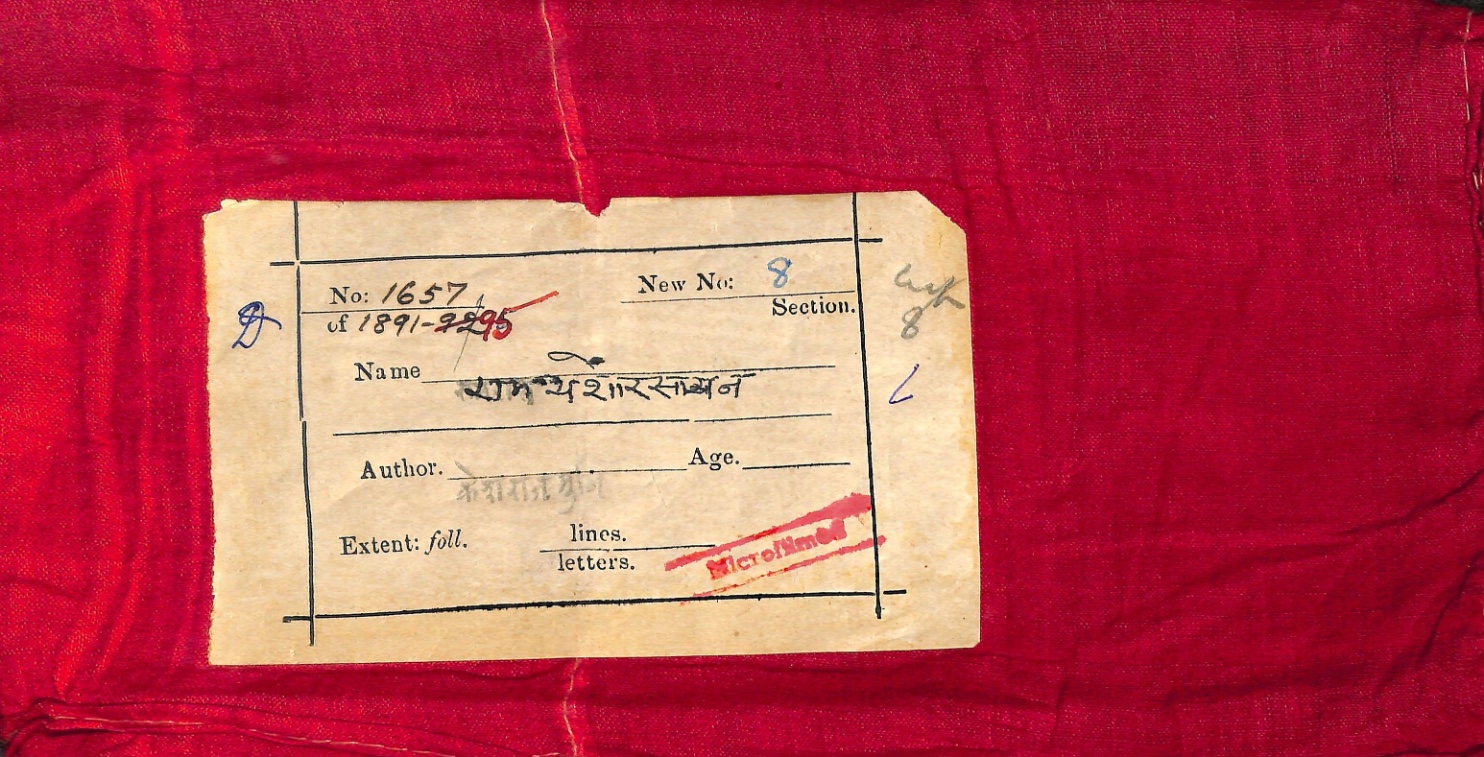
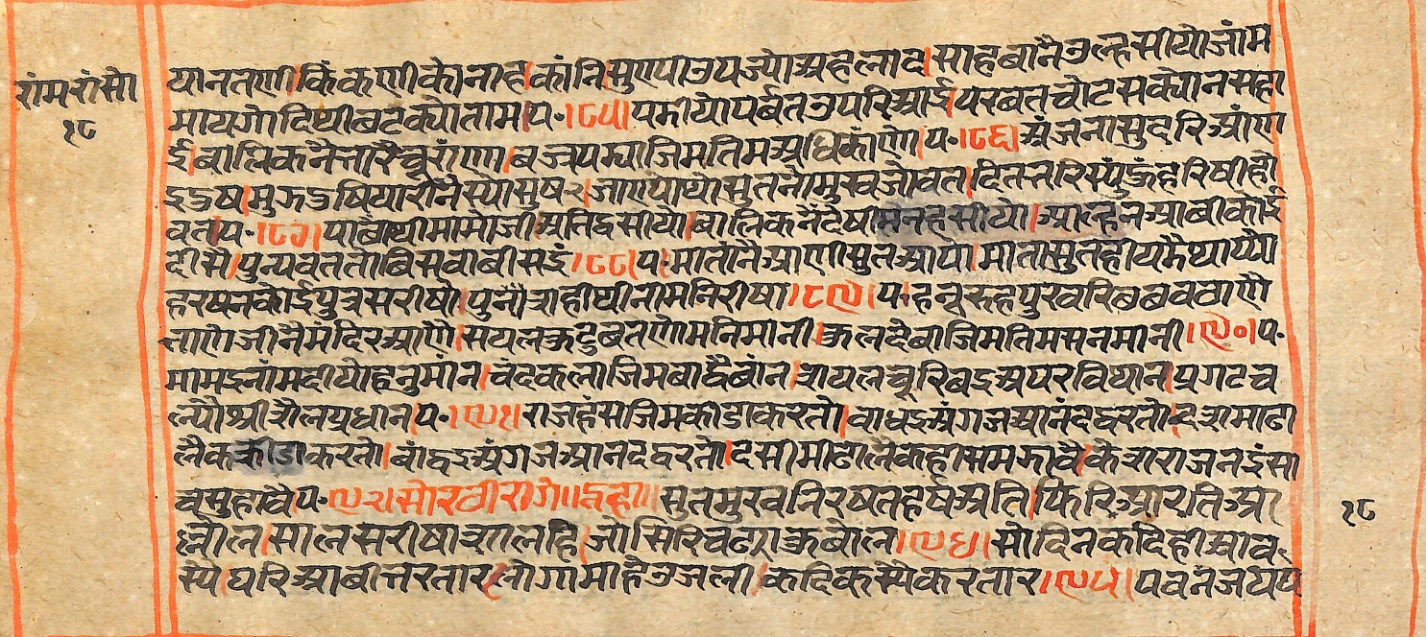
This manuscript, titled *Rāmayaśorasāyana* (also referred to as *Rāmarāsa*), is a Jain devotional reworking of the Rāmāyaṇa narrative composed by Keśavarāja, preserved in a 19th-century copy (accession no. 1657 of 1891–95). The text uniquely integrates Rāma into Jain hagiographical frameworks, presenting him as a pious Jain king (*jinavar*) and emphasizing themes of renunciation (*saṃyama*), liberation (*mokṣa*), and the spiritual authority of Jina Munisuvrata. Composed in Old Gujarati verse forms (*dūhā*) set to musical modes (*rāga*) such as Desāvala and Bhairava, the work exemplifies the Jain literary tradition of appropriating epic narratives to propagate sectarian values, with notable episodes including the conversion of Vāli and the characterization of Rāvaṇa as a devout Jain practitioner.
In the Jain Rāmāyaṇa, Hanuman is born to danger, married a thousand times, and finally takes the ascetic vow—a monkey's path to freedom.
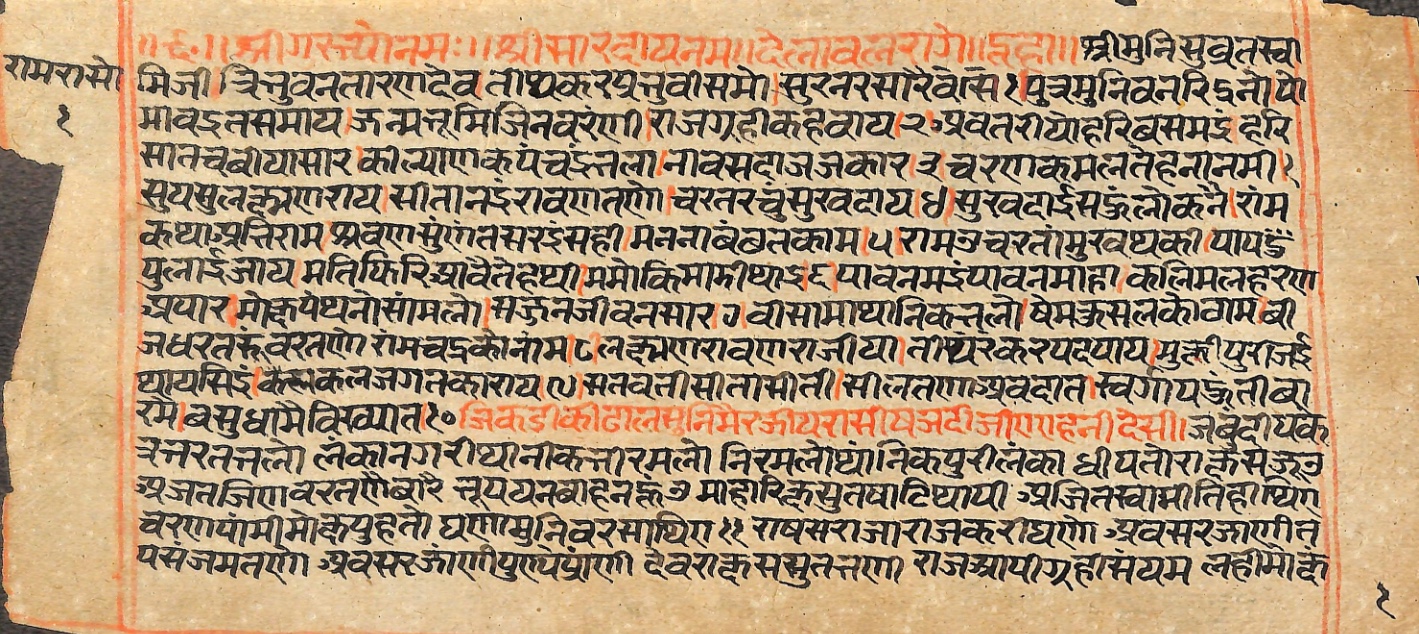
A Jain Ramayana where Rama bows to the Jina and the epic's victory becomes spiritual enlightenment—devotion remade for Jain believers.