MathematicsJanuary 15, 2026
Bhāṣālīlāvatī: Mathematics in the Vernacular
The Bhāṣālīlāvatī brings Bhāskara's Līlāvatī into the vernacular, teaching arithmetic in prose and verse that ordinary learners could follow and apply.

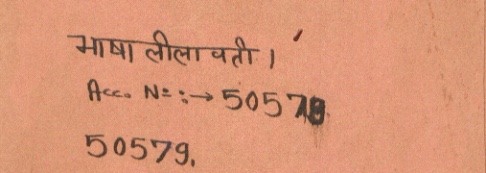
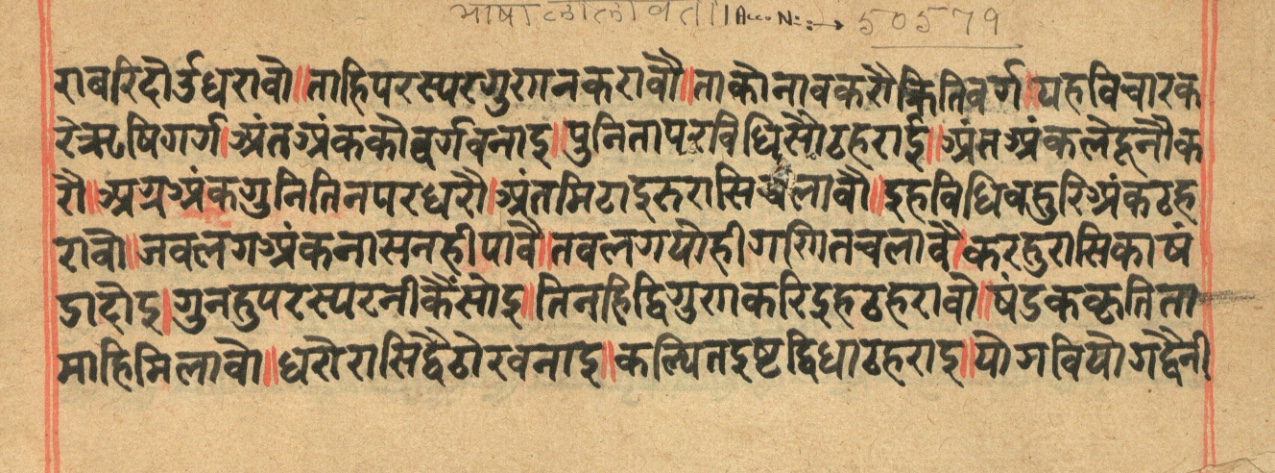
This manuscript presents a vernacular Hindi rendition of Bhāskara II's celebrated Sanskrit mathematical treatise *Līlāvatī*, specifically addressing advanced arithmetic operations including square and cube root extraction (*vargamūla* and *ghanamūla*). The text employs traditional verse formats (*dohā*, *savaiyā*) to expound algorithmic procedures for calculating roots of non-perfect squares and cubes through iterative approximation methods, demonstrating the sophisticated pedagogical transmission of Indian mathematical knowledge into regional languages. Notable features include worked examples with numerical arrays (*nyāsa*), fractional reduction techniques (*apavartana*), and the distinctive use of *karaṇī*-based root estimation for irrational quantities. The accession number 50579 identifies this as a significant specimen of early modern vernacular mathematical literature, preserving Bhāskara's twelfth-century algorithms while adapting them for Hindi-speaking scholarly communities.