VyakaranaFebruary 24, 2026
Pāṇini's Machine: The Aṣṭādhyāyī at Work
Sanskrit grammar is a machine, and the Aṣṭādhyāyī is its enginee. Pāṇini's grammar — composed around the fourth century BCE — reduced the entire language to a s

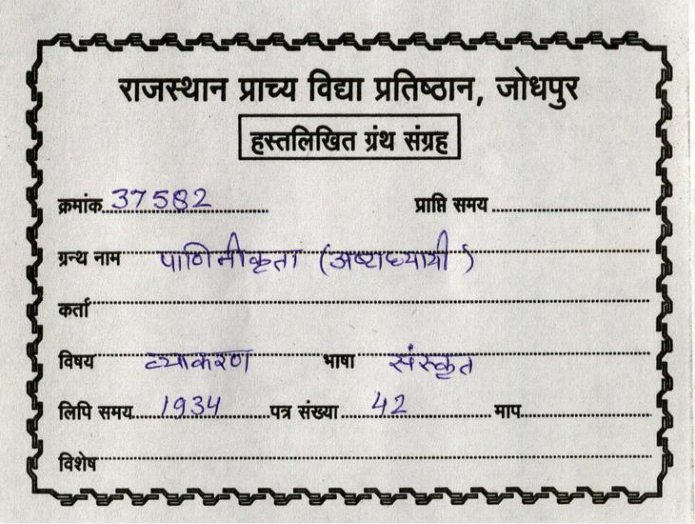
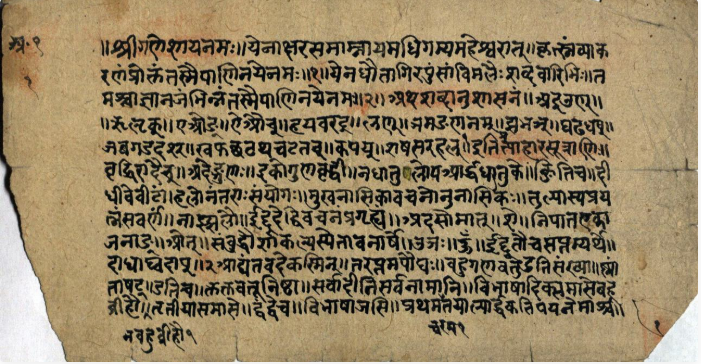
This manuscript is a 1934 Devanagari copy of Pāṇini's Aṣṭādhyāyī, the foundational Sanskrit grammatical treatise, held in the Rajasthan Prachyavidya Pratishthan collection (MS 37582). The text sample presents the complete first pāda of the first adhyāya, containing the fourteen Pratyāhāra-sūtras that inaugurate the metalinguistic system, followed by rules governing substitution (sthāne'ntaratamaḥ), augmentation (ādeḥ parasya), and compounding (tatpuruṣaḥ samānādhikaraṇaḥ karmadhārayaḥ). Notable features include the preservation of traditional opening verses (maṅgalaśloka) honoring Pāṇini and the inclusion of Kaumudī-style section markers, indicating this manuscript belongs to the pedagogical transmission lineage rather than a critical recension.