
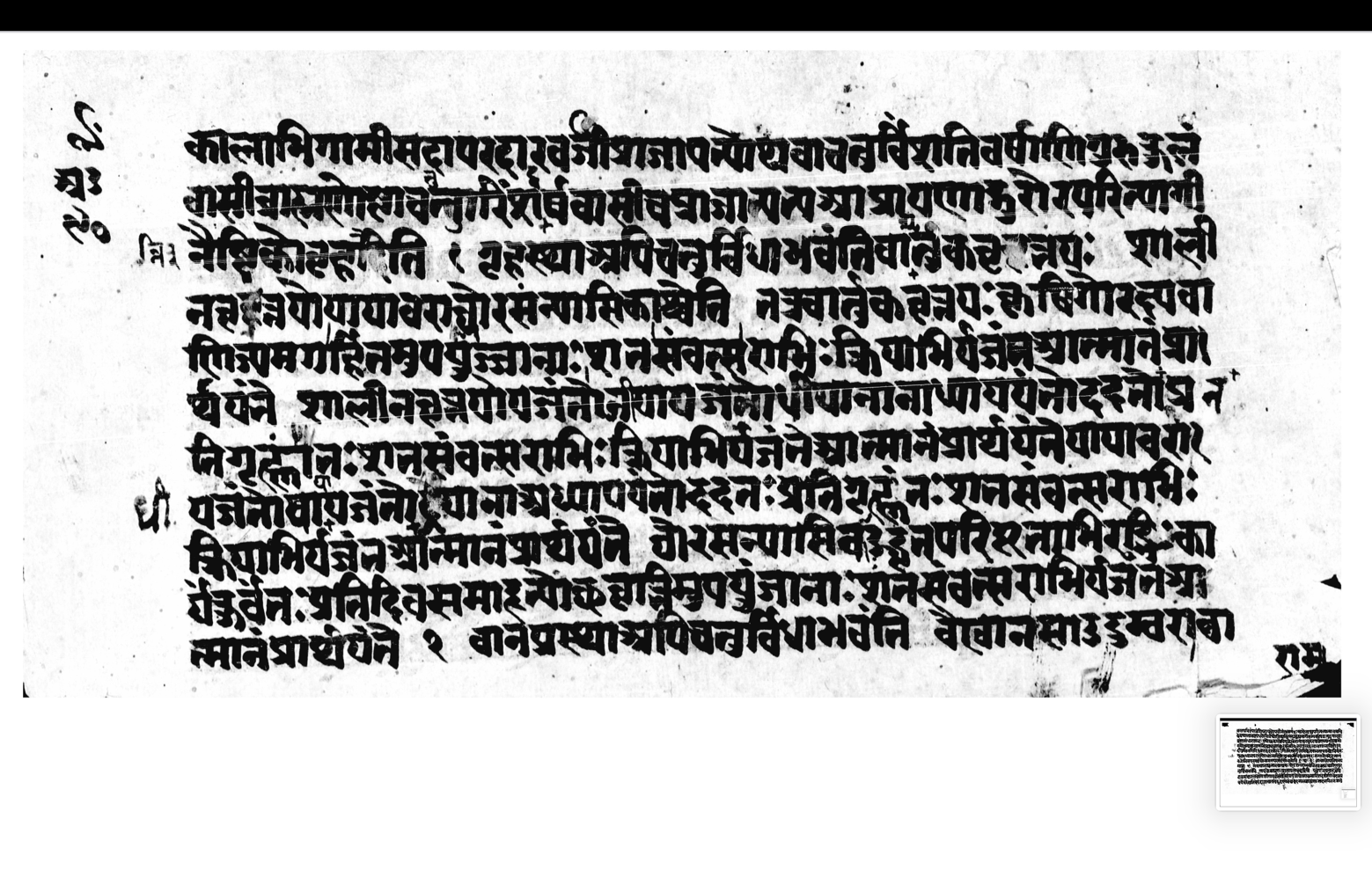
Some Upaniṣads ask what reality is. The Āśramopaniṣad asks something more practical: how should a life be lived? It is a small text on the four stages of life — student, householder, forest-dweller, renouncer — and the subdivisions within each, an architecture for a whole human existence.
The stages, subdivided
The text sorts each stage into its kinds, with the householder receiving the fullest treatment.
Householders are also of four kinds: those who live by trade, those who live by agriculture, those who beg for a night, and those who eat only what is left over from a sacrifice. Among these, one who lives by trade engages in agriculture, cattle-tending, commerce, etc., who eats only food obtained without begging, who always approaches his wife at the proper time, who avoids another's wife — he is a householder.
The householder is not one thing but four — defined by livelihood, by generosity, by discipline. The text is a taxonomy of the ordinary.
The student's vows
It gives the same care to the student stage, distinguishing the lifelong student from the one who studies for a time.
One who approaches his wife at the proper time, who avoids another's wife, who is a Prajāpati student in the fourfold manner in the teacher's house — observing proper conduct, having devotion — the Naishthika remains in the teacher's house for life.
The forest-dweller's disciplines
The text also reserves substantial attention for the vanaprastha, the forest-dweller who withdraws from householder life but has not yet become a renouncer. These are divided into four kinds, each with specific practices and obligations.
One who lives by agriculture performs the six daily duties, who is devoted to the five great sacrifices, who engages in teaching, performing sacrifices, and other acts, who is always devoted to the five great sacrifices, who eats only food obtained without begging—he is a wandering ascetic. One who lives by begging for a night, who is devoted to the five great sacrifices, who does not engage in agriculture, who eats what remains after the Vaishvadeva offering, who is devoted to the Vedas, who lives by gleaning, who daily collects medicinal herbs, who performs the five great sacrifices, who approaches his wife only in the proper season—he is a hermit.
The forest-dweller is neither householder nor renouncer but a third thing: bound by ritual duties (the five great sacrifices), gathering sustenance from the forest, gathering knowledge from the Vedas. Each type — the farmer, the night-beggar, the gleaner collecting herbs — has a distinct rhythm and set of duties.
A blueprint for living
The Āśramopaniṣad's genius is its subject: not the cosmos but the course of a life. It takes the messy business of being a student, a parent, a trader, a renouncer, and gives each stage a shape and a discipline. This tiny manuscript, five pages long, is a reminder that the Upaniṣadic tradition was not only about the absolute — it also cared about how a person should spend a Tuesday.
The text also covers specialized roles within householder life: those who live by agriculture performing the six daily duties, those devoted to the five great sacrifices and ritual functions, and those who live by gleaning and collecting herbs for daily sustenance. The Naishthika brahmacarin, the household farmer, the wandering mendicant — each is not merely a role but a complete way of being, with obligations, rights, and spiritual accomplishments. The Āśramopaniṣad teaches that every path within the ashrama system has dignity and purpose, that none is inherently superior, and that the question of how to live well is answered differently depending on where one stands.