
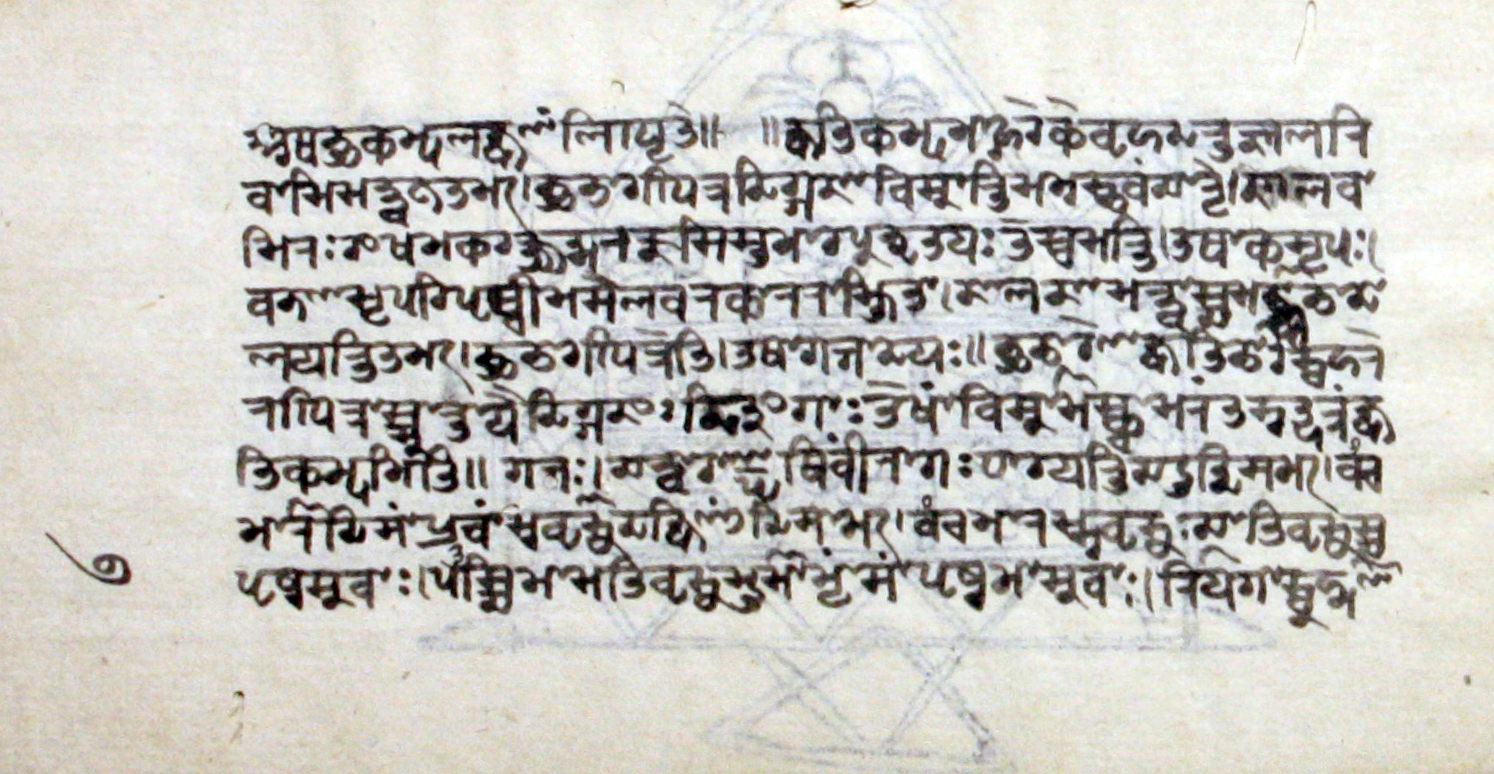
Bhūkaṁpalakṣaṇa
This multilingual manuscript fragment represents a complex South Asian ritual and philosophical compendium, combining Sanskrit verses in Devanagari script with interspersed Gurmukhi passages, likely of Hindu tantric or Smarta orientation. The text encompasses diverse subject matter including: (1) ritual instructions for maṇḍala construction, specifically detailing an aṣṭadaḍapadma (eight-petaled lotus) configuration for pitṛ worship and Brahmaṇī propitiation; (2) medical or alchemical preparations involving botanical substances such as guḍūci, guggulu, and various puṣpa (flowers); and (3) cosmological or yogic discourse referencing yugānta (world dissolution) and vanavāsa (forest-dwelling) practices. The presence of extensive lacunae marked by [?], mixed scripts, and technical terminology spanning ritual geometry (maṇḍalalakṣaṇa), materia medica, and soteriological instruction suggests this may be a composite or excerpted work, possibly a pauṣṭika or prayoga manual intended for practical application rather than purely theoretical study. The orthographic variations and code-switching between Sanskrit and vernacular registers indicate regional transmission, potentially from the Punjab or broader northwestern Indian cultural sphere during the late medieval or early modern period.